
Bioequivalence Waivers: What They Are and Why They Matter for Generic Drugs
When a generic drug company wants to sell a copy of a brand-name medicine, it usually has to prove the two work the same way in your body. That’s called bioequivalence, a scientific standard that shows two drug formulations produce the same amount of active ingredient in the bloodstream at the same rate. But sometimes, the FDA lets companies skip those expensive human trials — and that’s called a bioequivalence waiver, a regulatory shortcut granted when the drug’s physical and chemical properties make clinical testing unnecessary. These waivers aren’t handed out lightly. They’re based on solid science: if a drug dissolves quickly in the body, isn’t absorbed through the gut in a complex way, and has a wide safety margin, then testing it in people adds little value — but adds huge cost.
Think of it like this: if you’re making a salt tablet and the original is just pure sodium chloride, you don’t need to test whether your version works the same way. The ingredients are simple, the body absorbs them the same way, and there’s no risk of harmful variation. That’s the kind of drug that qualifies for a waiver. But if you’re dealing with something like phenytoin, an antiepileptic drug with a narrow therapeutic window, even tiny differences in how it’s made can cause seizures or toxicity. That’s why waivers don’t apply to every drug — only those with predictable behavior. The FDA uses a system called the Biopharmaceutics Classification System (BCS) to decide which drugs qualify. Drugs in BCS Class I — highly soluble and highly permeable — are the most likely to get a waiver. That’s why you see so many generic versions of simple antibiotics or blood pressure pills. But for complex drugs like warfarin or insulin, the rules are strict. Even a small change in how the pill breaks down can change how much medicine enters your blood.
These waivers directly affect what’s on your pharmacy shelf. Without them, many generic drugs would cost 10 times more to develop — and you’d pay more, too. They’re one reason why generic drugs now make up 90% of prescriptions in the U.S. But they’re also why you need to be careful with certain medications. If your doctor switches your brand to a generic, and that generic got approved through a waiver, it’s usually safe. But if you’re on a drug with a narrow window — like those listed in our posts on phenytoin or warfarin — you should still monitor your levels and talk to your pharmacist. The system works well for most people, but not all drugs play by the same rules. Below, you’ll find real-world examples of how drug substitution, regulatory decisions, and patient safety intersect — from FDA inspection records to state-level pharmacy laws — all tied to the same core question: when is a generic really the same?
Published on Dec 5
11 Comments
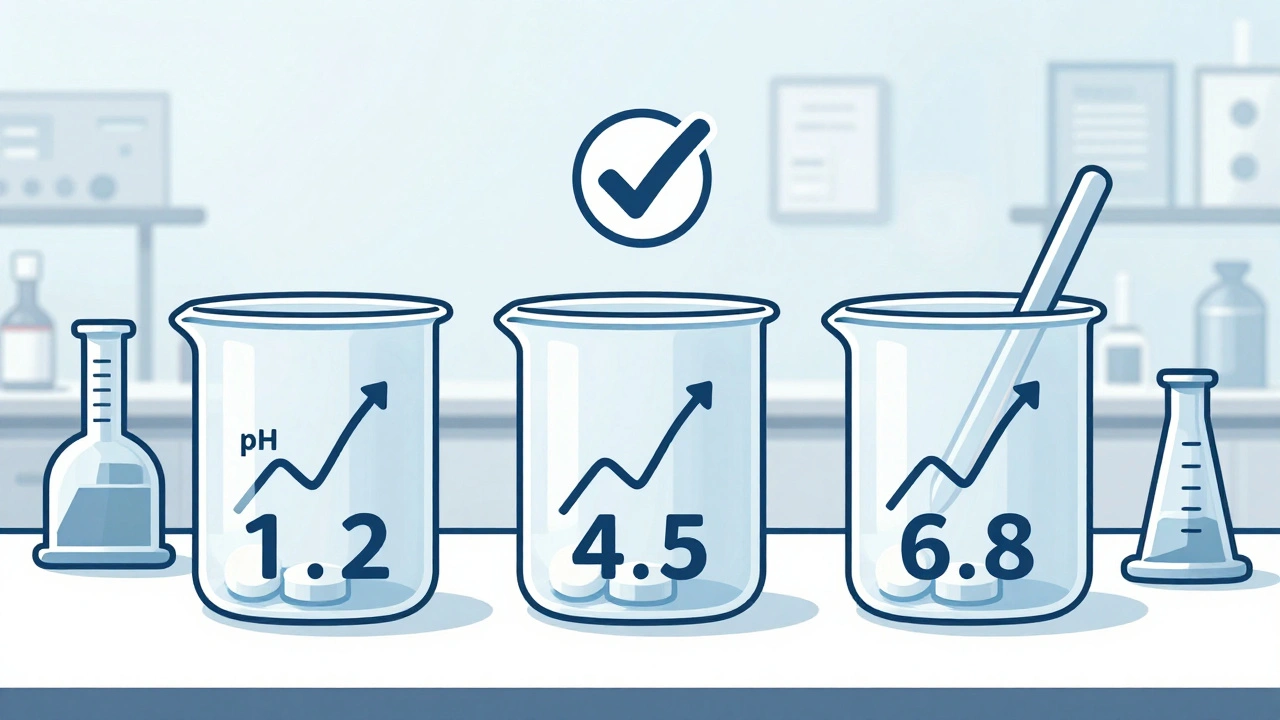
Bioequivalence waivers let generic drug makers skip costly human trials when lab tests prove their pills behave like the brand. Learn how the FDA uses BCS classification and dissolution data to approve generics faster - safely and scientifically.