
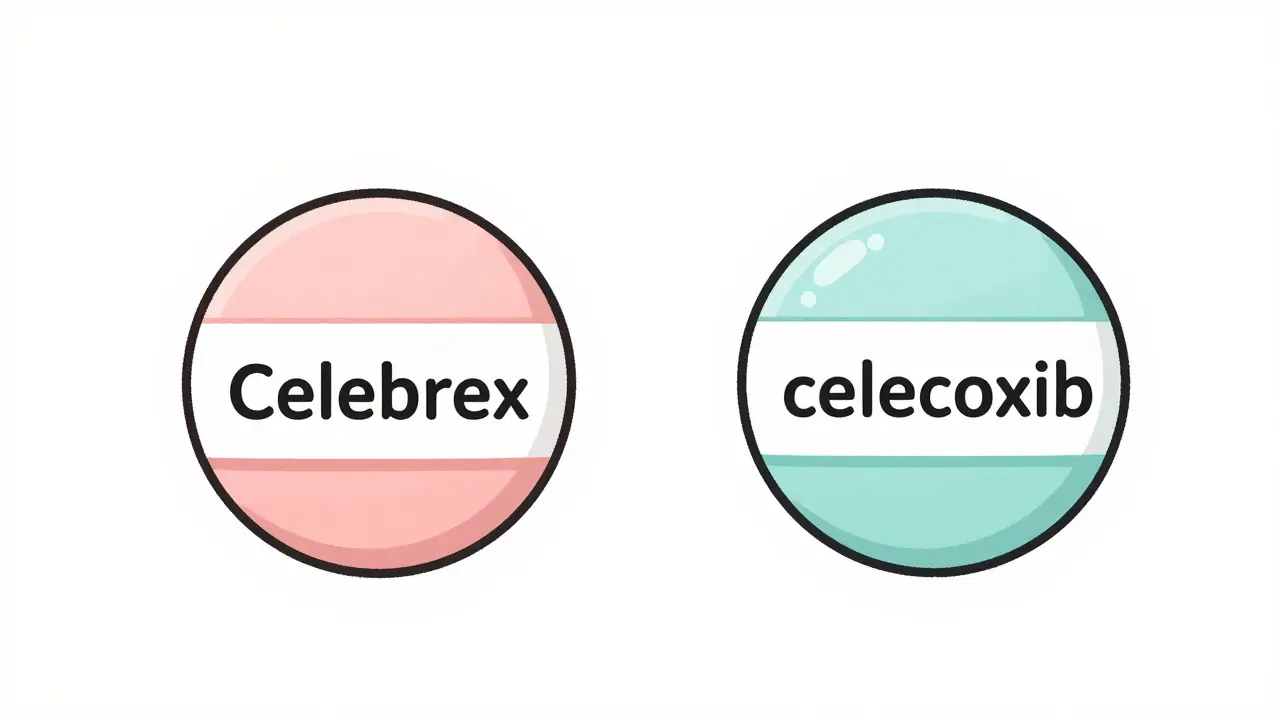
When a popular brand-name drug loses its patent, you expect prices to drop. That’s what happens with generics-cheaper versions that work the same way. But here’s something most people don’t realize: sometimes, the same company that made the original brand drug also releases its own generic version. That’s called an authorized generic. And it’s not a mistake. It’s a calculated move.
What Exactly Is an Authorized Generic?
An authorized generic is the exact same drug as the brand-name version-same active ingredients, same inactive ingredients, same pill shape, same manufacturing process. The only difference? No brand name on the label. It’s sold under a generic label, often at a lower price. You might not even know you’re taking it. For example, when Pfizer’s Celebrex (celecoxib) lost patent protection, its subsidiary Greenstone launched an authorized generic of the same pill. Same formula. Same factory. Same quality. Just a different box. The FDA allows this because the brand company uses its original New Drug Application (NDA) to sell it, skipping the usual generic approval process. That means no delays. No uncertainty. Just a direct, fast way to flood the market with a copy of their own drug.Why Would a Company Undercut Its Own Brand?
At first glance, it seems strange. Why would a brand company help kill its own profits? The answer is simple: to survive. When a blockbuster drug like Lipitor or Concerta loses patent protection, revenue typically crashes by 80-90% in the first year. That’s not just a dip-it’s a cliff. And if a generic competitor enters first, they get to set the price and capture nearly all the market. That’s where the Hatch-Waxman Act comes in. It gives the first generic company 180 days of exclusive rights to sell the drug after patent expiry. During that time, they can charge high prices without competition. That’s the window brand companies fear. So instead of sitting back and watching their profits vanish, they launch their own authorized generic-right on time. Sometimes even before the 180-day clock starts. By doing this, they split the market. The generic company still gets its exclusivity, but now they’re not the only player. The brand company is competing against them with the exact same product. And that changes everything. The Federal Trade Commission found in 2011 that when brand companies launched authorized generics during the 180-day window, prices dropped significantly faster. Consumers paid less. The first generic company made less money. And the brand company? They kept a slice of the market they would’ve lost completely.It’s Not Just About Price-It’s About Control
There’s more to it than just lowering prices. Authorized generics let brand companies control the narrative. Many patients and doctors trust the original brand. They worry that a generic from a new manufacturer might not work the same way-even if it’s legally required to be bioequivalent. But an authorized generic? It’s the same pill. Same factory. Same formulation. No guesswork. That’s powerful. For drugs with narrow therapeutic windows-like blood thinners, seizure medications, or thyroid pills-small differences in inactive ingredients can matter. An authorized generic eliminates that risk. Patients get continuity. Doctors feel confident. Pharmacies can fill prescriptions without switching brands. And here’s the quiet win: consumer trust. A 2005 Roper survey found over 80% of Americans wanted the option to buy an authorized generic. People don’t want to gamble with their health. If they can get the same drug they’ve been using, but cheaper, they’ll take it. And the brand company? They keep their reputation intact.
Who Benefits? (Spoiler: It’s Not Just the Brand)
You might think this is just a corporate trick to protect profits. But the data says otherwise. The FTC’s 2011 report showed that authorized generics led to lower prices for everyone. When the first generic had no competition, prices stayed high. When the brand company jumped in with its own version, prices dropped 20-30% faster. That’s money saved by insurers, Medicare, and patients paying out-of-pocket. It also forces generic manufacturers to compete. If they know a brand company is ready to drop an authorized generic on day one, they’re less likely to spend millions to challenge a patent. Why risk it if you won’t get the full 180-day monopoly? That reduces litigation and speeds up market entry overall. Even the brand company benefits long-term. They don’t have to shut down their manufacturing lines. They keep their workers employed. They use their existing supply chains. And they maintain relationships with pharmacies and distributors. It’s not just about selling pills-it’s about keeping the whole system running.The Strategy Is Evolving
In the past, most authorized generics were launched after generic competition started. But that’s changing. Between 2020 and 2023, brand companies started launching them earlier-sometimes even before the first generic is approved. It’s no longer just defense. It’s offense. Some companies are now using different distribution channels to avoid direct price comparisons. They might sell the authorized generic only through mail-order pharmacies or specific retail chains. That way, the brand version can still be marketed as premium, while the generic version quietly captures the price-sensitive crowd. And it’s not just small molecules anymore. With biologics-complex drugs like Humira and Enbrel-patents are expiring too. The FDA hasn’t officially defined “authorized biosimilars” yet, but brand companies are already preparing. The same playbook is being adapted: exact same drug, different label, same strategy.
How Much Money Are We Talking About?
Let’s say a drug brings in $1 billion a year. When the patent expires, the brand might lose 85% of sales. That’s $850 million gone. But if the company launches an authorized generic and captures 15-20% of the remaining market-say, $100 million in sales-they’ve saved a huge chunk of revenue. That’s not just profit. That’s survival. It keeps R&D funding flowing. It supports jobs. It keeps factories open. And it ensures patients keep getting the same medication they rely on. Companies like Greenstone (Pfizer), Prasco (colchicine), and Amneal (formerly Impax) have built entire divisions around authorized generics. They’re not side projects. They’re core business units.What This Means for You
If you’re taking a brand-name drug that’s gone generic, check the label. Is it the same manufacturer? If yes, you might be on an authorized generic. It’s not a downgrade. It’s the same medicine, just cheaper. If you’re on insurance, your plan might prefer the authorized generic because it’s cheaper than the brand-but just as reliable. Ask your pharmacist. You might be saving money without even knowing it. And if you’re a patient who’s worried about switching to a generic? You don’t have to. Authorized generics give you the option to stay with what you know-without paying the brand price.Is This Fair?
Some critics say it’s anti-competitive. They argue brand companies are using their market power to crush generic rivals before they even get started. But the evidence says otherwise. Prices drop. Patients get choices. The market moves faster. The FTC still monitors the practice, but their data shows net benefits for consumers. And with over 850 authorized generics launched in the U.S. between 2010 and 2019, this isn’t a niche tactic-it’s now standard industry practice. It’s not about tricking the system. It’s about adapting to it. The patent system was designed to reward innovation. But once that reward ends, the market shifts. And brand companies are just playing the game as it’s written.Are authorized generics the same as regular generics?
Yes and no. Authorized generics are identical to the brand-name drug in every way-active ingredients, inactive ingredients, strength, and even manufacturing process. Regular generics only need to match the active ingredient and prove bioequivalence. They can have different fillers, colors, or coatings. That’s why some patients notice differences with regular generics. Authorized generics eliminate that uncertainty.
Why don’t all brand companies launch authorized generics?
It’s expensive. Setting up a separate generic label, managing distribution, and competing with your own brand requires resources. Smaller companies may not have the infrastructure. Some prefer to exit the market entirely after patent expiry. Others believe they can’t compete on price. But for big players with strong manufacturing and distribution networks, it’s a smart way to preserve value.
Can I ask my pharmacist for an authorized generic?
Yes. If your prescription is for a brand drug that has an authorized generic version, your pharmacist can usually substitute it unless your doctor specifically says “dispense as written.” Ask if there’s an authorized generic available-it’s often cheaper than the brand and just as reliable as the original.
Do authorized generics affect the quality of care?
They usually improve it. Because they’re exact copies of the brand, they reduce the risk of switching side effects or inconsistent performance. This is especially important for drugs with narrow therapeutic windows, like warfarin or levothyroxine. Patients get continuity, doctors get predictability, and pharmacies get fewer returns or complaints.
Will authorized generics become more common in the future?
Absolutely. As more expensive specialty drugs and biologics lose patent protection, brand companies will need strategies to protect revenue and patient access. Authorized generics are already being tested in the biosimilars space. Expect more of them, launched earlier, with smarter distribution. The trend isn’t slowing down-it’s accelerating.
Siobhan Goggin
January 5, 2026 AT 12:13This is one of those topics that flies under the radar but affects everyone who takes medication. I never realized my prescription could be the exact same pill with a different label. It’s reassuring to know there’s a way to save money without compromising on quality.
Vikram Sujay
January 6, 2026 AT 16:04The phenomenon of authorized generics reveals a fascinating tension within capitalist systems: the incentive to innovate versus the necessity to sustain. When intellectual property expires, the moral imperative to ensure accessibility collides with the corporate imperative to preserve profitability. What we observe here is not exploitation, but adaptation-a pragmatic recalibration within the boundaries of legal and economic structures. The consumer emerges not as a victim, but as a beneficiary of systemic foresight.
Jay Tejada
January 8, 2026 AT 00:26So the big pharma guys are like, 'Hey, we made this drug, now we're gonna sell it cheaper under a different name so we don't lose everything.' Classic. Like a magician pulling the same rabbit out of a different hat. Honestly? I'm here for it. If I can get the same pill for half the price, I'm not gonna complain.
Shanna Sung
January 8, 2026 AT 06:02They’re not letting you know this because they want you to save money they’re hiding the truth so you keep trusting them. The FDA is in on it. Pharmacies are in on it. Even your doctor knows. They want you to think this is some noble move but it’s just a slick way to keep you hooked while they milk the last drops out of your insurance. You think you’re getting a deal? You’re being played.
mark etang
January 8, 2026 AT 15:17The strategic deployment of authorized generics represents a model of corporate responsibility aligned with market dynamics. By preserving manufacturing infrastructure, maintaining employment, and ensuring therapeutic continuity, pharmaceutical firms demonstrate that profitability and public welfare are not mutually exclusive. This is capitalism at its most functional-adaptive, efficient, and patient-centered.
Brendan F. Cochran
January 10, 2026 AT 10:16Why do these rich drug companies get to play both sides? They make the brand, then sell the same damn thing cheaper like they’re doing us a favor? Nah. They’re just trying to keep their yachts full of champagne. Meanwhile, people are skipping doses because they can’t afford the brand even if it’s the same pill. This isn’t innovation. It’s greed with a PR team.
Charlotte N
January 12, 2026 AT 06:39I’ve been on levothyroxine for 12 years and switched to a generic once… I felt weird for a week. Then I found out it was an authorized generic and everything went back to normal. I didn’t even know that was a thing until now. So… if my pill says Teva but the manufacturer is the same as the brand, does that mean I’ve been on an authorized generic this whole time? And if so, why didn’t my pharmacy tell me? I need more info. Like, now. Please.
bob bob
January 13, 2026 AT 12:49Man, I never thought about this before. I just assumed generics were all the same. But if the brand company makes their own generic, that’s actually kind of cool. Means I don’t have to worry about whether it’ll work. Same factory, same stuff. I’d take that over some random Chinese-made pill any day. Good to know this exists.
Uzoamaka Nwankpa
January 15, 2026 AT 00:13I just want to say I’m tired. I’m so tired of being told I should be grateful for these "solutions" when the system is rigged. They make billions, then give us crumbs and call it kindness. I’m not mad, I’m just… drained. This isn’t progress. It’s survival with a smile.
Chris Cantey
January 15, 2026 AT 20:58It’s not about the pill. It’s about the ritual. The brand name on the bottle is part of the identity. When you take it, you’re not just ingesting chemistry-you’re reaffirming trust. An authorized generic? It’s the same substance, but the soul is gone. We’ve commodified healing. And now we’re selling it without the label that gave it meaning.
Abhishek Mondal
January 17, 2026 AT 01:44While your analysis is superficially plausible, it fails to account for the structural asymmetries inherent in the U.S. pharmaceutical regulatory apparatus-specifically, the perverse incentives embedded within the Hatch-Waxman Act’s 180-day exclusivity provision, which, when weaponized by vertically integrated firms, constitutes a form of regulatory arbitrage masquerading as market efficiency. Furthermore, the FTC’s 2011 report, while cited with apparent authority, neglects longitudinal data on price elasticity post-authorized-generic entry, thereby rendering its conclusions statistically incomplete. One must also consider the psychological impact of brand loyalty on therapeutic adherence-a variable conspicuously absent from your utilitarian framework. In sum: your argument is elegant, but dangerously reductive.