
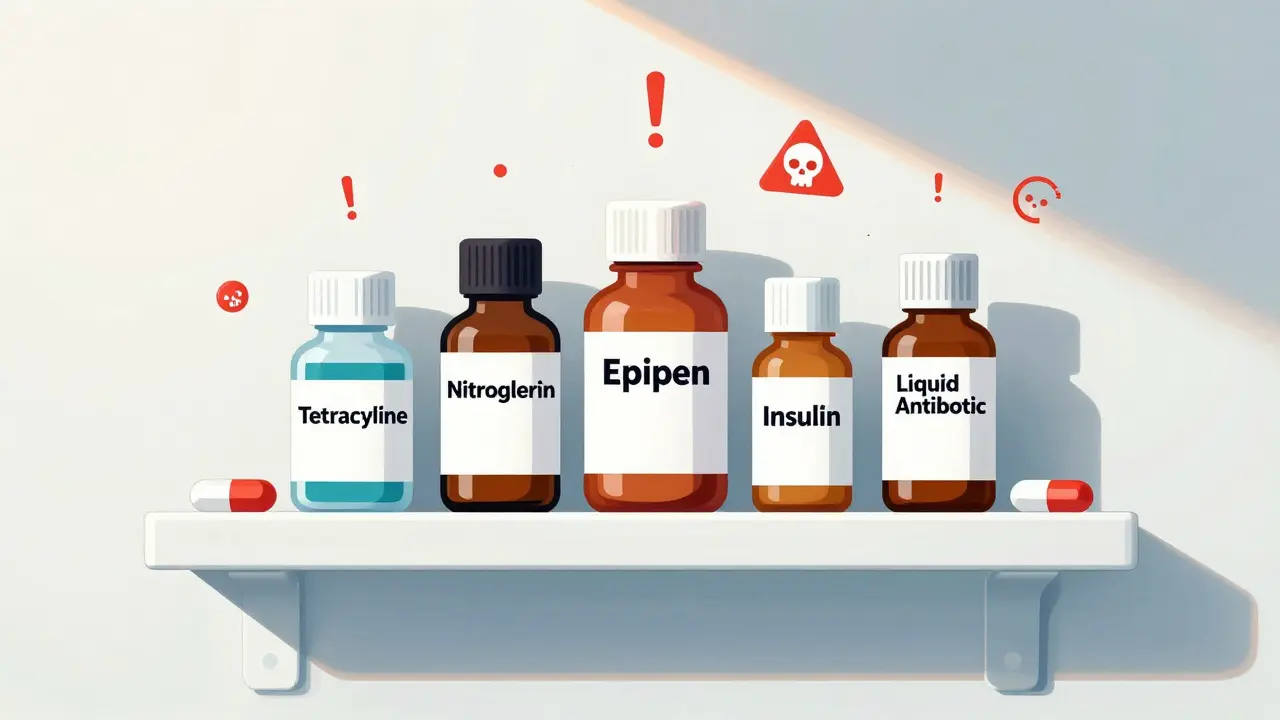
Most people assume that taking an expired pill is harmless-maybe less effective, but not dangerous. That’s not always true. While the majority of expired medications lose potency over time, a small but critical group can turn harmful. The difference between a useless tablet and a toxic one isn’t about how long it’s been sitting on your shelf-it’s about what’s inside the pill.
Expiration Dates Aren’t Just a Marketing Tactic
The expiration date on your medicine isn’t arbitrary. It’s the last day the manufacturer guarantees the drug will work as intended and remain safe under proper storage. This requirement became law in the U.S. in 1979 after the FDA started requiring stability testing. But here’s what most people don’t know: the FDA’s own Shelf Life Extension Program found that 90% of medications tested were still potent 5 to 15 years past their expiration date-if stored correctly.
So why do we still throw out pills that might still work? Because some drugs don’t just fade out-they break down into something dangerous. And for those, the expiration date isn’t a suggestion. It’s a line you shouldn’t cross.
The Real Danger: These 5 Medications Can Turn Toxic
Not all expired drugs are created equal. Some are fine. Others? Not even close. Here are the five that demand strict attention:
- Tetracycline antibiotics: In 1963, three patients developed kidney damage after taking expired tetracycline. The drug degraded into epitetracycline and anhydro-4-epitetracycline-compounds known to harm the kidneys. Even though modern packaging is better, this remains the only well-documented case of toxicity from expired antibiotics. But it’s enough to warrant caution.
- Nitroglycerin: Used for chest pain, this medication breaks down quickly. A 2019 Cleveland Clinic study showed it loses half its potency within three months after expiration. If you’re having a heart attack and your nitroglycerin doesn’t work, you’re not just out of luck-you’re at risk of death. Storing it in its original glass bottle, away from light and heat, helps-but even then, don’t rely on it past the date.
- Insulin: After expiration, insulin starts forming clumps and fibrils. A 2018 study found it loses 20-30% of its effectiveness each year. For someone with diabetes, that’s not just a weaker dose-it’s a spike in blood sugar, ketoacidosis, or worse. Refrigeration slows this down, but doesn’t stop it.
- Liquid antibiotics: Once opened, liquid antibiotics like amoxicillin-clavulanate start to break down within days. Hydrolysis doesn’t just reduce potency-it can create allergenic compounds. One parent reported their child developed severe diarrhea after taking a liquid antibiotic expired by just three days. That’s not coincidence. Bacterial growth can also occur in opened bottles, especially if left unrefrigerated.
- EpiPens: Epinephrine degrades fast. A 2017 study in the Annals of Internal Medicine found EpiPens lost 85% of their potency after one year past expiration. In a life-threatening allergic reaction, that’s not a delay-it’s a death sentence. If your EpiPen is expired, replace it. No exceptions.
What’s Safe? What’s Not
Here’s the good news: most solid medications-like blood pressure pills, antidepressants, antihistamines, and pain relievers-stay stable for years. The FDA’s SLEP program showed they often retain 70-90% potency 10-15 years after expiration, as long as they’re kept dry and cool.
But “safe” doesn’t mean “reliable.” Aspirin, for example, breaks down into acetic acid and salicylic acid. A 2021 study found it becomes 50% more likely to irritate your stomach after two years past expiration. That’s not toxic-it’s just unpleasant. But if you’re taking it for heart protection, a weaker dose could be risky.
For most people, taking a 2-year-old ibuprofen tablet won’t hurt you. But it might not stop your headache either. The real danger isn’t poisoning-it’s treatment failure.

Storage Matters More Than You Think
Your bathroom is the worst place to store medicine. Humidity, heat, and steam wreck pills and liquids. The FDA says “cool, dry place” means 15-25°C (59-77°F) with 35-45% humidity. The average bathroom? 32°C and 80% humidity. That’s a recipe for degradation.
Insulin stored in the fridge lasts longer. Nitroglycerin in its original amber glass bottle stays stable longer than in plastic. Eye drops? Once opened, they’re only good for 28 days-no matter what the bottle says. Preservatives wear off, and bacteria grow. That’s why you’re told to toss them after a month.
Don’t rely on smell or color. A pill might look fine but still be chemically broken down. Only lab tests can tell. And you don’t have those.
Why Do Companies Set Such Short Expiration Dates?
It’s not about safety-it’s about profit. The U.S. pharmaceutical industry makes $8.2 billion a year from people replacing expired meds. The FDA’s own data shows most drugs last far longer. The Department of Defense saved $1.2 million annually just by extending expiration dates on 10 critical drugs.
But regulators play it safe. One death from an expired drug is one too many. So they err on the side of caution. The Institute for Safe Medication Practices admits: “Most expired drugs are not toxic-they’re just weak.” But when it comes to insulin, nitroglycerin, or epinephrine, weak isn’t an option.
What Should You Do?
Here’s a simple rule:
- If it’s insulin, nitroglycerin, EpiPen, liquid antibiotic, or eye drops-throw it out on the expiration date. No exceptions.
- If it’s a solid pill (blood pressure, antidepressant, allergy, painkiller) and you’re in a pinch with no access to a refill, it’s probably still safe to use for a short time. But don’t count on it working fully.
- If you’re treating a chronic condition or a life-threatening one-don’t gamble. Replace it.
- Store meds in a cool, dry place-like a bedroom drawer, not the bathroom.
- Never use expired meds for emergencies. If you’re having chest pain, an allergic reaction, or a diabetic crisis, call 911. Don’t trust an old pill.
How to Dispose of Expired Medications Safely
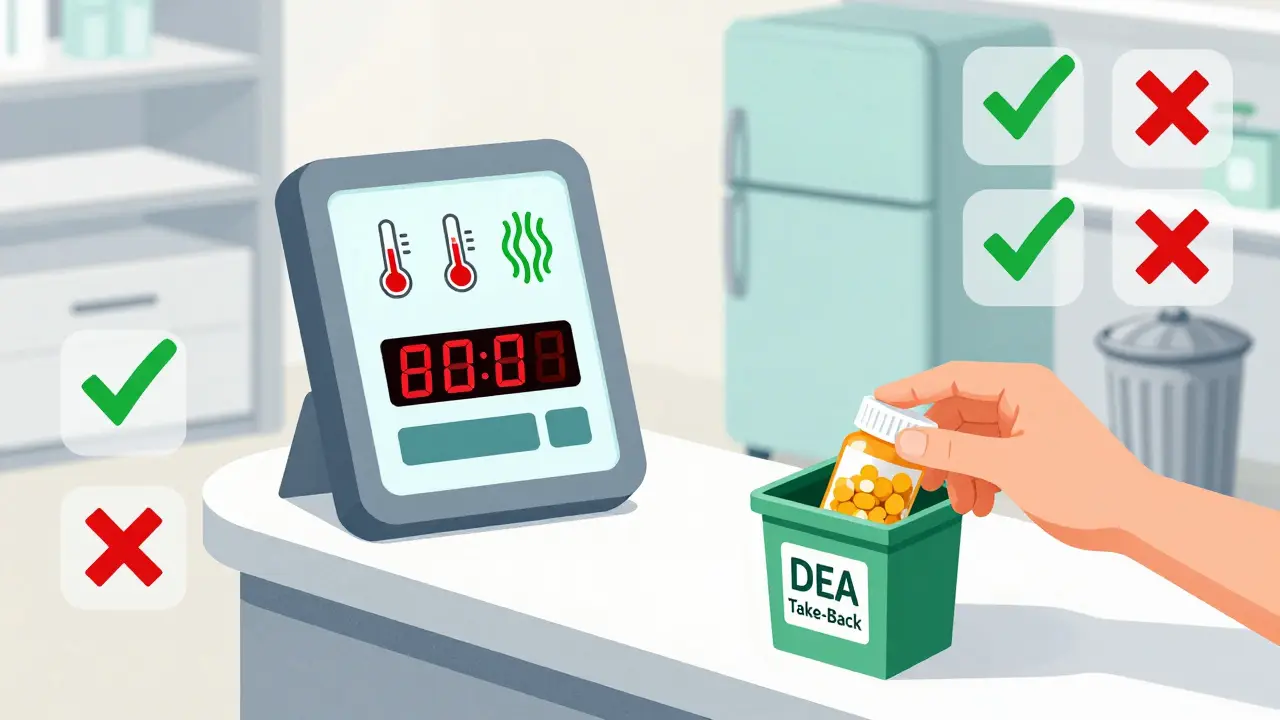
Flushing pills down the toilet or tossing them in the trash isn’t safe. It pollutes waterways and risks accidental ingestion by kids or pets. The DEA’s National Prescription Drug Take-Back Day collected over 930,000 pounds of unused meds in 2023. Use it.
Most pharmacies, including CVS and Walgreens, have drop-off bins. Some cities offer mail-back programs. If none are available, mix pills with coffee grounds or cat litter, seal them in a container, and throw them in the trash. Remove labels to protect your privacy.
What About Emergency Situations?
If you’re stranded without your EpiPen, insulin, or nitroglycerin, and your prescription has expired:
- Call 911 immediately.
- Do not rely on the expired drug.
- If you have no choice and it’s your only option (e.g., no cell service, no help nearby), use it-but know you’re taking a risk.
There’s a difference between desperation and smart risk. In an emergency, the risk isn’t the expired drug-it’s the untreated condition.
What’s Changing?
Things are starting to shift. In 2024, the FDA launched a pilot program to extend expiration dates for 20 critical medications based on real-time stability data. Companies like Pfizer and Merck are investing hundreds of millions in smart packaging that tracks how long a drug has been exposed to heat or humidity.
By 2027, experts predict 30% of prescriptions will have dynamic expiration dates-adjusted based on your actual storage conditions, not a fixed date printed on the bottle.
But until then, treat expiration dates like traffic lights. Green? Fine. Yellow? Proceed with caution. Red? Stop. And for the five high-risk drugs listed above-red means don’t even think about using it.
Are expired medications always dangerous?
No. Most expired medications, especially solid pills like ibuprofen or blood pressure drugs, are not dangerous-they just lose potency. The real danger comes from only a few types: insulin, nitroglycerin, EpiPens, liquid antibiotics, and eye drops. These can become ineffective or even toxic after expiration.
Can expired antibiotics make you sick?
Rarely. The only well-documented case of toxicity from expired antibiotics was tetracycline in 1963, which damaged kidneys. Today’s packaging is better, so this is extremely unlikely. But expired antibiotics often lose potency, which means they won’t kill bacteria properly. That can lead to treatment failure and antibiotic resistance-not poisoning, but still dangerous.
Is it safe to take expired allergy medicine?
Generally yes. Antihistamines like loratadine or cetirizine lose potency over time but don’t break down into toxic substances. If your allergy symptoms aren’t controlled, it’s likely because the drug is too weak-not because it’s harmful. Replace it for best results, but don’t panic if you accidentally take an expired one.
Why do pharmacies give expiration dates so early?
Manufacturers set expiration dates based on stability testing, but they often choose conservative estimates to limit liability and encourage repeat sales. The FDA allows this. The government’s own tests show many drugs last years longer. But because one bad outcome could cost lives-and lawsuits-companies don’t push the limit.
What should I do if I took an expired EpiPen during an allergic reaction?
Call 911 immediately-even if you feel better. Epinephrine from an expired EpiPen may have lost most of its potency. You could still be at risk of a second, more severe reaction. Never assume an expired auto-injector will work. Always carry a current one.
Can I store medications in the fridge to make them last longer?
Only if the label says to. Insulin and some liquid antibiotics benefit from refrigeration. But many pills, like antibiotics or heart meds, can break down if exposed to moisture from the fridge. Always check the packaging. When in doubt, keep them in a cool, dry drawer-not the bathroom or fridge.
Mussin Machhour
December 25, 2025 AT 07:06Yo I just threw out my grandma’s expired insulin last week after reading this. She’s been using the same EpiPen since 2020 because ‘it still looks fine.’ Now I’m forcing her to get new ones. No more ‘it’s just a little expired’ nonsense. Life’s too short to gamble with meds.
Winni Victor
December 25, 2025 AT 10:20Oh wow so the pharmaceutical industry is secretly running a global scam where they profit off our fear of dead pills? Next they’ll tell us toothpaste expires too. I’m starting a cult. We’ll call it ‘The Church of Lasting Pills.’ Sermons every Sunday. Hymns sung in the aisles of CVS. I’ll be the pope. Wear a lab coat. Bless expired ibuprofen with holy water.
Ben Harris
December 27, 2025 AT 05:33Everyone’s acting like expired meds are some kind of ticking bomb but let’s be real if you’re the type to keep meds for 10 years you probably also think ‘natural remedies’ cure cancer and microwave your phone to ‘recharge the battery’
Also who stores meds in the bathroom besides someone who thinks a humidifier is a medical device
And why are we still using paper labels why not QR codes that update the expiry date based on your actual fridge temp
Also why is this even a thing why don’t we just have smart pills that self destruct after 30 days like spy gadgets
Linda B.
December 29, 2025 AT 04:55Of course the FDA says 90% are still potent. They also said aspartame was fine until it wasn’t. And cigarettes. And lead paint. You think they care about you? They care about liability. The moment you get sick from an expired pill they’ll say ‘you ignored the date’ and walk away. Meanwhile their stock price goes up because you bought a new one.
They’re not protecting you. They’re protecting their bottom line. And you’re the fool who keeps buying the same product over and over.
Jason Jasper
December 30, 2025 AT 17:20I’ve got a bottle of amoxicillin from 2019. It’s been in a sealed drawer. No heat. No moisture. I used it last year when I got a bad sinus infection. Worked fine. I’m not going to throw it out just because of a date printed by a corporation that charges $400 for a refill.
But I won’t use it for my kid. Or for an emergency. That’s where I draw the line. Practicality isn’t recklessness.
Zabihullah Saleh
January 1, 2026 AT 16:40It’s funny how we treat medicine like a vending machine. You put in your money, you get your fix, and when it runs out you just buy another. But we forget that these are chemical compounds with molecular lifespans. We don’t think about how heat warps proteins. How moisture hydrolyzes esters. How time turns a lifesaver into a liability.
There’s a quiet science in storage. A quiet tragedy in neglect. The bathroom isn’t just humid-it’s a chemical reactor. And we’re the ones turning our medicine into experiments.
Maybe the expiration date isn’t about profit. Maybe it’s a mercy. A way to say: ‘This isn’t your problem anymore. Let someone else deal with it.’
But we’re stubborn. We hoard. We rationalize. We say ‘it’s just one more month.’
Until one day it’s not.
Lindsay Hensel
January 2, 2026 AT 00:51I appreciate the clarity of this post. The distinction between potency loss and toxicity is vital. Many people conflate the two. I have elderly relatives who still use expired beta-blockers. This information may save their lives. Thank you for emphasizing storage conditions. A cool, dry drawer is not a luxury-it is a necessity.
Christopher King
January 3, 2026 AT 19:49Did you know the government has been testing expired drugs since the 70s and they’ve been hiding the results because they don’t want you to know you can save money
They’re also putting tracking chips in pills to monitor when you take them so they can raise your insurance rates
And the real reason insulin expires fast is because they add preservatives that break down into mind-control agents
Ask yourself why the FDA won’t let you refill your EpiPen for $5 like they do with birth control
It’s not about safety. It’s about control
Katherine Blumhardt
January 5, 2026 AT 01:27my dog ate an expired ibuprofen last week and he’s fine so i think we’re all overreacting