
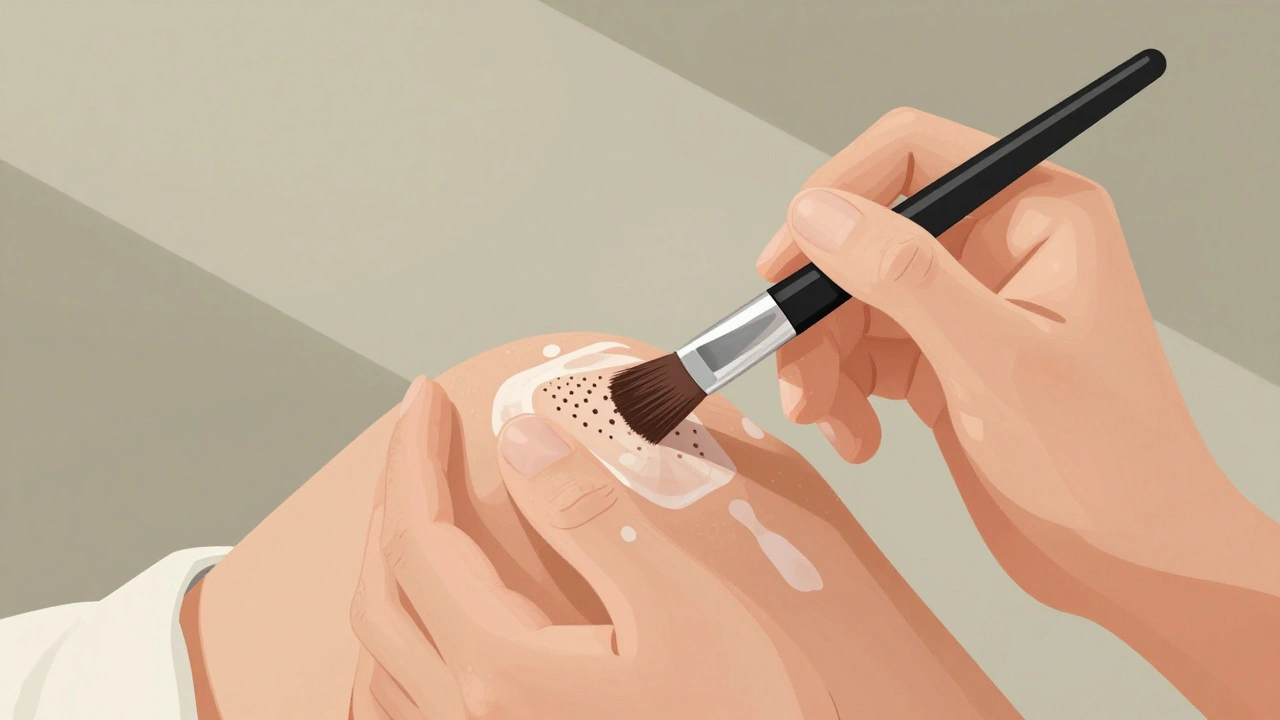
Living with vitiligo means more than just dealing with patches of lighter skin. For many, it’s the daily worry about stares, questions, or feeling like your skin doesn’t match who you are inside. That’s where vitiligo camouflage comes in-not as a cure, but as a powerful tool to reclaim confidence, one day at a time.
What Vitiligo Camouflage Actually Does
Vitiligo camouflage isn’t regular makeup. It’s medical-grade pigment designed to blend depigmented skin with your natural tone. Unlike drugstore foundations, these products contain up to 25% more pigment, so they cover without looking cakey. They’re made to last through sweat, showers, and long days-not fade after two hours. The goal? To make the skin look even, so you don’t have to explain, apologize, or hide. Studies show that people who use camouflage regularly report a 22-35% improvement in their quality of life. That’s not just cosmetic. It’s emotional. It’s mental health.Temporary Camouflage: Daily Solutions That Work
If you’re new to camouflage, start here. Temporary options let you test what works before committing to anything permanent. Water-based camouflage is the most common. Think of it like a supercharged foundation. It’s lightweight, easy to blend, and ideal for dry or normal skin. Brands like Dermablend and Dermacolour use this formula. They’re water-resistant, not waterproof, so they’ll stay on through a workout but come off with gentle cleanser. Oil-free formulas are better for oily skin. They use silicones like dimethicone to sit on top of the skin without clogging pores. These won’t slide off in humidity or heat-perfect for Sydney summers. Anhydrous (water-free) products are the heavy lifters. These are wax- and oil-based, designed to be waterproof. They’re great for lips, hands, and areas that get rubbed or washed often. But they’re harder to remove. You’ll need an oil-based cleanser, not just soap. Don’t be fooled by henna, indigo, or home remedies. A 2022 survey found only 32% of users were happy with these. The color doesn’t match well, and they wash off too fast. Stick with clinically tested products.How to Apply Camouflage Like a Pro
Applying camouflage isn’t like putting on foundation. There’s a technique. Start with clean, dry skin. Use a pH-balanced cleanser-no harsh soaps. Let your skin breathe for 10 minutes before applying. Color matching is everything. Do this in natural daylight. Hold the product next to your neck, not your face. Vitiligo patches can look different under artificial light. If you’re unsure, many brands now offer virtual color matching via apps. L’Oréal’s ModiFace tech, coming in early 2024, will let you upload a photo and get shade recommendations. Apply in thin layers. Build up slowly. Water-based products need 90 seconds to set before adding another layer. Anhydrous formulas need 3-5 minutes. Rushing this step causes streaks. Blend the edges with a damp sponge or stippling brush. Don’t drag. Tap. This avoids harsh lines. Many users report that the first time they got it right, they cried. Finish with a light dusting of translucent powder if needed. And yes-some products include SPF 2-3. Not enough for sun protection, but it helps. Always add a separate broad-spectrum SPF 50+ on top.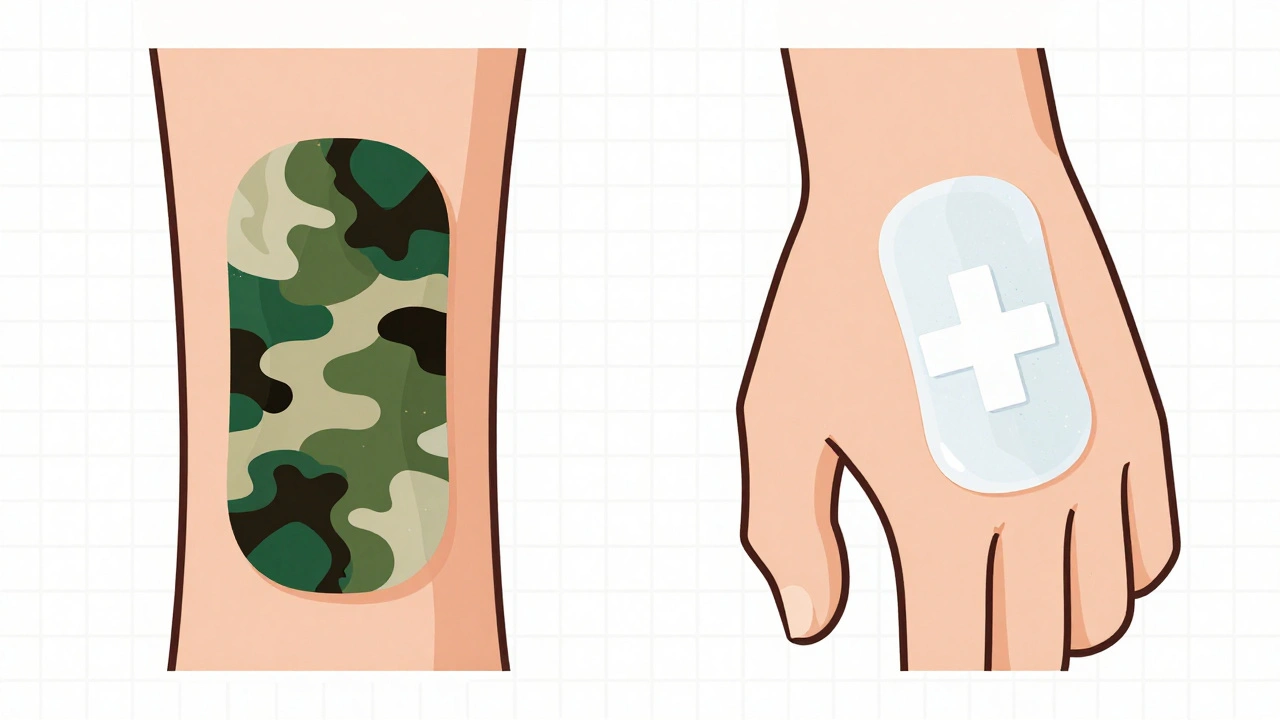
Permanent Camouflage: Micropigmentation Explained
For those tired of daily application, micropigmentation is an option. It’s like tattooing, but with medical-grade iron oxides, not ink. The pigment particles are 6 microns in size-small enough to stay stable, large enough to avoid toxicity. This isn’t a one-time fix. You need 2-3 sessions, spaced 6-8 weeks apart. Each session takes 45-90 minutes. The technician implants pigment just below the surface of the skin-between the superficial and middle dermis-at 15-20 punctures per square centimeter. It works best on stable vitiligo. That means no new patches for at least 12 months. If your vitiligo is still spreading, the pigment can fade unevenly or create a halo effect around the treated area. A 2022 case series showed 18% of unstable patients had this issue. Best areas for micropigmentation: lips, wrists, elbows, axillae, and fingers. These are spots that are hard to cover with makeup. Worst areas? Hands and feet. The skin moves too much. Pigment fades 40% faster there. Costs range from $300 to $800 per session. That adds up. And touch-ups are needed every 1-3 years. It’s not cheap, but for many, it’s worth it. One Reddit user, u/VitiligoWarrior, said it changed his life after 15 years of hiding his lip vitiligo.What Doesn’t Work (And Why)
Self-tanners? They’re risky. Vitiligo patches absorb tan unevenly. You end up with orange streaks or patches that look worse than before. Not recommended. Regular foundation? Too light. Too sheer. It won’t cover. And it won’t last. Home remedies like Loha Bhasma (iron filings) or clay mixtures? They’re unsafe. No regulation. No testing. They can irritate or even damage skin. And don’t skip the patch test. Even medical-grade products can cause reactions. Test on a small patch behind your ear for 48 hours before going all in.Cost, Accessibility, and Real Talk
Camouflage products aren’t cheap. Dermablend and Dermacolour run $25-$45 per product. That’s $150-$200 a month if you use them daily. For some, that’s impossible. But here’s the good news: many dermatologists can prescribe camouflage as part of your treatment plan. In Australia, some private health insurers cover it under “dermatological aids.” Ask your skin specialist. The market is growing fast. North America leads, but Asia-Pacific is catching up. In 2023, 82% of users surveyed by the Vitiligo Society were satisfied with foundation-based products. That’s not luck. That’s progress. And the tech is getting smarter. Virtual color matching is now standard. Apps let you upload photos and get shade matches in minutes. No more guessing.
When to Skip Camouflage
Camouflage isn’t for everyone. If your vitiligo is still active-new patches forming, spreading-you should focus on medical treatments first. Phototherapy, topical steroids, or oral meds might help restore pigment. Camouflage is a bridge, not a destination. It’s for when you need to feel normal while your body heals. It’s not a replacement for treatment. And if you’re not ready for daily application? That’s okay. You don’t have to do this. Your skin doesn’t owe anyone an appearance.Where to Start
1. Talk to your dermatologist. Ask if they offer camouflage training or referrals. 2. Order sample kits. Dermablend and Dermacolour sell mini sets for $20-$30. 3. Watch YouTube tutorials from certified specialists-not influencers. 4. Join the Vitiligo Society’s online community. Real people, real advice. 5. Give yourself time. It takes 2-4 weeks to get good at this. Don’t quit after one try.Final Thought
Vitiligo camouflage doesn’t erase your condition. It just gives you back control. Over time, you’ll find your rhythm-the product that fits your life, the technique that feels like second nature. You’re not hiding. You’re choosing how you show up.Can I use regular makeup to camouflage vitiligo?
Regular makeup doesn’t have enough pigment to cover vitiligo patches effectively. It often looks patchy, fades quickly, or doesn’t match your skin tone. Medical-grade camouflage products contain up to 25% more pigment and are designed specifically for depigmented skin. Stick to brands like Dermablend or Dermacolour for reliable results.
How long does vitiligo camouflage last?
Temporary camouflage lasts 6-14 hours, depending on the product and your skin type. Water-based formulas wear off faster with sweat or water exposure. Anhydrous (waterproof) versions can last all day but require oil-based removers. Permanent micropigmentation lasts 1-3 years, but touch-ups are needed every 12-18 months, especially on high-friction areas like hands.
Is micropigmentation safe for vitiligo?
Yes, but only if your vitiligo has been stable for at least 12 months. If patches are still spreading, micropigmentation can cause uneven fading or halo effects around the treated area. Always choose a practitioner trained in vitiligo-specific techniques using medical-grade iron oxides-not regular tattoo ink.
Can camouflage products cause skin irritation?
Some people experience irritation, especially with waterproof formulas. Always patch test behind your ear for 48 hours before full application. If you have sensitive skin, opt for fragrance-free, hypoallergenic products. Avoid products with alcohol, parabens, or synthetic dyes. Dermablend’s sensitive skin line is a good starting point.
Does insurance cover vitiligo camouflage?
In Australia, some private health insurers cover medical-grade camouflage products under dermatological aids if prescribed by a dermatologist. Medicare does not cover cosmetic treatments, but you may be able to claim a portion under extras cover. Always check with your insurer and ask your doctor for a prescription or letter of medical necessity.
Can children use vitiligo camouflage?
Yes, but only under medical supervision. Children’s skin is more sensitive. Use only pediatric-approved, fragrance-free, and hypoallergenic products. Many dermatologists recommend starting with water-based formulas and avoiding waterproof or anhydrous products until adolescence. Always consult a pediatric dermatologist before use.
Do I need to stop medical treatments if I use camouflage?
No. Camouflage is meant to work alongside medical treatments-not replace them. Many dermatologists recommend combining phototherapy, topical steroids, or oral medications with camouflage for the best outcome. Camouflage gives you immediate confidence while your skin responds to treatment over time.
How do I remove waterproof camouflage?
Waterproof formulas won’t come off with soap and water. Use an oil-based cleanser, micellar water, or makeup remover wipes designed for long-wear makeup. Gently massage the product off-don’t scrub. Follow with a gentle cleanser to remove any residue. Avoid harsh scrubs or alcohol-based toners, which can irritate the skin.
ian septian
December 10, 2025 AT 00:44This changed my life. I used to hide my hands in public. Now I wear short sleeves without thinking twice.
Simple. Effective. No drama.
Tejas Bubane
December 10, 2025 AT 18:18Let’s be real - this is just expensive makeup for people who can’t accept themselves. You don’t need to ‘camouflage’ your skin to be worthy. Just embrace it. End of story.
Ajit Kumar Singh
December 11, 2025 AT 21:13Bro in India we have henna for centuries why you all running to some American brand like its magic
My cousin used turmeric and coconut oil and it worked better than any cream you talking about
Stop overcomplicating everything
Angela R. Cartes
December 11, 2025 AT 22:40I mean… it’s cute that people think this is ‘empowering’ but honestly? It’s just another way to police how people with vitiligo should look.
Also, $45 for a tube of makeup? 😭
Andrea Beilstein
December 13, 2025 AT 19:17There’s something deeply human about the choice to cover or not to cover.
It’s not about beauty standards or societal pressure - it’s about agency.
When your skin doesn’t reflect your inner self, sometimes the act of matching it becomes an act of reclaiming identity.
Not every healing path looks the same.
Some heal with light therapy. Others with words. Others with pigment.
None are more valid than the other.
It’s not about conformity - it’s about autonomy.
And autonomy is sacred.
Even when it looks like makeup.
Even when it costs money.
Even when it’s messy.
Even when you cry after you get it right.
That’s not vanity.
That’s survival.
And survival deserves respect.
Courtney Black
December 15, 2025 AT 10:27Okay so I tried Dermablend for three days.
First day: I cried because it looked natural.
Second day: I got compliments from strangers who thought I had a ‘glow-up’.
Third day: My skin broke out because I didn’t remove it properly.
Now I use it only for dates and job interviews.
It’s not a cure.
It’s a tool.
And tools can hurt if you don’t use them right.
Also, the SPF in these things is a joke. Don’t be fooled.
Use actual sunscreen.
Like, please.
I’m not kidding.
My dermatologist yelled at me.
She’s scary.
And right.
Also, micropigmentation? I’m considering it.
But only if my vitiligo stabilizes.
And only if I can find someone who actually knows what they’re doing.
Most tattoo artists have no idea what vitiligo is.
They think it’s just ‘light skin’.
It’s not.
It’s autoimmune.
And it’s not a canvas.
It’s a body.
Respect that.
Lauren Dare
December 15, 2025 AT 17:52Wow. So we’re now treating vitiligo like it’s a fashion flaw that needs ‘correcting’?
Let me guess - next we’ll have ‘melanin matching’ services for freckles.
How about we stop monetizing insecurity and start funding real research?
Also, ‘medical-grade’ is just marketing speak for ‘expensive’.
And no, your dermatologist isn’t prescribing this because it’s clinically necessary - they’re doing it because they get kickbacks from brands.
Just sayin’.
Taya Rtichsheva
December 16, 2025 AT 22:31so i tried the water based one and it smudged when i cried at my mom's funeral
but i still wore it
because i didn't want people asking why my skin looked weird
and yeah it's expensive
but sometimes you spend money on things that let you breathe
also i use micellar water now
not soap
lesson learned
lol
Mona Schmidt
December 17, 2025 AT 14:52For anyone considering micropigmentation: please, please, please find a practitioner who specializes in vitiligo. Not just any tattoo artist. Look for someone who has worked with autoimmune skin conditions. Ask for before-and-after photos of vitiligo patients specifically. Check their training. Many clinics in the U.S. and Europe now offer certified vitiligo micropigmentation. The pigment used should be iron oxide-based, not carbon or organic dyes. Also, ensure they test your skin’s reaction to the pigment in a small area before full treatment. This isn’t just cosmetic - it’s medical. Treat it that way.
Sarah Gray
December 17, 2025 AT 19:48Everyone’s so obsessed with covering up. What about the people who just don’t care? Why is their choice less valid? You don’t need a product to be worthy. You’re already enough. End of discussion.
Michael Robinson
December 17, 2025 AT 20:03My kid has vitiligo. We tried the samples. She didn’t like how it felt. So we don’t use it. We talk about it. We teach her it’s okay to be different. And she’s happier now than when she was hiding.
Camouflage isn’t the answer for everyone.
And that’s okay.
Love your skin. Even the parts that look different.
It’s still yours.