
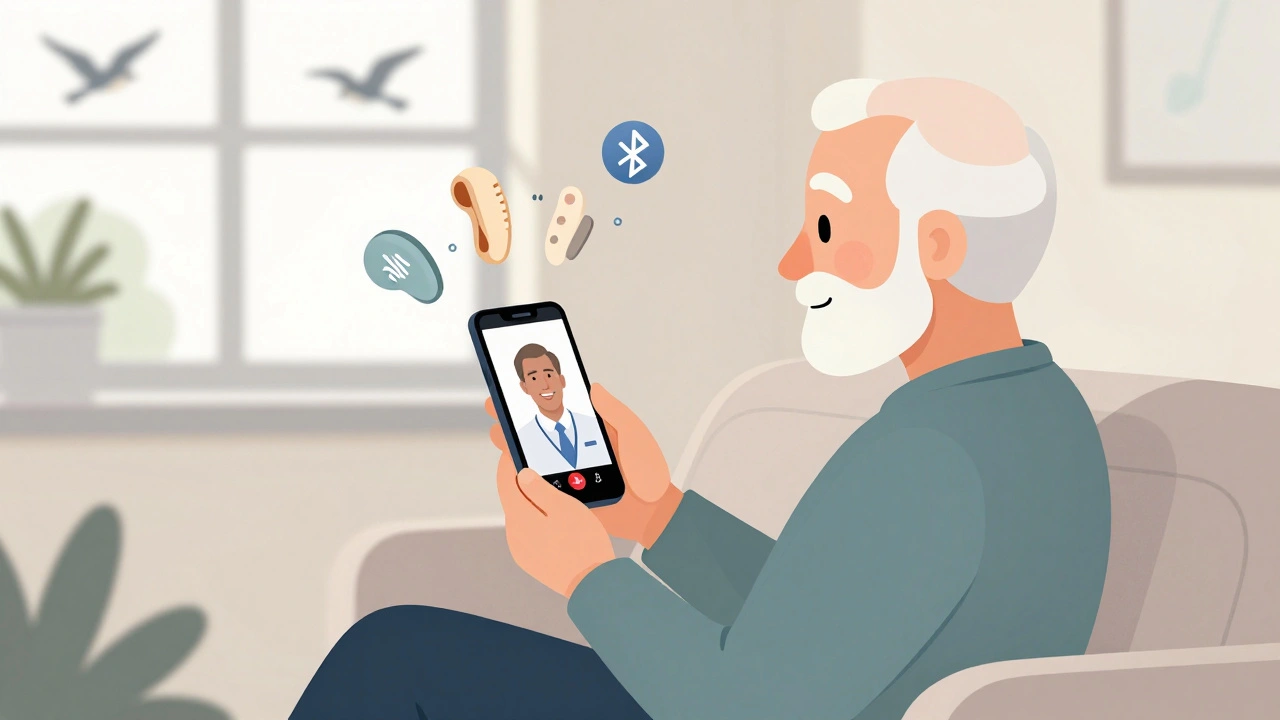
Imagine fixing your hearing aid without leaving your couch. No driving to a clinic, no waiting rooms, no scheduling conflicts. Just a quick video call, and your audiologist adjusts your device while you’re sitting in your favorite chair, listening to the birds outside. This isn’t science fiction-it’s teleaudiology, and it’s already helping hundreds of thousands of people manage their hearing health from home.
What Exactly Is Teleaudiology?
Teleaudiology is the use of video calls, mobile apps, and digital tools to deliver hearing care remotely. It lets audiologists test hearing, program hearing aids, answer questions, and troubleshoot problems without the patient ever stepping into a clinic. This isn’t just about convenience-it’s about access. For people living in rural areas, those with mobility issues, or anyone who finds travel difficult, teleaudiology removes barriers that used to make hearing care feel out of reach.The technology has been around for decades, but it exploded during the pandemic. In 2020, only about 12% of U.S. audiology practices offered remote services. By 2023, that number jumped to 63%. Major hearing aid brands like Phonak, ReSound, Oticon, and Starkey built their own apps so patients can connect directly with their providers. These apps let you do everything from running a basic hearing test to getting real-time adjustments to your hearing aid settings.
How Does It Work?
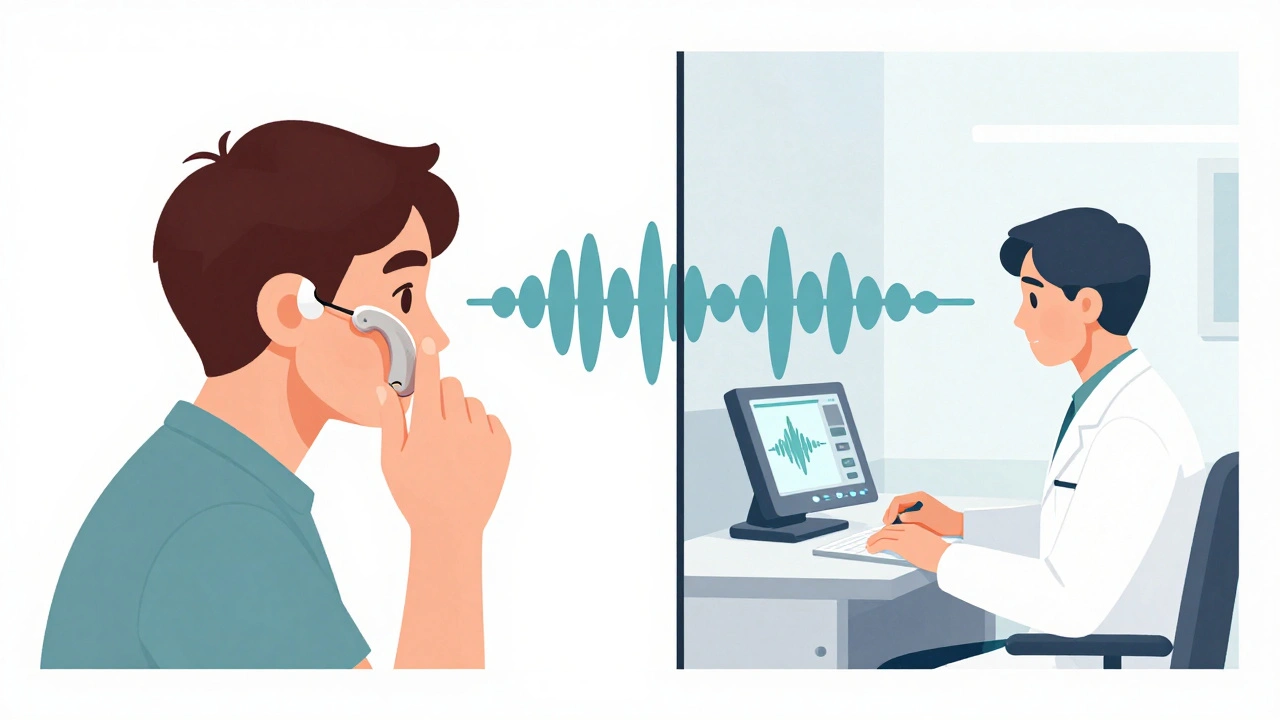
There are two main ways teleaudiology works: synchronous and asynchronous.Synchronous means live interaction. You hop on a video call with your audiologist using Zoom, Microsoft Teams, or a secure platform built into your hearing aid app. The audiologist can guide you through tests, listen to your feedback about sound quality, and change your hearing aid settings on the spot. Some systems even let the audiologist control remote microphones or environmental settings during the call-like simulating a noisy restaurant so they can fine-tune your device for that exact situation.
Asynchronous is when you do the test yourself and send results later. You might use a smartphone app to play tones at different volumes and press a button when you hear them. The app records your responses and sends the data to your audiologist, who reviews it and sends back recommendations via secure message. This method is great for routine check-ins or when you’re not sure if you need a full session.
To get started, you need a few things: a smartphone or computer with a stable internet connection (at least 5 Mbps), Bluetooth-enabled hearing aids from a major brand, and a little patience. Most users over 65 can handle it after one 30-minute tutorial. The apps are designed to be simple-think of them like streaming services you already use.
How Accurate Are Remote Hearing Tests?
One big question people have: Can a test done at home be as accurate as one done in a soundproof booth?The answer is: Most of the time, yes. Studies show that when done in a quiet room with proper instructions, remote pure-tone hearing tests match in-clinic results within 92-95% accuracy. That’s incredibly close. But there’s a catch. If your home is noisy-kids playing, a fan running, traffic outside-the accuracy drops to 78-85%. That’s why audiologists always ask you to find the quietest room possible, turn off the TV, and use wired headphones if Bluetooth is unreliable.
What teleaudiology can’t do is look inside your ear. No remote tool can check for earwax blockages, infections, or structural issues. That’s why audiologists still recommend at least one in-person visit per year, especially if you’re experiencing sudden changes, pain, or dizziness. But for routine adjustments, feedback issues, or battery problems? Remote care is just as effective.
Real Benefits People Are Seeing
The biggest win? Time and money.A study from the International Journal of Audiology found that rural patients saved an average of 2.3 hours of travel time per appointment-and $87 in gas, parking, and lost wages. For someone with arthritis or limited mobility, that’s not just savings-it’s dignity. One user in Montana, 72, avoided four 4-hour round trips to her audiologist by solving a persistent whistling issue in three 15-minute video calls. She said it changed her life.
Patients also report higher satisfaction with remote adjustments. Why? Because the audiologist can hear how your hearing aid works in your real world. In a clinic, you might say, “It’s too loud in restaurants,” but the clinic is silent. With teleaudiology, you can turn on your TV, ask someone to talk across the room, or even walk into your kitchen while the audiologist listens and tweaks settings in real time. Hearzap’s 2023 data showed this leads to 31% better outcomes in noisy environments.
Cost-wise, a typical teleaudiology visit runs $120-$150, compared to $140-$180 for an in-person one. Some manufacturers charge a $29.99 monthly subscription for premium remote support, but most basic adjustments are included with your hearing aid purchase.
Where It Falls Short
Teleaudiology isn’t magic. It has limits.First, you need reliable tech. About 29% of negative reviews mention connectivity problems-Wi-Fi drops, app crashes, Bluetooth pairing failures. Solution? Switch to cellular data, use wired headphones, or restart your router before the call.
Second, not everyone is tech-savvy. While 82% of users over 65 succeed after minimal help, a small group still struggles. If you’re not comfortable with smartphones, ask a family member to help set up the app or request a phone-guided session.
Third, regulatory rules vary. In 28 U.S. states, audiologists can’t legally treat patients across state lines. If you moved from Texas to Florida, you might need to find a new provider unless your current one is licensed in both. Medicare only covers tele-audiology in 18 states right now, so check your plan.
And finally, if you have sudden hearing loss, ear pain, or ringing that won’t go away, don’t wait for a video call. See a provider in person. Remote care can’t replace physical exams.
What’s Next for Teleaudiology?
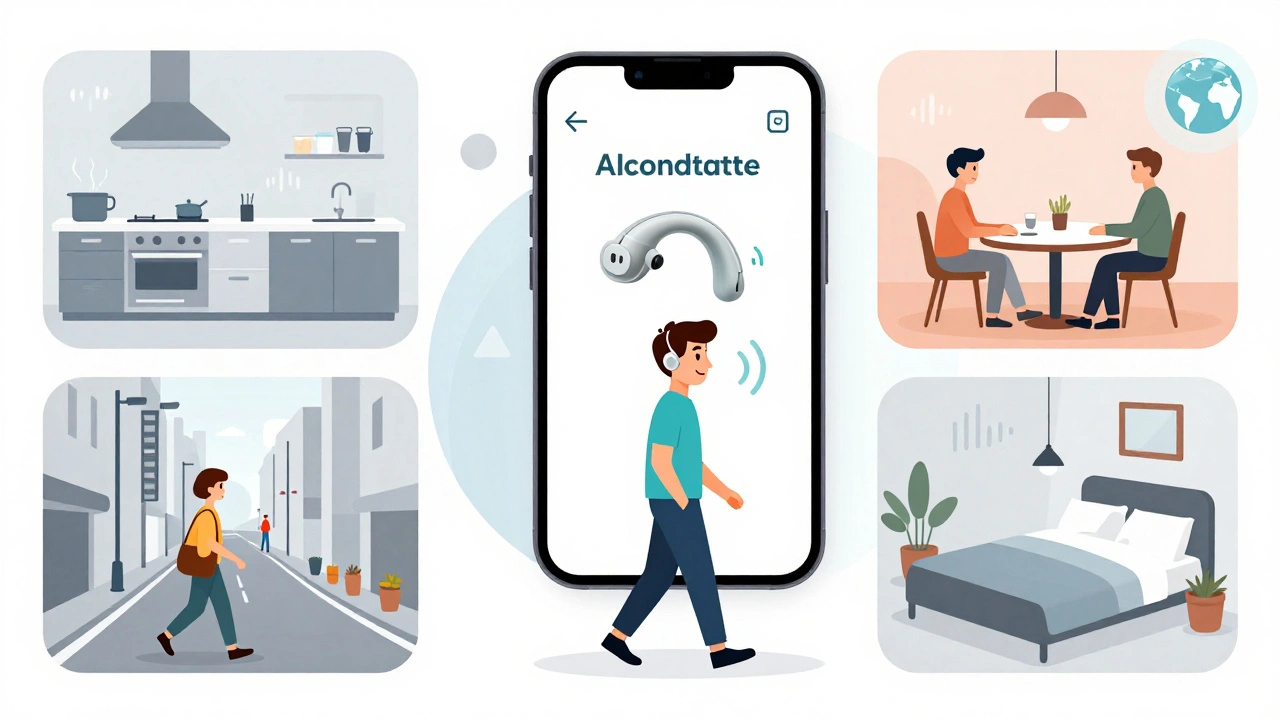
The future is getting smarter. In late 2023, Widex launched an AI feature that automatically detects your environment-like a busy street or a quiet room-and adjusts your hearing aid without you lifting a finger. Signia added tele-audiology support to over-the-counter (OTC) hearing aids in early 2024, opening the door for millions more people to get help without a prescription.The FDA updated its guidelines in April 2024 to expand tele-audiology use for OTC devices, which could bring remote care to 40 million Americans who previously couldn’t access professional support.
By 2027, experts predict that 55-60% of all hearing aid follow-ups will happen remotely. AI will handle 30-40% of routine tweaks-like volume changes or noise reduction-leaving audiologists free to focus on complex cases.
The World Health Organization calls teleaudiology essential to solving the global shortage of 200,000 hearing professionals by 2030. In India, government-backed tele-audiology programs have already reached 12 million rural residents. In the U.S., the Veterans Affairs system cut patient no-show rates from 22% to 9% by switching routine visits to remote.
How to Get Started
If you have Bluetooth-enabled hearing aids, here’s how to begin:- Download your hearing aid brand’s app: Phonak’s myPhonak, ReSound Smart, Oticon More, or Starkey Livio.
- Create a secure patient account using the email tied to your hearing aid purchase.
- Check your internet speed-aim for at least 5 Mbps upload and download.
- Find a quiet room. Turn off fans, TVs, and dishwashers.
- Call your audiologist’s office and ask if they offer tele-audiology. Most do now.
- For your first session, schedule a 30-minute tutorial. They’ll walk you through testing and adjustments.
Most people get comfortable after one session. If you hit a snag, most major brands offer 24/7 tech support with average response times under 10 minutes. Independent clinics usually respond within a few hours during business days.
Final Thoughts
Teleaudiology isn’t replacing in-person care-it’s enhancing it. Think of it as a tool in your hearing health toolkit. Use it for quick fixes, routine check-ins, and real-world tuning. Keep in-person visits for initial evaluations, ear exams, and anything that feels off.The people who benefit most? Those who live far from clinics, have trouble driving, or just want to avoid waiting rooms. But the real winner is the system itself. By making care easier, faster, and cheaper, teleaudiology is helping more people keep their hearing-and their independence-for longer.
Can I use teleaudiology if I have over-the-counter (OTC) hearing aids?
Yes, but only if your OTC device supports Bluetooth and connects to a manufacturer’s app. As of early 2024, Signia became the first major brand to offer tele-audiology support for OTC models. Other brands are expected to follow. If your OTC hearing aids came with an app, check its features or contact the company directly. Not all OTC devices have remote adjustment capabilities-only those designed for professional integration do.
Do I need a prescription to use teleaudiology?
No, you don’t need a prescription to use teleaudiology services. However, if you’re using prescription hearing aids (which most people do), you’ll need to be a patient of an audiology practice that offers remote care. Tele-audiology is a service provided by licensed professionals, not a self-service app. Even if you have OTC aids, you’ll still need to connect with a provider to get adjustments unless your device has fully automated features.
Is teleaudiology covered by Medicare or insurance?
Medicare covers tele-audiology services in only 18 U.S. states as of 2024. Private insurance coverage varies widely. Some plans cover it under telehealth benefits, while others don’t. Always check with your provider before scheduling. Even if it’s not covered, teleaudiology is often cheaper than in-person visits-typically 15-20% less. Many manufacturers include remote adjustments as part of your hearing aid warranty or service plan.
Can teleaudiology diagnose hearing loss for the first time?
It can help identify possible hearing loss, but it’s not a full diagnostic replacement. Remote tests can detect patterns consistent with hearing loss, especially if you’ve had previous in-clinic evaluations. However, a first-time diagnosis should include an in-person exam. Audiologists need to check for medical issues like earwax, infections, or structural problems that remote tools can’t see. Most clinics use teleaudiology for follow-ups after an initial diagnosis.
What if my internet goes out during a session?
If your connection drops, the session will pause. Most apps save your progress, so you can resume once you’re back online. If the issue is persistent, switch from Wi-Fi to your phone’s cellular data. Audiologists often recommend having a backup plan-like a phone call or rescheduling-before your appointment. If you’re in a low-signal area, consider doing the session at a public library or community center with better internet.
Are teleaudiology apps secure and private?
Yes, reputable apps use HIPAA-compliant encryption and secure patient portals. Your hearing test results, audio files, and communication are stored securely and only accessible by your provider. Avoid using third-party apps or unverified platforms. Stick to apps from major manufacturers like Phonak, ReSound, or Oticon. Never share login details, and always log out after use, especially on shared devices.
How often should I schedule remote hearing aid adjustments?
Most people benefit from a remote check-in every 3-6 months. If you notice changes in sound quality, increased feedback, or difficulty in noisy places, don’t wait-schedule a session. Some apps even send alerts when your hearing aid battery is low or if settings drift from your profile. Your audiologist may recommend more frequent adjustments if you’re new to hearing aids or have fluctuating hearing loss.
Can children use teleaudiology?
Yes, but with limitations. Teleaudiology works best for older children and teens who can follow instructions and sit still during tests. For younger kids, especially under age 6, in-person testing is still preferred because it requires behavioral responses and visual cues that are hard to replicate remotely. Some clinics offer parent-guided remote screenings as a preliminary step, but formal diagnosis and fitting still require a clinic visit.
kevin moranga
December 13, 2025 AT 16:51Man, I wish this was around when my dad was struggling with his hearing aids. He used to dread those 3-hour drives to the clinic, especially in winter. Now he does everything from his recliner with his tablet. Last week he adjusted the noise cancellation while watching football - no one even knew he was tweaking it. It’s like having a personal audiologist in your pocket. Seriously, this tech is a game-changer for older folks who just want to hear their grandkids laugh without the hassle.
And the best part? No more waiting rooms filled with people coughing. I’ve seen him go from frustrated to cheerful in 15 minutes. That’s not just convenience - that’s quality of life.
My mom even started using the app to run quick checks every few weeks. She says she feels more in control now. Like she’s not just waiting for someone else to fix her hearing - she’s part of the process. That kind of empowerment? Priceless.
Scott Butler
December 14, 2025 AT 01:15So now we’re letting people adjust medical devices from their couch while their dog barks and the TV blares? Brilliant. Next they’ll let you perform open-heart surgery via TikTok. This isn’t innovation - it’s laziness disguised as progress. Real hearing care requires a quiet room, calibrated equipment, and a trained professional’s hands - not some app that thinks ‘press this button when you hear a beep’ is enough.
And don’t get me started on the regulatory mess. One state says yes, another says no. Medicare only covers it in half the states? This isn’t healthcare - it’s a patchwork of corporate convenience. You want real progress? Fix the supply chain for hearing aids, not turn everything into a Zoom call with a 70-year-old fumbling with Bluetooth.
Donna Hammond
December 14, 2025 AT 06:30I’ve been an audiologist for 22 years, and I’ve seen teleaudiology transform lives - especially for rural patients and those with chronic mobility issues. The accuracy stats are solid: 92–95% match for pure-tone tests in quiet environments. But what matters more is the human impact.
One of my patients, a veteran with severe arthritis, hadn’t left his house in six months. After we set up remote adjustments, he started going to church again because he could finally hear the hymns. Another, a single mom in rural Kansas, saved over $1,200 in travel costs last year - money she put toward her daughter’s braces.
Yes, it’s not perfect. Wi-Fi drops. Some seniors need help setting up. And yes - you still need an in-person visit annually for ear exams. But dismissing this as ‘second-rate care’ ignores the millions who had zero access before. This isn’t replacing in-person care - it’s expanding it. And that’s what real healthcare innovation looks like.
Lauren Scrima
December 14, 2025 AT 23:23Emily Haworth
December 16, 2025 AT 19:17Did you know the government is using this to track your hearing patterns and build a behavioral profile? 😳
I heard from a friend who works at Starkey - they’re feeding all your audio data into an AI that predicts your political views based on how you react to loud noises. Like, if you turn up the volume during news broadcasts, you’re flagged as ‘highly anxious.’
And don’t even get me started on the Bluetooth spyware. Every time you connect your hearing aid, it’s pinging your location, your Wi-Fi network, and even your smart fridge. They say it’s for ‘personalization’ - but what if they’re selling your ear data to advertisers? 🤔
My cousin’s neighbor’s dog got hacked through a hearing aid last year. It started barking at 3 a.m. every night. Coincidence? I think not. 🚨
Also, I read somewhere that 5G causes tinnitus. Are these apps using 5G? Are we being slowly deafened by tech? 😭
Tom Zerkoff
December 17, 2025 AT 00:44The integration of teleaudiology into mainstream audiological practice represents a paradigmatic shift in the delivery of rehabilitative auditory services. The empirical evidence supporting its efficacy, particularly in controlled acoustic environments, is both statistically significant and clinically meaningful.
Moreover, the reduction in patient attrition rates - particularly within federally funded programs such as the Veterans Health Administration - demonstrates not merely an improvement in accessibility, but a profound enhancement in patient adherence and longitudinal care continuity.
It is imperative, however, that regulatory frameworks evolve in tandem with technological advancement to ensure equitable access across state lines and socioeconomic strata. The current patchwork of state licensure laws constitutes a systemic barrier to the full realization of teleaudiology’s potential.
Furthermore, the ethical imperative to preserve humanistic care within algorithmic frameworks must not be overlooked. While automation may streamline routine adjustments, the therapeutic alliance between clinician and patient remains irreplaceable.
Yatendra S
December 17, 2025 AT 17:25When I first heard about teleaudiology, I thought - this is the sound of modernity whispering to the soul. We used to sit in silence, waiting for the world to become audible again. Now, we reach out - not with our hands, but with Wi-Fi, with apps, with the quiet courage of pressing a button.
But tell me - is the silence between the tones still sacred? Or has it become just another data point in a cloud server?
In India, where I come from, many elders still believe the ear is the doorway to the spirit. When a hearing aid adjusts remotely, who is really listening? The audiologist? Or the algorithm that learned your voice from a thousand calls?
I don’t know if this is healing… or just another way we’ve learned to outsource our humanity.
But still - I’m glad my uncle can hear his granddaughter’s laugh again. Even if it’s through a phone.
🙏
Himmat Singh
December 18, 2025 AT 10:29The claim that teleaudiology achieves 92–95% accuracy is misleading. The studies referenced were conducted under ideal laboratory conditions with highly motivated, tech-literate subjects - a non-representative sample. Real-world environments are chaotic, and hearing thresholds are context-dependent. The notion that a smartphone app can replicate the nuanced acoustic calibration of a clinical audiometer is scientifically unsound.
Furthermore, the proliferation of OTC devices with remote capabilities undermines the professional integrity of audiology as a healthcare discipline. The FDA’s recent regulatory relaxation is a capitulation to corporate interests, not patient welfare.
Let us not confuse convenience with competence. If we continue down this path, we risk creating a two-tiered system: one for those who can afford in-person diagnostics, and another for those who are ‘optimized’ by algorithms. This is not progress - it is the commodification of sensory health.
Webster Bull
December 19, 2025 AT 03:43Casey Mellish
December 20, 2025 AT 19:41Down under, we’ve been doing this for years - especially in the Outback. One audiologist serving 200km of desert? Teleaudiology isn’t optional - it’s survival.
My cousin, a schoolteacher in Alice Springs, got her hearing aids adjusted via video while she was grading papers. She said it felt like magic - but the magic was just good tech and a decent internet connection.
And yeah, sometimes the app glitches. But you know what? So does my coffee machine. Doesn’t mean I throw it out.
Also, shoutout to the Aussies who’ve been using Bluetooth hearing aids since 2018. We were early adopters - and we’re still here, listening to the ocean, the birds, and our grandkids’ terrible karaoke.
Teleaudiology isn’t the future. It’s just hearing care, finally catching up to the 21st century. 🇦🇺