
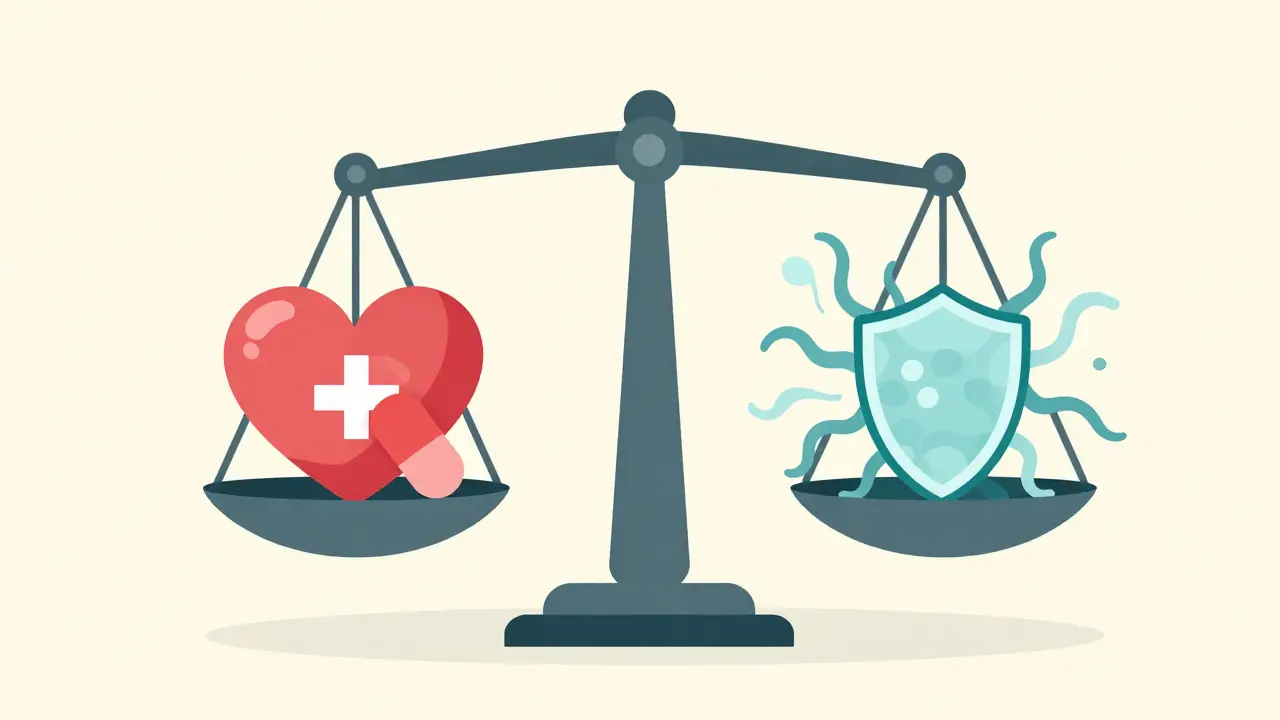
Statin Safety Decision Guide
Statin Safety Assessment Tool
Based on the latest scientific evidence about statins and ALS, this tool helps you understand the risks and benefits of continuing your statin therapy. Always consult your healthcare provider before making changes to your medication.
For years, people taking statins to lower cholesterol have worried: could these common pills be linked to ALS? It’s a scary thought. ALS, or Lou Gehrig’s disease, is a devastating condition that slowly steals movement, speech, and eventually breathing. And statins? They’re among the most prescribed drugs in the world - taken by millions to protect the heart. So when rumors started swirling that statins might trigger ALS, it wasn’t just a medical question. It became a personal fear for many.
Where Did This Fear Come From?
The alarm started in 2007. The U.S. Food and Drug Administration (FDA) noticed more reports than usual linking statin use to ALS. Spontaneous reports from doctors and patients piled up. It wasn’t proof - just signals. So the FDA dug into 41 large clinical trials involving thousands of people. The results? No increase in ALS cases among those taking statins compared to those on placebo. In October 2008, they made it clear: don’t stop your statins because of ALS fears.
But the story didn’t end there. Over the next 15 years, new studies kept popping up - some saying one thing, others saying the opposite. That’s where confusion set in. One study in 2024 used genetic data to claim atorvastatin increased ALS risk by nearly 17 times. Another, a massive Norwegian study of over 500 ALS patients, found no link at all. Why the clash? Because the methods were wildly different.
The Science Isn’t Simple - It’s Layered
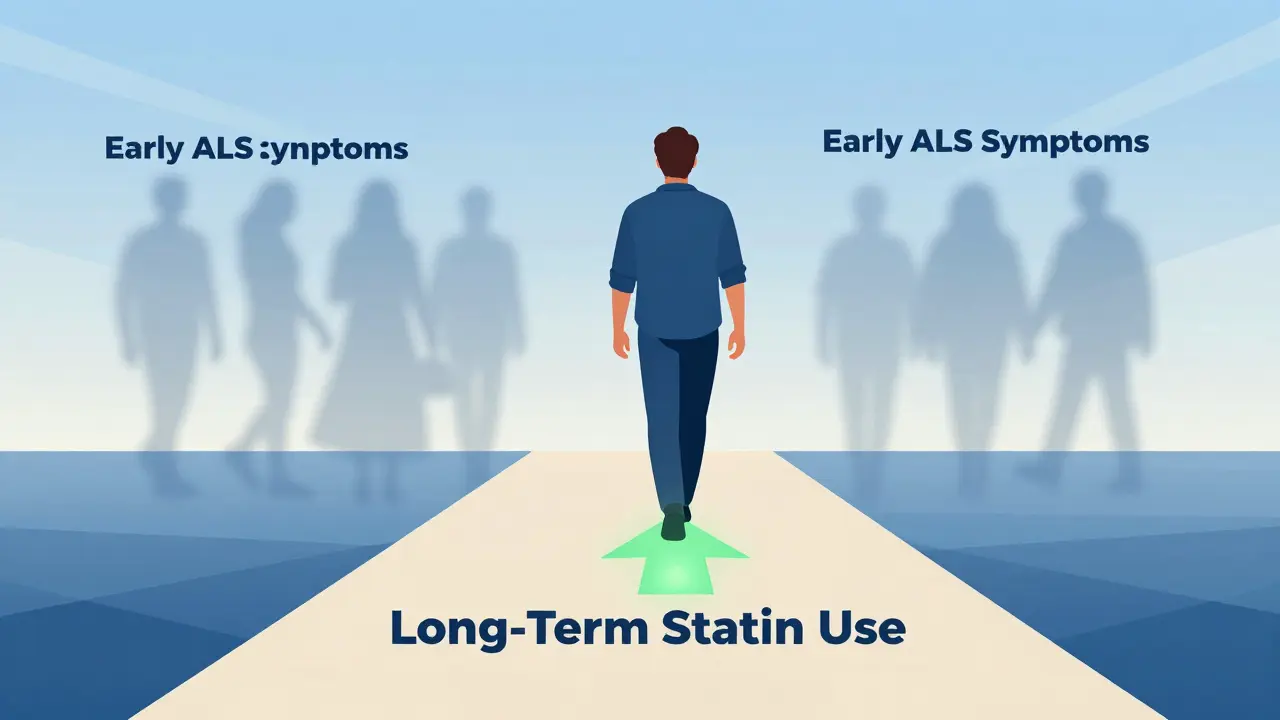
Not all studies are created equal. The FDA’s 2008 analysis looked at short-term trials, usually under five years. But ALS takes years to develop. If someone starts having muscle weakness months before diagnosis, they might see a doctor, get a cholesterol check, and start statins - not because the drug caused ALS, but because early symptoms mimicked statin side effects. That’s called reverse causality. A 2024 study in Neurology found exactly that: short-term statin use was linked to higher ALS risk - but only because people were already in the early stages of the disease.
Meanwhile, long-term use tells a different story. The same 2024 study showed that people who took statins for more than three years had a lower risk of developing ALS - especially men. Another study in mice showed lovastatin and atorvastatin reduced motor neuron loss by up to 30%. That’s not proof in humans, but it suggests statins might actually be doing something protective, possibly by calming inflammation in the nervous system.
What Do the Experts Say Today?
Major medical groups are unified: there’s no solid evidence statins cause ALS.
The Mayo Clinic updated its website in January 2024 with a clear statement: “There’s no good evidence that statins cause or trigger ALS.” The European Medicines Agency reviewed all available data in 2023 and came to the same conclusion. The American Heart Association still recommends statins as first-line treatment for high-risk patients.
Some researchers see nuance. Dr. Marc Weisskopf from Harvard found long-term statin use reduced ALS risk. Dr. Shafeeq Ladha, lead author of the Norwegian study, concluded that stopping statins after an ALS diagnosis doesn’t help survival - and might hurt. “Statin use should not routinely be discontinued,” he wrote. That’s backed by real-world data: 21% of ALS patients stopped statins in the year before diagnosis, often because they mistook muscle weakness from ALS for statin side effects. Those who stopped ended up with worse outcomes - not because statins were harmful, but because they lost heart protection.
Why Do People Stop Statins After an ALS Diagnosis?
It’s understandable. When you’re diagnosed with a disease that robs you of movement, you look for causes. If you’ve been taking a pill for years, it’s natural to wonder: did this make it worse? Especially when statins can cause muscle pain - a symptom that overlaps with early ALS.
Neurologists report that about 35% of ALS patients ask about stopping statins. Twelve percent actually do. That’s dangerous. Statins prevent heart attacks and strokes. For someone with ALS, cardiovascular health is critical. A heart problem can be just as life-threatening as ALS progression.
Dr. Merit Cudkowicz from Massachusetts General Hospital puts it plainly: “Many patients stop statins unnecessarily after an ALS diagnosis, which may put them at risk for preventable cardiovascular events.”
What Should You Do If You’re Taking Statins?
If you’re on statins and don’t have ALS - keep taking them. The heart benefits far outweigh any unproven risk.
If you’ve been diagnosed with ALS and are on statins - don’t stop unless your doctor says so. Unless you’re having severe muscle pain that can’t be explained by ALS itself, continuing statins is the safer choice. Your heart still needs protection.
Doctors are now trained to explain this clearly. The European ALS Consortium recommends having an honest conversation: “Yes, we see confusion between statin side effects and ALS symptoms. But stopping your statin won’t slow ALS. It might increase your risk of a heart attack.”
What’s Next in Research?
Science isn’t done. The CDC’s National ALS Registry is funding new studies, including one tracking 10,000 statin users over five years. Researchers are also exploring whether sex differences matter - the protective effect of long-term statin use appears stronger in men. Genetic studies are being refined to avoid false signals from flawed methods.
Even if future research finds a tiny increased risk, experts agree: statins will remain first-line treatment. Why? Because for every 100 people who might have a theoretical risk of ALS, thousands more are protected from heart disease. The math doesn’t change.
The Bottom Line
Statins do not cause ALS. That’s the clear message from the FDA, Mayo Clinic, European regulators, and the largest population studies. What you’re seeing in some headlines are statistical flukes or misinterpreted data.
Short-term statin use might appear linked to ALS - but only because people start taking them when ALS symptoms are already beginning. Long-term use might even help. Animal studies point to anti-inflammatory benefits. Human data shows no harm.
Don’t let fear make you stop a life-saving medication. If you’re worried, talk to your doctor. But don’t stop statins on your own. Your heart won’t thank you.