
Every year, hundreds of thousands of people in the U.S. are harmed because of mistakes made when doctors write prescriptions. These aren’t rare accidents-they’re preventable, and you don’t have to wait for someone else to catch them. As a patient, you’re the last line of defense. If you’ve ever looked at a prescription label and thought, "Does this seem right?", you’re not overreacting. You’re doing exactly what you should be doing.
What Exactly Are Prescription Writing Errors?
Prescription writing errors happen before the pill even leaves the doctor’s office. They occur when the order for your medication is written, typed, or entered incorrectly. This isn’t about pharmacists misreading labels or pharmacies giving you the wrong bottle-it’s about mistakes in the original instruction. The most common ones include:- Wrong dose (like writing 50 mg instead of 5 mg)
- Wrong drug (confusing similar-sounding names like Celebrex and Celexa)
- Unclear handwriting (still a problem even in 2026)
- Missing or confusing instructions (using "QD" instead of "once daily")
- Not stating why you’re taking the drug (so you don’t know if it’s right for you)
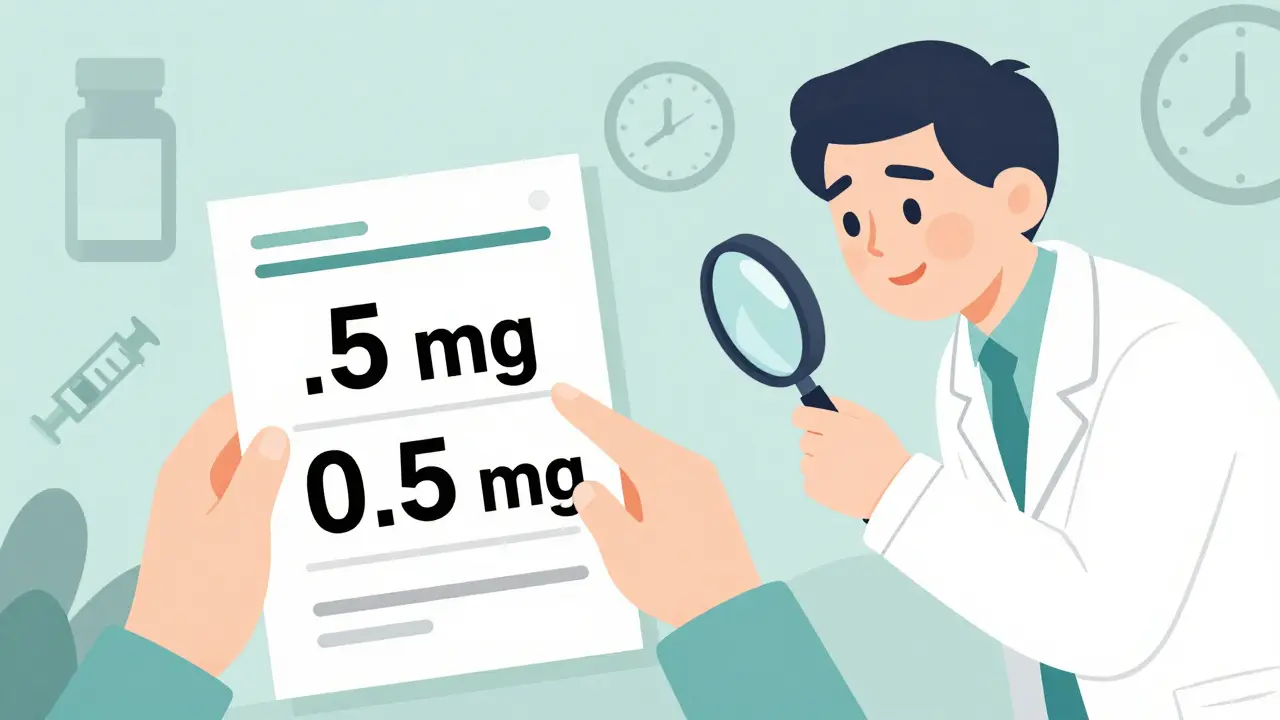
A 2023 analysis of over 12,500 malpractice claims found that nearly 40% of all prescription errors were due to dosage mistakes. The FDA says between 2010 and 2020, just two types of decimal errors-missing leading zeros (like writing ".5 mg" instead of "0.5 mg") and trailing zeros ("5.0 mg" instead of "5 mg")-caused 128 deaths. These aren’t theoretical risks. They’re real, documented, and happening right now.
Why Do These Errors Happen?
You might assume doctors are careless, but the truth is more complicated. Most are overworked. A 2021 study in JAMA found that in busy clinics, physicians spend just 17 seconds per prescription. That’s less time than it takes to scroll through a social media feed. When you’re juggling 30 patients, a full EHR system, and constant interruptions, small mistakes slip through.Electronic prescribing systems were supposed to fix this. And they did-handwriting errors dropped by 55%. But they created new problems. Dropdown menus with similar drug names next to each other? You click the wrong one. Safety alerts that pop up every 30 seconds? Doctors learn to ignore them. A 2023 report found that 31% of providers routinely bypass safety warnings. That’s not laziness-it’s burnout.
Then there’s the language. Abbreviations like "U" for units, "MS" for morphine sulfate, or "QD" for daily are still used. But "U" can look like a "0". "MS" can be mistaken for magnesium sulfate-a totally different drug. And "QD"? It’s been banned in many hospitals because it’s too easily confused with "QID" (four times daily). Yet many doctors still use them.
What to Check on Every Prescription-Before You Leave the Office
You don’t need to be a doctor to catch these mistakes. Here’s what to look for on every prescription, whether it’s handwritten or digital:- Drug name-Is it written out fully? "Lamotrigine" not "Lamictal" (one is the drug, the other is a brand name). Avoid abbreviations.
- Dosage-Does it have a leading zero? "0.5 mg" not ".5 mg". No trailing zeros? "5 mg" not "5.0 mg".
- Frequency-Is it "twice daily" or "every 12 hours"? Avoid "BID", "QD", "TID".
- Quantity-If you’re taking it for 30 days, does the script say 30 pills? Or 90? That’s a red flag.
- Purpose-Why are you taking this? "For high blood pressure" or "for anxiety"? If it’s blank, ask.
- Prescriber info-Does it have the doctor’s full name, phone number, and license? If not, the script may be invalid.
- Expiration date-Most prescriptions expire in 6 months. If it’s not listed, ask.
Use this checklist every time. A 2022 University of Michigan study showed patients who used it caught 63% of errors before reaching the pharmacy. Those who didn’t? Only 22% caught anything.
High-Risk Medications You Must Double-Check
Some drugs are more dangerous if dosed wrong. These are called "high-alert medications." Even small mistakes can kill. If you’re prescribed any of these, treat them like a bomb that needs a two-person disarm code:- Insulin-A wrong dose can send you into a coma.
- Warfarin (a blood thinner)-Too much = internal bleeding. Too little = stroke.
- Opioids (like oxycodone)-Easy to overdose.
- Heparin-Used in hospitals, but sometimes prescribed for home use.
- Chemotherapy drugs-Dosing is extremely precise.
According to the Institute for Safe Medication Practices, these drugs cause 72% of fatal prescription errors-even though they make up only 8% of all prescriptions. If you’re on one of these, ask your doctor: "Is this the right dose for my weight, age, and kidney function?" Then ask your pharmacist to confirm.
How to Use the "Teach-Back" Method
Don’t just nod and smile when the doctor explains your meds. Say this:"Just to make sure I got it right, you’re giving me [drug name] at [dose], [frequency], for [reason]. I take it [time of day] and I’ll call if [symptom]. Is that correct?"
This is called the "teach-back" method. Johns Hopkins Medicine found it cuts misunderstanding by 81%. It forces the provider to clarify-and gives you a chance to catch errors before you leave. If they get annoyed? That’s a red flag. Good doctors welcome questions.
Check the Pharmacy Label-Even If It’s Electronic
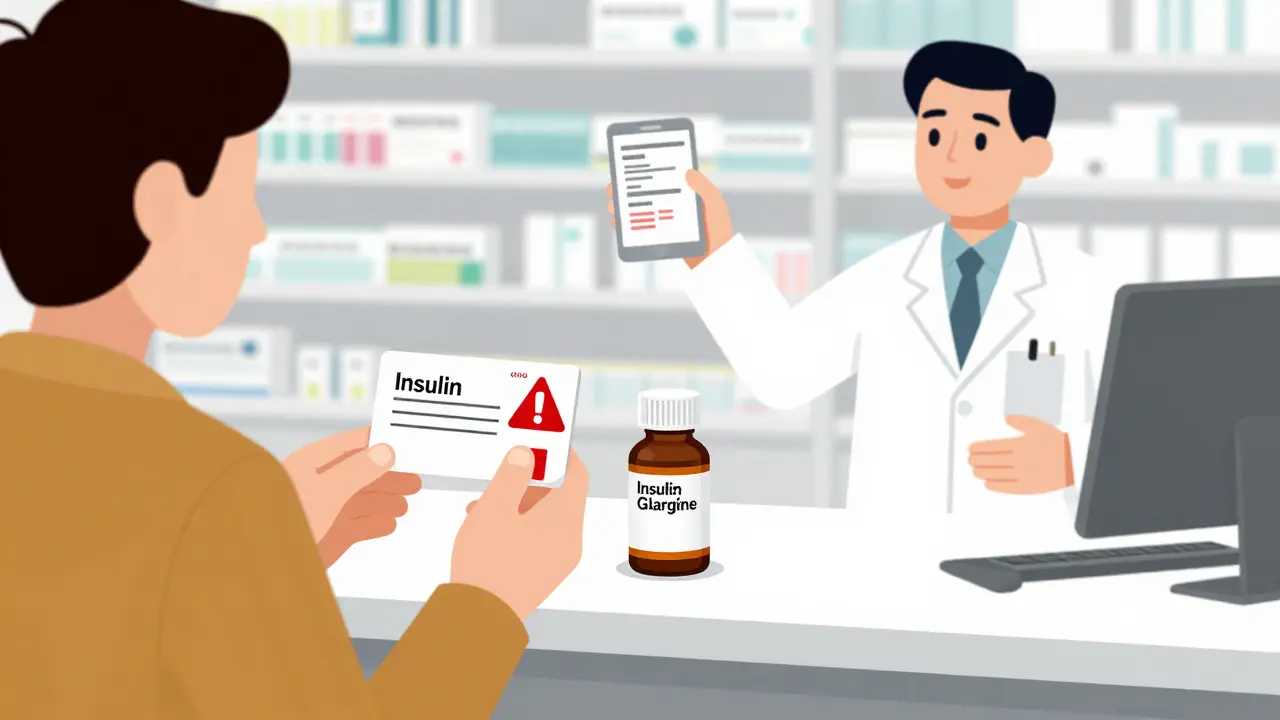
Pharmacies are busy too. They get electronic prescriptions, but they don’t always know why you’re taking the drug. That’s why you need to compare:- The name on the bottle vs. the prescription
- The dose on the bottle vs. what your doctor wrote
- The instructions vs. what you were told
One patient in Sydney was given insulin for hypertension because the e-prescription said "insulin" without specifying type. The pharmacist didn’t catch it. The patient did-because they asked, "Why am I getting insulin? I don’t have diabetes." That question saved their life.
Use Technology to Your Advantage
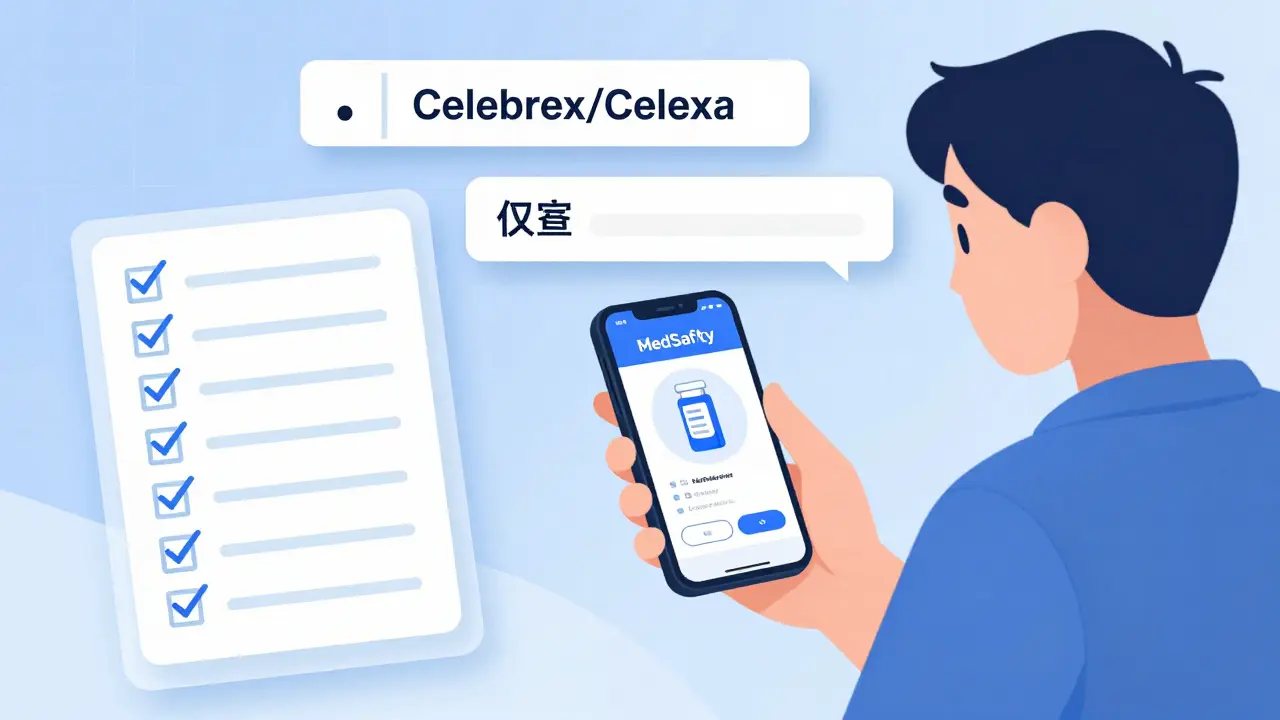
There are apps now that scan your prescription and flag errors. One called MedSafety has been used by over 2 million people. In a 2023 pilot study, it caught 68% of errors patients missed on their own. It checks for:- Decimal mistakes
- Look-alike drug names
- Missing indications
- Drug interactions
Even better: the FDA’s new 2024 guidance requires all new drugs to come with pictogram labels-simple icons showing how to take them. No more confusing text. Just a picture of a pill, a clock, and a glass of water.
And starting in 2025, all electronic health records in the U.S. will give patients real-time access to their prescription details through secure apps. You’ll get a notification the moment your doctor sends it. You’ll be able to approve or question it before it goes to the pharmacy.
What If You Catch an Error?
Don’t panic. Don’t argue. Just say:"I think there might be a mistake. Can we double-check this?"
Most doctors will thank you. Pharmacists will thank you. The system needs you to be alert. If they brush you off? Ask to speak to a supervisor. Or call the doctor’s office directly. Use the phone number on the prescription. Don’t rely on a receptionist to pass along your concern.
Why This Matters More Than You Think
Medication errors cost the U.S. healthcare system $42 billion a year. That’s not just money-it’s lives. One in 200 people who take a prescription will be harmed by a writing error. But here’s the good news: when patients actively check their prescriptions, risk drops by up to 50%. That’s not magic. That’s math.You’re not being difficult. You’re not "difficult" for asking. You’re being smart. And in a system where time is tight, errors are common, and high-risk drugs are everywhere-your attention might be the only thing standing between you and harm.
What are the most common prescription writing errors?
The most common errors include wrong dosage (especially decimal mistakes like .5 mg vs. 5 mg), confusing drug names (like Celebrex and Celexa), unclear handwriting, using dangerous abbreviations (U for units, QD for daily), missing the reason for the prescription, and incorrect frequency instructions. Dosage errors alone account for nearly 40% of all prescription mistakes.
Can electronic prescriptions still have errors?
Yes. While e-prescribing reduced handwriting errors by 55%, it introduced new problems. Dropdown menus can make it easy to pick the wrong drug, safety alerts are often ignored, and dosing options may be too close together (e.g., 5 mg next to 50 mg). A 2023 study found that 34% of new error types came from electronic systems.
How can I check if my prescription is correct?
Use a seven-point checklist: 1) Full drug name (no abbreviations), 2) Correct dosage with leading zeros (0.5 mg, not .5 mg), 3) Clear frequency (twice daily, not BID), 4) Right quantity for the duration, 5) Purpose stated (e.g., "for high blood pressure"), 6) Prescriber’s full contact info, and 7) Expiration date. If any are missing, ask for clarification.
Which medications are most dangerous if dosed wrong?
High-alert medications include insulin, warfarin, opioids (like oxycodone), heparin, and chemotherapy drugs. These make up only 8% of all prescriptions but cause 72% of fatal errors. Always double-check the dose, purpose, and frequency with both your doctor and pharmacist.
What should I do if I spot a mistake on my prescription?
Stay calm and say, "I think there might be a mistake. Can we double-check this?" Ask your doctor or pharmacist to review the prescription together. If they dismiss you, ask to speak to a supervisor or call the prescriber’s office directly using the number on the script. Your vigilance can prevent harm.
Are there apps that can help me catch prescription errors?
Yes. Apps like MedSafety scan your prescription image and flag errors such as decimal mistakes, look-alike drug names, missing indications, and potential interactions. In a 2023 study, these apps helped patients catch 68% of errors they missed on their own. Many are free and work on smartphones.
What’s Next?
By 2027, patient-led error detection could become standard. New systems will require you to confirm your prescription details before the pharmacy fills it. That’s not a burden-it’s protection. The goal isn’t to make you a pharmacist. It’s to make sure you’re not a passive recipient of a system that’s still too fragile to trust blindly.Start today. Check your next prescription. Ask one question. Use one tool. You might not change the system-but you’ll change your own outcome.