
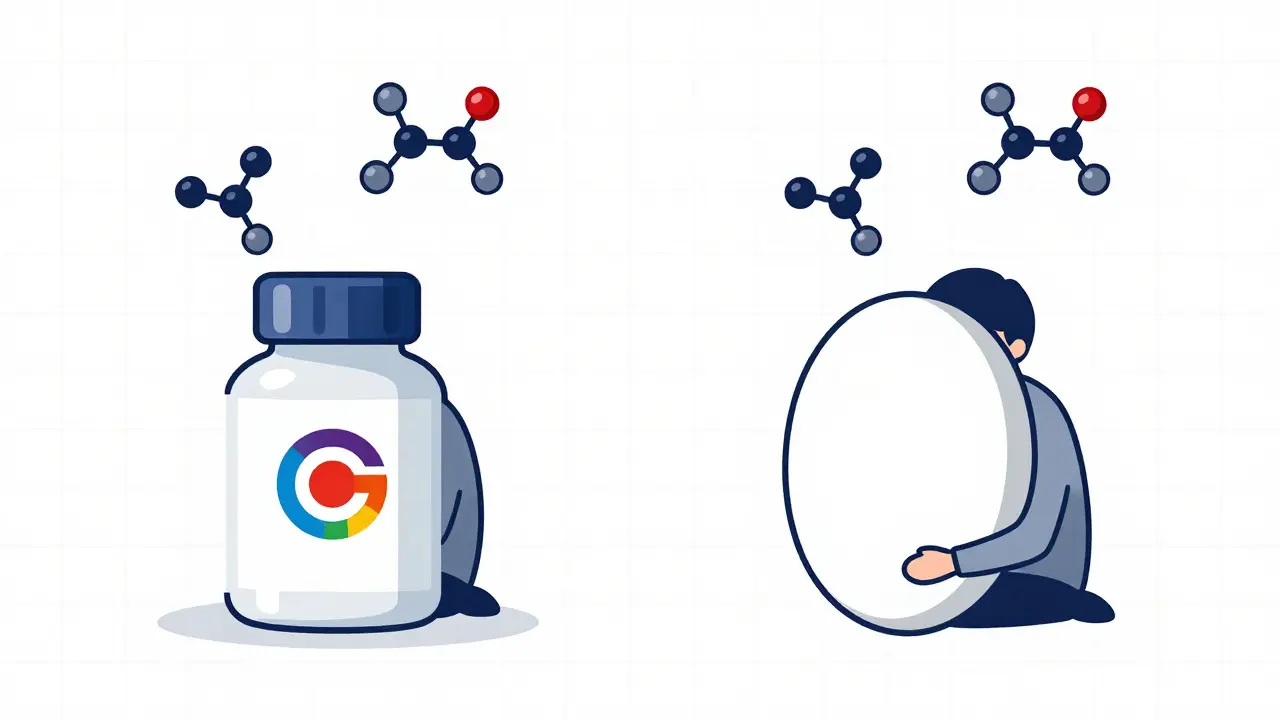
You’ve been taking your blood pressure pill for years. Your doctor switches you to the generic version. You feel fine-until you start noticing a slight headache, or your anxiety creeps back in. You think: "The generic doesn’t work like the brand did." You’re not alone. Millions of people believe generics are weaker, less reliable, or even fake. But here’s the truth: generic drugs are not less effective. They’re the same medicine, made to the same standards, with the same active ingredients. So why does it feel like they’re not working?
The Science Says They’re Identical
The U.S. Food and Drug Administration (FDA) doesn’t approve a generic drug unless it matches the brand-name version in every way that matters: same active ingredient, same strength, same dosage form, same route of administration. That means if you’re taking lisinopril for high blood pressure, the generic version has exactly the same molecule as the brand-name version. No more, no less. To get approval, generic manufacturers must prove bioequivalence. That means when you swallow the pill, the amount of drug that enters your bloodstream has to be within 80% to 125% of the brand-name drug’s levels. That’s not a loophole-it’s a scientifically proven range where differences don’t affect how the drug works. For most medications, that variation is smaller than the natural day-to-day changes in your body’s absorption. A 2022 FDA report confirmed that for over 99% of generic prescriptions, there’s no measurable difference in clinical outcomes compared to the brand. Even for drugs with narrow therapeutic windows-like warfarin or levothyroxine-where tiny changes can matter-the FDA requires stricter testing. The American College of Clinical Pharmacy reviewed hundreds of studies and found no consistent evidence that generic versions of these drugs are less effective. Yet, people still believe otherwise.Why Do People Think Generics Don’t Work?
It’s not about chemistry. It’s about psychology. When you’ve been taking a brand-name pill for years, your brain associates that pill with feeling better. The color, the shape, the logo on the tablet-they become part of your treatment ritual. When you switch to a generic, it looks different. Maybe it’s white instead of blue. Maybe it’s round instead of oval. Your brain doesn’t know it’s the same drug. It just knows: "This isn’t what I’m used to." This is called the nocebo effect-the opposite of placebo. If you expect something to fail, your body responds as if it already has. A 2023 study in JAMA Network Open showed that patients told generics were "just as good" had 34% better adherence. Those told they were "less effective" had 41% worse adherence. The drug didn’t change. Their belief did. And it’s not just patients. Doctors, too, sometimes hesitate. A 2020 survey found 11% of physicians believed generics caused more side effects. That’s not based on data-it’s based on anecdote, marketing, or old habits. One pharmacist in Alabama told me about a patient who refused generics because he believed they were "for poor people." That’s not a medical concern. It’s a cultural one.Who Believes This-and Why?
The perception gap isn’t random. It’s unevenly distributed. Studies show non-Caucasian patients are significantly more likely to distrust generics. In one national survey, 43% of Black and Hispanic patients expressed skepticism about generic effectiveness, compared to 29% of white patients. Rural communities show even higher rates of doubt. In parts of Alabama’s Black Belt region, people say generics are "not real medicine," "need higher doses," or "don’t last as long." These aren’t medical facts-they’re stories passed down, shaped by distrust in the system, lack of access to clear information, or past experiences with underfunded clinics. Even the packaging can fuel suspicion. Some generics are made overseas. A 2016 FDA report noted that foreign manufacturing sites had more inspectional observations than U.S. ones. But here’s the catch: those observations were mostly about paperwork, labeling, or minor facility issues-not product quality. The final drug, once tested and approved, meets the same standards as the brand. Yet, the idea that "foreign-made = lower quality" sticks.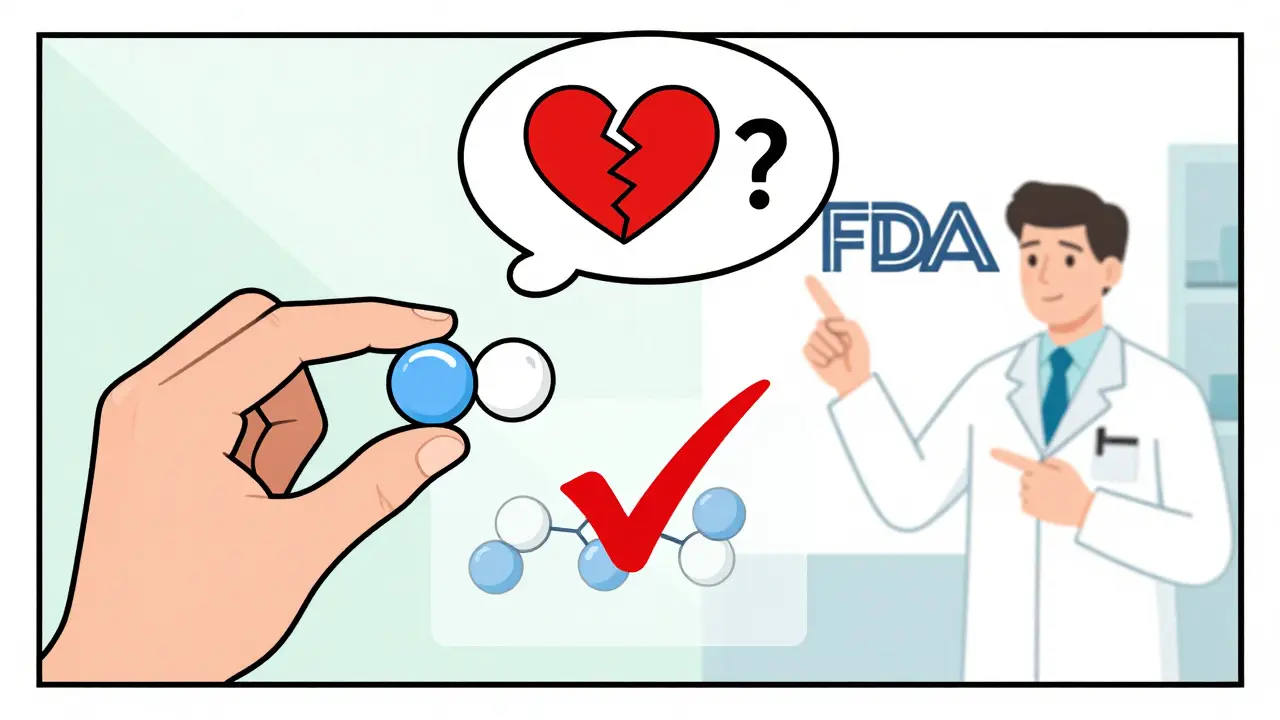
How Much Money Are We Losing?
This isn’t just about feelings. It’s about dollars-and health. Generics cost 80-85% less than brand-name drugs. From 2009 to 2019, they saved the U.S. healthcare system $1.7 trillion. If everyone trusted generics fully, we could save another $5.9 billion a year. But when people refuse generics, they either skip doses, pay more out of pocket, or stop taking their meds altogether. A 2019 study found that 22% of patients who believed generics were inferior stopped their medication early. That’s compared to just 8% of those who didn’t have those beliefs. For someone with diabetes, heart disease, or depression, that’s not a small risk. It’s life-threatening. And it’s not just patients paying. Insurance companies, employers, and taxpayers foot the bill when people end up in the ER because they didn’t take their pills.What’s Being Done-and What’s Not
The FDA has tried. Their "It’s the Same Medicine" campaign has reached 27 million people since 2019. But only 19% of those people remembered the message. Why? Because the website is written at a 58/100 Flesch-Kincaid readability score-roughly a 10th-grade level. Many patients, especially older adults or those with limited health literacy, can’t understand it. Meanwhile, brand-name drug companies spend $1.8 billion a year on marketing that subtly undermines generics. They don’t say "generics are worse." They say things like: "Our patented formula ensures consistent results"-implying generics don’t. They use the same colors, shapes, and logos as the original. They make you think you’re getting something special. The FDA’s 2023 plan to add "Therapeutic Equivalence Ratings" to generic packaging is a step forward. So is their new "Equivalence Explorer" tool, launching in 2024, which lets patients compare drugs side by side. But tools mean nothing if people don’t know they exist.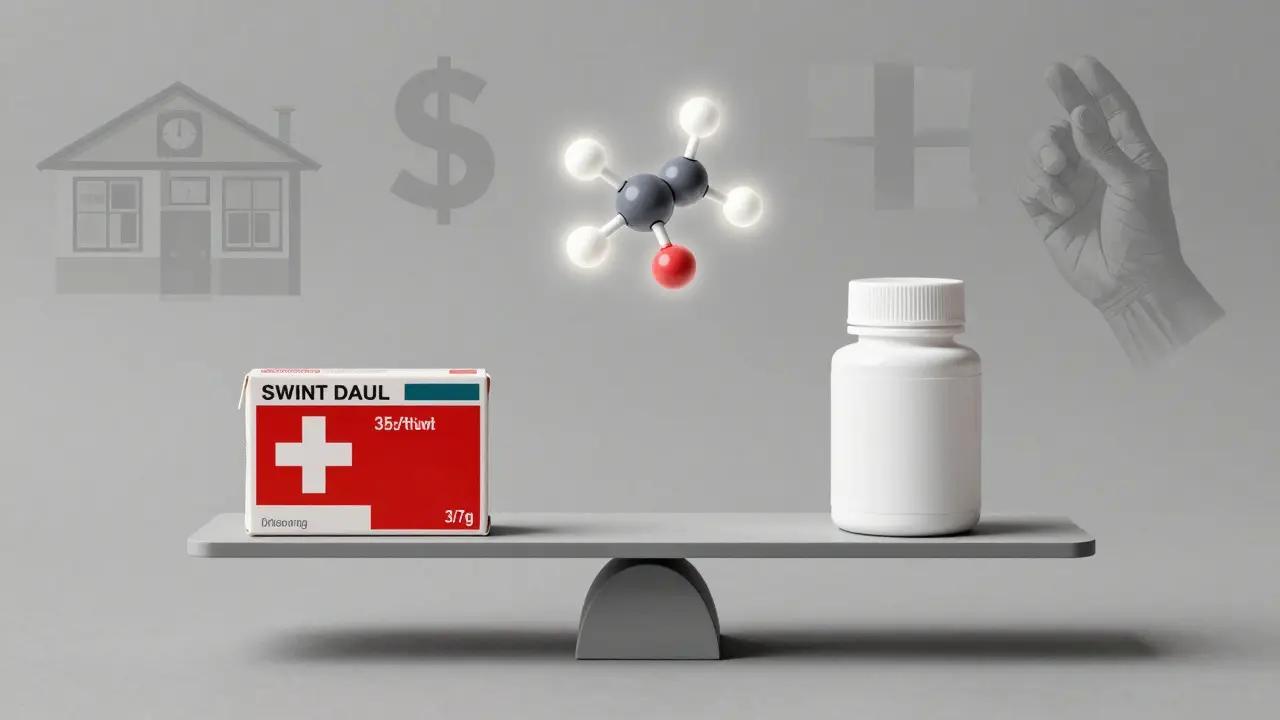
What You Can Do
If you’ve been told to switch to a generic and you’re worried:- Ask your pharmacist: "Is this the same active ingredient as my brand?" They’ll show you the label. It’s always the same.
- Check the FDA’s website. Type in your drug name. You’ll see the generic and brand listed side by side-same active ingredient, same strength.
- If you notice a change after switching, talk to your doctor. But don’t assume it’s the drug. Stress, sleep, diet, or even a new supplement can change how you feel.
- Ask your provider to explain why the switch is being made. Most of the time, it’s to save you money-and it’s safe.
The Bottom Line
Generics aren’t "cheap versions" of medicine. They’re the same medicine, priced fairly. The only thing different is the label. The science is clear. The data is overwhelming. The savings are massive. And yet, the perception lingers. It’s not that generics don’t work. It’s that we’ve been conditioned to believe they don’t. The next time you’re handed a white pill instead of a blue one, remember: it’s not a downgrade. It’s the same treatment, without the brand markup. Your body doesn’t care about the logo. It only cares about the molecule. And that molecule? It’s doing exactly what it’s supposed to.Are generic drugs really the same as brand-name drugs?
Yes. Generic drugs contain the same active ingredient, in the same strength, and are taken the same way as the brand-name version. The FDA requires them to meet the same strict manufacturing standards and prove they work the same way in your body. The only differences are in color, shape, or inactive ingredients like fillers-which don’t affect how the drug works.
Why do some people feel worse after switching to a generic?
It’s usually not the drug. It’s the nocebo effect-when expecting something to go wrong makes you feel worse. Switching from a familiar-looking pill to a different one can trigger anxiety, especially if you’ve been told generics are inferior. Stress, changes in routine, or other medications can also play a role. If symptoms persist, talk to your doctor-but don’t assume the generic is the cause without checking.
Are generics made in lower-quality facilities?
No. All drug manufacturing facilities-whether making brand or generic drugs-must follow the same FDA rules called Current Good Manufacturing Practices (cGMP). While foreign facilities may have more inspectional observations, these are often about paperwork or labeling, not product safety or effectiveness. The final drug is tested and approved to the same standard regardless of where it’s made.
Can generics cause more side effects?
Studies show no consistent difference in side effects between generics and brand-name drugs. A few isolated reports exist, but they’re often tied to patient expectations or other factors like diet, other medications, or changes in health. The FDA and independent medical groups have found no evidence that generics are inherently more likely to cause adverse reactions.
Why do doctors sometimes hesitate to prescribe generics?
Some doctors were trained during a time when generics were less common, or they’ve heard anecdotal stories from patients. Others are influenced by marketing from brand-name companies. But research shows that when doctors explain the science clearly-especially by showing the identical active ingredient-patients are far more likely to accept generics. Medical training is now shifting to include education on this perception gap.
Angela Goree
January 1, 2026 AT 18:49Look, I don't care what the FDA says-my blood pressure spiked the second they switched me to that white pill. I've been on this brand for 12 years. I know what works. You think science is magic? It's not. It's corporate lies wrapped in jargon. They don't care if you feel like garbage-they just want you to stop spending money on real medicine.
Brittany Wallace
January 2, 2026 AT 23:31It's wild how much our brains shape our reality, isn't it? 😊 The molecule doesn't change, but the meaning we attach to the pill does. That blue capsule? It's not just chemistry-it's comfort, identity, ritual. When we lose that, we lose trust. Maybe the real medicine isn't in the tablet... but in the story we tell ourselves about it.
Liam Tanner
January 4, 2026 AT 07:18My dad switched to generics after his Medicare plan forced it. He swore they didn't work. We sat down, looked up the FDA database together, and saw the exact same active ingredient. He cried. Not because he was mad-because he realized he'd been scared for nothing. Sometimes all you need is to see it written out plain.
Hank Pannell
January 4, 2026 AT 14:28The bioequivalence window of 80–125% is statistically robust, yes-but what's often ignored is inter-individual pharmacokinetic variance. In populations with polymorphic CYP450 enzymes-common in certain ethnic groups-micro-differences in excipients can alter absorption kinetics. This isn't about perception; it's about pharmacogenomic heterogeneity. The FDA’s standards are population-level averages, not individualized medicine. So while statistically insignificant, clinically meaningful variation can exist in subgroups. We need personalized bioequivalence thresholds, not one-size-fits-all regulatory dogma.
Sarah Little
January 5, 2026 AT 05:13Have you checked the manufacturing site on the bottle? I did. My generic lisinopril came from a facility in India flagged for 17 violations last year. You say it's 'just paperwork'? That's the same excuse they gave for the tainted heparin in 2008. You think the FDA inspects every batch? They don't. They sample. And if the sample passes? You get the green light. Meanwhile, your kidneys are getting the rest.
erica yabut
January 6, 2026 AT 08:41Oh sweet mercy, here we go again with the FDA propaganda. You people are so gullible. The brand-name drug? Made in the USA with love, care, and actual quality control. The generic? Probably churned out in a basement in Bangladesh by someone who thinks 'active ingredient' is a type of yoga. You want to save money? Fine. But don't pretend you're not gambling with your life. I'd rather pay $15 extra and sleep at night than wake up dead because I trusted a white pill with no logo.
JUNE OHM
January 7, 2026 AT 16:21They're lying. All of them. 🤫 The FDA, the pharma giants, your doctor-they all work for the same shadow cabal. Generics are laced with microchips to track you. That’s why they look different. To confuse your bio-rhythm. The blue pill? It’s got a proprietary coating that syncs with your circadian clock. The white one? It’s a placebo with a side of surveillance. And don’t even get me started on the 5G towers syncing with the fillers. 🚨💊 #WakeUp
Philip Leth
January 8, 2026 AT 10:50My grandma in Mississippi refused generics for 5 years. Said they were 'government pills.' Last year, she got sick, couldn't afford the brand, and finally tried the generic. She said, 'Huh. I feel just like I did before.' She was proud she lived long enough to admit she was wrong. Sometimes the hardest thing to swallow isn't the pill-it's your own pride.
Shanahan Crowell
January 8, 2026 AT 18:55Don’t let fear stop you from saving money-and your health! 💪 Generics are safe, legal, and backed by science. If you’re worried, talk to your pharmacist. They’re the real heroes here. You’ve got this. Trust the data, not the doubt.
Kerry Howarth
January 9, 2026 AT 18:06Same active ingredient. Same dosage. Same FDA standards. The rest is noise.
Tiffany Channell
January 10, 2026 AT 20:26So you're telling me people are dying because they're too lazy to pay $10 more? That's not a healthcare issue-that's a moral failure. If you can't afford the brand, you shouldn't be on the drug. There are charities. There are programs. There are alternatives. But no, you'd rather gamble on a cheap knockoff and blame the system when it fails. Pathetic.
Shruti Badhwar
January 11, 2026 AT 06:23In India, we’ve been using generics for decades-and they’ve saved millions of lives. My mother took a generic antihypertensive for 15 years. She’s 84 and still walks two miles every morning. The science is universal. The fear is cultural. The solution? Education, not suspicion. We need more pharmacists in rural clinics, not more ads telling people to fear what’s affordable.