
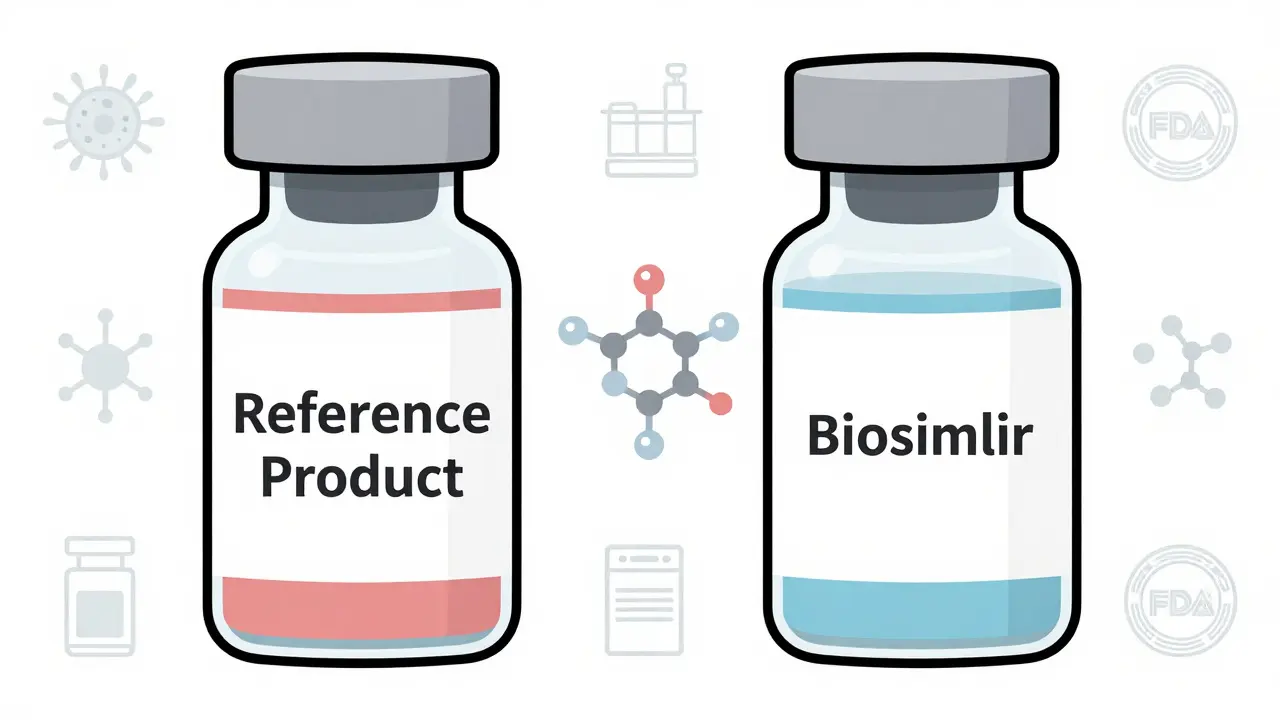
Why Your Biologic Medicine Isn’t Exactly the Same Every Time
If you’ve ever been told your biologic drug is "the same" as the last one you took, but noticed something different-maybe a slight change in how you feel, or your lab results shifted a little-it’s not your imagination. It’s biology.
Unlike a pill you swallow that’s made in a lab with exact chemical formulas, biologics are made from living cells. Think of them like a recipe for a sourdough loaf: same ingredients, same oven, same baker-but every batch turns out just a little different. That’s not a mistake. It’s how they’re supposed to work.
This natural difference between production batches is called lot-to-lot variability. And it’s not just normal-it’s expected. The U.S. Food and Drug Administration (FDA) says biologics contain millions of slightly different versions of the same protein or antibody in every single lot. Some molecules might have extra sugar molecules attached. Others might have tiny tweaks in their amino acid chains. These aren’t flaws. They’re part of the process.
How Biologics Are Made (And Why They’re Never Identical)
Small-molecule drugs like aspirin or metformin are built atom by atom in a chemical reactor. Every tablet is identical. That’s why generics can be exact copies.
Biologics? They’re grown. Scientists insert human genes into living cells-usually Chinese hamster ovary cells-and feed them nutrients. These cells then produce complex proteins like antibodies. The cells don’t follow a blueprint like a machine. They respond to temperature, pH, oxygen levels, even the quality of the nutrients. One batch might grow in a slightly warmer tank. Another might get a different batch of feedstock. Tiny shifts like these change how the protein folds, how sugars attach, or how stable the final product is.
That’s why each lot of a biologic drug-whether it’s the original brand or a biosimilar-isn’t a carbon copy. It’s a family of similar molecules. The FDA calls this "inherent variation." And it’s not just in the reference product. It’s in every biosimilar too.
Biosimilars vs. Generics: The Big Difference
Many people think biosimilars are just generics for expensive biologics. They’re not.
Generics must prove they’re identical to the original drug. They test chemical structure, dissolution rates, and blood levels. If they match, they get approved.
Biosimilars can’t be identical. They’re designed to be highly similar-with no clinically meaningful differences in safety or effectiveness. That’s why the approval path is completely different. Instead of just comparing blood levels, manufacturers run hundreds of tests: analyzing protein structure, checking sugar patterns, testing how the drug binds to its target, and even running immune response studies.
The FDA requires biosimilar makers to prove their product’s variation pattern matches the original. Not that every molecule is the same-but that the range of differences is within what’s already seen in the reference product. If the original drug has 5% variation in glycosylation across its lots, the biosimilar must stay in that same range.
How Regulators Make Sure Variability Doesn’t Hurt Patients
It’s not enough to say "it’s natural." Regulators need proof that this variation doesn’t affect how well the drug works or how safe it is.
The FDA looks at three things: analytical data, functional studies, and clinical trials. First, they use advanced tools like mass spectrometry and chromatography to map out every possible version of the protein in each lot. Then they test how those proteins behave in the lab-do they still block inflammation? Do they still kill cancer cells?
Finally, they run clinical trials. Not to prove the biosimilar works better than the original-but to prove it works the same. Patients are given either the reference drug or the biosimilar. Their immune response, disease activity, and side effects are tracked over months. In some cases, especially for interchangeable biosimilars, patients are switched back and forth between the two to see if switching causes any problems.
As of May 2024, the FDA has approved 53 biosimilars in the U.S., and 12 of them have the "interchangeable" designation. That means pharmacists can substitute them without asking the doctor-just like a generic. But only after proving that switching doesn’t change outcomes.
What This Means for Labs and Test Results
Lot-to-lot variability doesn’t just affect the drugs you take. It affects the tests doctors use to monitor you.
Lab reagents-like the chemicals used to measure HbA1c (a diabetes marker) or cholesterol-are often biologics too. A change in reagent lot can shift test results by 0.5% or more. That might not sound like much, but for someone managing diabetes, that could mean a change in treatment.
Lab directors say 78% of them consider reagent lot changes a "significant challenge." Why? Because quality control samples don’t always behave like real patient samples. A control might show no change, but patient results could drift. That’s why labs don’t just rely on controls. They use moving averages of real patient data to spot trends over time. They also test 20 or more patient samples with each new reagent lot to catch any hidden bias.
It’s time-consuming. In smaller labs, staff spend 15-20% of their time every quarter just verifying new lots. But skipping it? That’s risky. Undetected variation can lead to misdiagnosis or wrong dosing.

Why This Isn’t a Flaw-It’s a Feature
Some people worry that variability means poor quality. But it’s the opposite. The complexity of biologics is what makes them powerful.
Small molecules can’t target cancer cells with the same precision as monoclonal antibodies. They can’t block specific immune signals in rheumatoid arthritis like biologics do. That complexity comes with variation. But that variation is managed, measured, and controlled.
Dr. Sarah Y. Chan from the FDA says it plainly: "Inherent variations occur in both reference products and biosimilars. These slight differences are normal and expected." The goal isn’t perfection. It’s consistency within a known, safe range.
And the data backs it up. Millions of patients have used biosimilars since 2015. No new safety signals have emerged. No increase in immune reactions. No drop in effectiveness. The system works.
The Future: More Complex Drugs, More Variation
Biologics are getting even more complex. Next-generation drugs like antibody-drug conjugates (ADCs) or cell and gene therapies involve multiple moving parts. Each one introduces more potential for variation.
But technology is keeping up. New tools can now detect differences at the single-molecule level. AI is helping predict how small changes might affect function. The FDA’s "totality of the evidence" approach is becoming more sophisticated, relying less on large clinical trials and more on deep analytical data.
By 2026, experts predict 70% of new biosimilar applications will include data on interchangeability. That means more patients will have access to lower-cost options without losing confidence in safety.
The message is clear: lot-to-lot variability isn’t something to fear. It’s a natural part of biological manufacturing. And with the right science, oversight, and testing, it’s perfectly safe.
What You Should Know as a Patient
If you’re on a biologic or biosimilar, here’s what matters:
- Don’t panic if your next refill looks different. The vial, the label, even the color of the liquid might change. That’s normal.
- Keep track of how you feel. If you notice new side effects or a drop in effectiveness, tell your doctor. But don’t assume it’s because of the lot.
- Ask if your drug is interchangeable. If it is, your pharmacist can swap it without a new prescription-and it’s been proven safe to switch.
- Don’t assume biosimilars are "weaker." They’re held to the same high standards as the original.
Biologics changed medicine. Biosimilars are making them accessible. And lot-to-lot variability? It’s just part of the story.
Is lot-to-lot variability a sign of poor manufacturing?
No. Lot-to-lot variability is a natural result of using living cells to produce complex proteins. It’s not a defect-it’s expected. The FDA requires manufacturers to control and monitor this variation to ensure every lot performs the same way in patients. If the variation stays within the range seen in the original product, it’s considered safe and acceptable.
Can switching between biosimilar lots cause side effects?
For approved biosimilars, including interchangeable ones, switching between lots is safe. The FDA requires manufacturers to prove that even with natural variation, each lot delivers the same clinical results. Studies show no increase in immune reactions or loss of effectiveness when patients switch between lots. This is why interchangeable biosimilars can be swapped at the pharmacy without a doctor’s approval.
Why can’t biosimilars be called generics?
Generics are exact copies of small-molecule drugs made through chemical synthesis. Biosimilars are highly similar to complex biologics made from living cells, which naturally vary between batches. Because they can’t be identical, biosimilars require more testing-analytical, functional, and clinical-to prove they work the same way. The FDA explicitly states: "Biosimilars Are Not Generics."
Do biosimilars work as well as the original biologic?
Yes. Over 50 biosimilars have been approved in the U.S., and real-world data shows they work just as well as the original biologics in treating conditions like rheumatoid arthritis, Crohn’s disease, and cancer. Clinical trials and post-market monitoring confirm no meaningful differences in safety or effectiveness. Millions of patients have switched to biosimilars without any loss of benefit.
How do labs handle lot-to-lot changes in test reagents?
Labs verify new reagent lots by testing 20 or more patient samples with duplicate measurements. They compare results from the old and new lots against predefined performance standards. They also track patient results over time using moving averages to detect hidden shifts. This is critical because quality control samples don’t always behave like real patient samples-so relying on controls alone isn’t enough.
Are biosimilars cheaper than the original biologics?
Yes. Biosimilars typically cost 15-35% less than the original biologic, with some savings reaching up to 50%. In the U.S., biosimilars now make up about 32% of all biologic prescriptions by volume. As more enter the market, prices continue to drop, helping patients and healthcare systems save billions.
Jason Xin
January 29, 2026 AT 17:56Donna Fleetwood
January 30, 2026 AT 19:05Melissa Cogswell
February 1, 2026 AT 03:47Diana Dougan
February 1, 2026 AT 04:57Bobbi Van Riet
February 1, 2026 AT 09:41Sazzy De
February 2, 2026 AT 01:37Blair Kelly
February 2, 2026 AT 11:08Rohit Kumar
February 3, 2026 AT 05:28Lily Steele
February 4, 2026 AT 03:33