

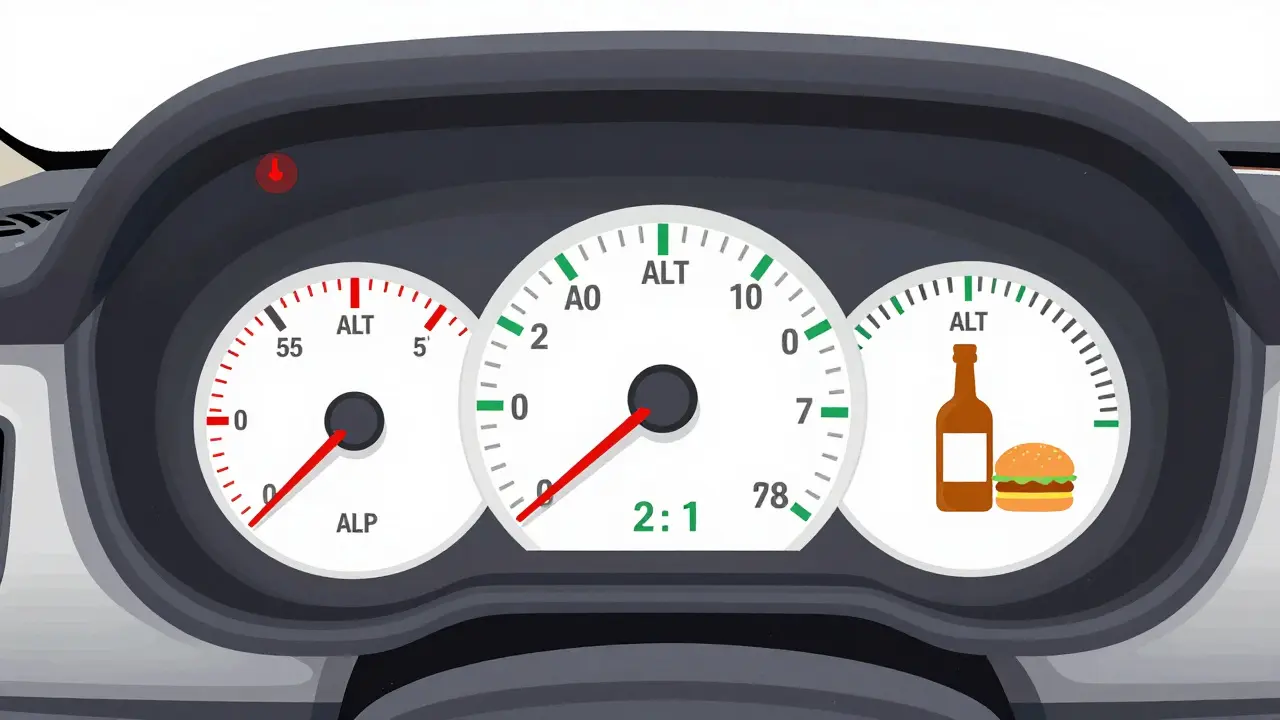
When your doctor orders liver function tests, they’re not actually checking how well your liver is working - they’re looking for signs it’s been damaged. The term "liver function tests" is outdated and misleading. What these blood tests really measure are markers of injury, not function. Think of them like a car’s check engine light: it doesn’t tell you how well the engine runs, just that something’s wrong.
What’s Actually Measured in a Liver Panel?
A typical liver panel includes five key markers: ALT, AST, ALP, GGT, and bilirubin. Two more - albumin and prothrombin time - give clues about the liver’s ability to make proteins and clot blood. But most people only hear about ALT and AST. Here’s what each one means in plain terms.
- ALT (alanine aminotransferase): Almost entirely found in the liver. When liver cells get damaged, ALT leaks into the blood. It’s the most specific marker for liver injury.
- AST (aspartate aminotransferase): Found in the liver, but also in heart, muscle, and kidneys. Elevated AST alone doesn’t always mean liver trouble.
- ALP (alkaline phosphatase): High levels often point to bile duct blockage or bone issues. It’s not liver-specific.
- GGT (gamma-glutamyl transferase): Rises with alcohol use or bile flow problems. Often used with ALP to tell if the source is liver or bone.
- Bilirubin: A waste product from broken-down red blood cells. The liver processes it. High levels cause jaundice - yellow skin and eyes.
Reference ranges vary by lab, but in Australia, typical values are:
- ALT: 7-55 U/L (higher in men and people with obesity)
- AST: 8-48 U/L
- Bilirubin (total): 3-17 μmol/L
- Albumin: 35-50 g/L
Here’s the catch: normal doesn’t always mean healthy. Up to 15% of healthy people have ALT or AST slightly above the "normal" range - especially men, people with higher BMI, or athletes. That’s why context matters more than the number.
Pattern Recognition: The Real Key to Interpretation
Looking at each number in isolation is like trying to diagnose a car problem by checking just the fuel gauge. You need to see the pattern.
Hepatocellular pattern means liver cells are dying. This shows up as ALT and AST rising much higher than ALP and bilirubin. If ALT is more than 10 times the upper limit (say, over 550 U/L), it’s almost always due to:
- Acute viral hepatitis (A, B, or E)
- Drug overdose - especially paracetamol (acetaminophen)
- Ischemic liver injury (from low blood flow, often after heart failure or shock)
Chronic conditions like fatty liver or hepatitis C usually cause milder elevations - maybe 2-5 times normal. And here’s something surprising: in advanced cirrhosis, ALT and AST can actually be normal. The liver is too damaged to leak enzymes anymore.
Cholestatic pattern means bile isn’t flowing right. This shows up as ALP and bilirubin rising much more than ALT and AST. Common causes:
- Gallstones blocking the bile duct
- Primary biliary cholangitis (autoimmune disease)
- Medications like antibiotics or birth control pills
- Alcohol-related liver disease (often mixed pattern)
Important note: if ALP is high but GGT is normal, the problem might be in your bones - not your liver. Bone growth, fractures, or even pregnancy can raise ALP.
The AST:ALT Ratio - A Hidden Clue
This simple number can tell you more than any other single value.
- AST:ALT ratio less than 1: This is classic for non-alcoholic fatty liver disease (now called MASLD), viral hepatitis, or early-stage liver damage. ALT is higher because it’s more liver-specific.
- AST:ALT ratio greater than 1: Strongly suggests alcohol-related damage. In alcoholic hepatitis, AST is often twice as high as ALT - sometimes even 3 times higher.
- AST:ALT ratio over 2: Almost always points to alcoholic liver disease. Studies show this happens in 90% of cases.
But here’s the exception: if AST is above 500 U/L, alcohol alone is unlikely to be the cause. In heavy drinkers, that kind of spike usually means acetaminophen overdose - which can be deadly if not treated fast.
Also, AST rises in heart attacks and muscle injuries. If you’ve had a serious workout, a car crash, or a seizure, your AST can jump - even if your liver is fine. ALT rarely rises from muscle damage. That’s why ALT is the better liver-specific marker.
Bilirubin: Why Jaundice Happens
Bilirubin comes from old red blood cells. Your liver converts it from "unconjugated" (toxic) to "conjugated" (water-soluble) so your body can flush it out in bile.
If bilirubin is high, one of three things is happening:
- Too much production: Hemolytic anemia - red blood cells breaking down too fast.
- Too little processing: Liver cells are damaged and can’t convert bilirubin (seen in hepatitis or cirrhosis).
- Too little flow: Bile ducts are blocked - gallstones, tumors, or inflammation.
The trick is looking at the types:
- Unconjugated bilirubin high: Suggests overproduction or poor uptake (like Gilbert’s syndrome - a harmless, common condition).
- Conjugated bilirubin high: Means bile flow is blocked or liver cells are damaged. This is the kind that causes jaundice.
If bilirubin is high but ALT and AST are normal, think gallstones or bile duct issues - not fatty liver.
Albumin and Prothrombin Time: The True Function Tests
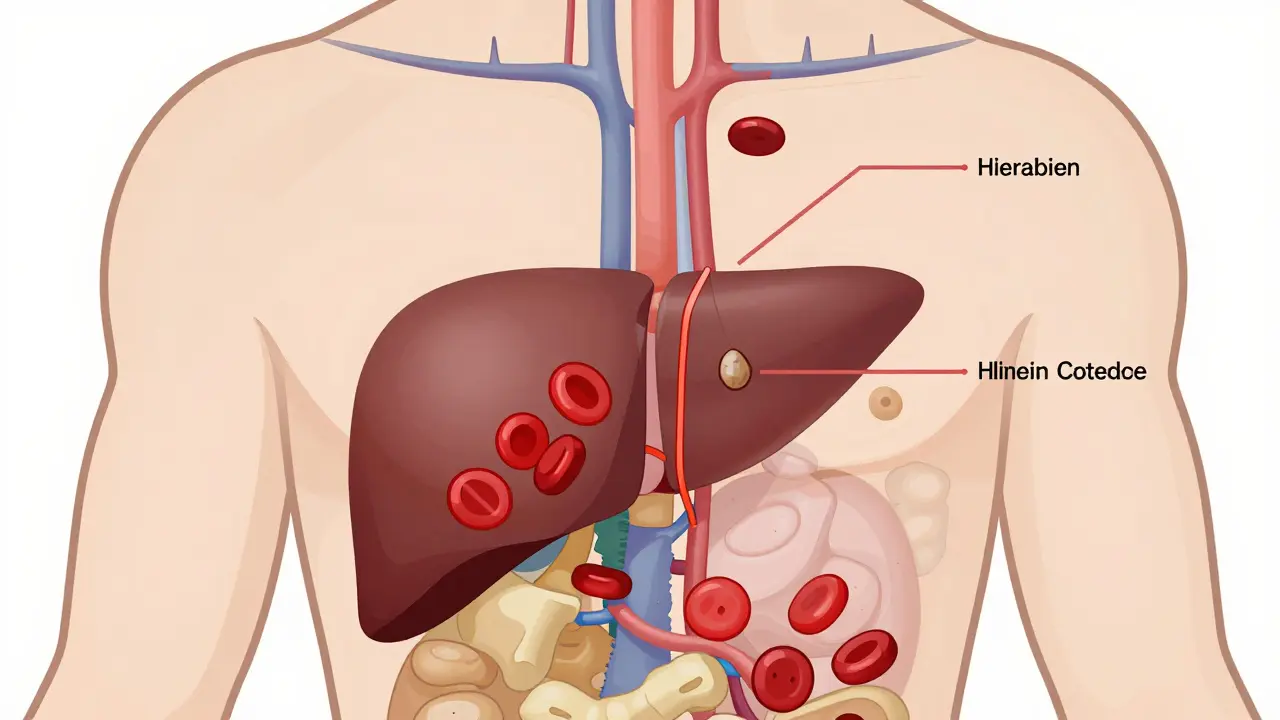
These are the only tests that actually measure what the liver does - not what’s broken.
Albumin is a protein your liver makes. It helps keep fluid in your blood vessels. If albumin is low (below 35 g/L), it means your liver has been damaged for months or years. It takes 20 days for albumin levels to drop - so this reflects chronic disease, not sudden injury.
Prothrombin time (PT) measures how fast your blood clots. Your liver makes clotting factors. If PT is prolonged (INR >1.5), it means your liver isn’t making enough of these proteins. This can happen quickly - within days - after severe liver damage. A rising INR is one of the first signs of acute liver failure.
Low albumin and high INR together are red flags. They mean the liver is failing to do its job - and urgent care may be needed.
When to Worry - And When to Wait
Not every slightly high ALT means cancer or cirrhosis. Most people with mild elevations (ALT 40-80 U/L) have nothing serious going on.
According to a 2022 JAMA study, 37% of GPs ordered unnecessary scans for patients with ALT levels in this range - even though the chance of serious disease was less than 5%.
Here’s when to act:
- Wait and monitor: If ALT or AST are less than 2x the upper limit, and you have no symptoms, no alcohol abuse, and no risk factors - repeat the test in 3-6 months.
- Refer immediately: If ALT or AST are above 500 U/L, or rising fast (more than 100 U/L per week), you need urgent evaluation. This could be drug toxicity or acute hepatitis.
- Check for MASLD: If you’re overweight, have high blood sugar, or high triglycerides, and your ALT is mildly elevated - fatty liver is the most likely cause. No scan needed yet. Focus on weight loss and exercise.
- Rule out alcohol: If AST is higher than ALT and you drink regularly - cut back. Even small reductions can reverse damage.
Studies show that combining LFT patterns with a simple score called FIB-4 (based on age, platelets, ALT, AST) can predict advanced liver scarring with 89% accuracy - far better than LFTs alone.
What’s New in Liver Testing?
The term "NAFLD" (non-alcoholic fatty liver disease) is being replaced with "MASLD" (Metabolic dysfunction-Associated Steatotic Liver Disease). It’s more accurate - it’s not just about being fat, it’s about how your body handles sugar and fat.
Doctors are starting to use newer tests like the ELF test (Enhanced Liver Fibrosis), which measures three proteins linked to scarring. In 2024, a Lancet study showed it detects advanced fibrosis with 92% accuracy when combined with AST/ALT ratio.
These tools help avoid unnecessary biopsies. But they’re not yet routine in primary care. For now, the old-school LFTs - when interpreted right - still do the job.
Bottom Line: Don’t Panic, But Don’t Ignore
Liver function tests aren’t a diagnosis. They’re a starting point. A high ALT doesn’t mean you have cirrhosis. A normal AST doesn’t mean your liver is perfect.
What matters is the pattern, your lifestyle, your symptoms, and your history. If you’ve gained weight, drink alcohol regularly, or take medications like statins or painkillers - your liver is under stress. Fix the cause, not just the number.
Most people with mild elevations can reverse liver damage with weight loss, cutting back on sugar and alcohol, and moving more. The liver is one of the few organs that can regenerate - if you give it a chance.
Can liver function tests detect liver cancer?
No, liver function tests cannot detect liver cancer. Tumors don’t always cause enzyme leaks until they’re large or advanced. Normal LFTs don’t rule out cancer. If there’s a risk - like chronic hepatitis B or cirrhosis - doctors use ultrasound or CT scans to screen, not blood tests.
Why is my ALT high but my AST normal?
This pattern is classic for fatty liver disease (MASLD), viral hepatitis, or medication-related injury. Since ALT is mostly found in the liver, it’s a more specific marker. If AST is normal, it suggests the damage is limited to liver cells, not other organs like muscle or heart.
Can exercise raise liver enzymes?
Yes, intense exercise - especially weightlifting or endurance events - can raise AST because it’s also found in muscle. ALT usually doesn’t rise unless there’s severe muscle damage. If you’ve just finished a marathon or started heavy lifting, wait a few days before retesting.
Does alcohol always raise AST more than ALT?
Usually, yes. In alcoholic liver disease, AST is often twice as high as ALT. But this isn’t foolproof. Some people with heavy drinking don’t show this pattern, and some with non-alcoholic disease do. The ratio helps, but it’s not a diagnosis on its own.
If my liver enzymes are normal, does that mean I don’t have fatty liver?
No. Up to 50% of people with fatty liver have normal ALT and AST, especially in early stages. Fatty liver can exist without inflammation or damage. Ultrasound or FibroScan are better tools to detect fat buildup - not blood tests.
Brandon Boyd
December 31, 2025 AT 20:24Bro, I had my ALT at 82 last year and panicked for weeks. Turned out I was just doing heavy squats and eating a ton of protein. Cut back on the shakes, lost 15 lbs, and now I’m at 44. Your liver’s tougher than you think - give it a chance to heal, not a CT scan.
Harriet Hollingsworth
January 1, 2026 AT 15:07This post is dangerously misleading. You say 'normal doesn't mean healthy' but you don't emphasize that people with normal enzymes can still have cirrhosis. This is the kind of half-truth that gets people killed. If you're overweight and drink, get an ultrasound. Not a lecture. An ultrasound.
Deepika D
January 2, 2026 AT 04:13Let me tell you something I’ve seen in my clinic in Mumbai - people think if their ALT is under 55 they’re fine. Nope. I had a 52-year-old man with fatty liver, normal ALT, and a FIB-4 score that screamed advanced fibrosis. He thought he was healthy because he didn’t drink. But he ate rice with every meal, drank sweet tea, and never moved. The liver doesn’t care if you’re 'not an alcoholic' - it cares if you’re metabolically broken. Get a FibroScan. Stop relying on outdated labs. And yes, weight loss works - 7% of your body weight can reverse steatosis. I’ve seen it. Not magic. Just biology.
Stewart Smith
January 3, 2026 AT 12:55So… my AST is 52, ALT is 28, GGT is 90. I drink two beers on weekends. Should I be worried? Or just… quietly start hating myself?
Retha Dungga
January 4, 2026 AT 23:36life is a liver test 🤷♀️💔 enzymes rise and fall like emotions… if your ALT’s high maybe you’re just not living right… or maybe you’re just human 😌🍷 #liverwisdom
Aaron Bales
January 6, 2026 AT 06:10AST:ALT >2? Probably alcohol. AST >500? Probably acetaminophen overdose. Don’t wait. Go to the ER. Now.
Lawver Stanton
January 7, 2026 AT 16:53I read this whole thing and now I’m convinced I have cirrhosis. I ate a burrito last Tuesday. My ALT was 48. I’ve been googling liver transplants since 2 a.m. My wife says I’m being dramatic. She doesn’t understand - this isn’t about enzymes. It’s about legacy. Am I going to die before I see my kid graduate? Is my liver already a brick? I can’t sleep. I need a biopsy. I need a priest. I need a new life.
Sara Stinnett
January 8, 2026 AT 05:58How quaint. You treat liver enzymes like a fortune cookie. 'Pattern recognition' - as if medicine were a tarot deck. The truth? Most of these numbers are statistically meaningless without context. And yet, doctors treat them like gospel. You’re not diagnosing a liver - you’re interpreting a noisy signal from a broken instrument. And you call this science? The entire field is built on correlation, not causation. And we wonder why people distrust medicine.
linda permata sari
January 9, 2026 AT 21:51In Indonesia, we say: 'The liver is the silent warrior.' It doesn’t scream until it’s too late. I saw my uncle - no symptoms, normal enzymes - then one day, he collapsed. Turned out he had hepatitis B for 15 years. No one knew. So please - if you’re from a place where vaccines are hard to get, get tested. Even if you feel fine. The liver doesn’t lie. But it doesn’t talk either.
Branden Temew
January 10, 2026 AT 02:37If the liver can regenerate, why do we treat it like a fragile vase? Maybe the real problem isn’t the enzymes - it’s our fear of impermanence. We want a number to tell us we’re safe. But health isn’t a static state. It’s a dance. The liver doesn’t care if your ALT is 45 or 85 - it cares if you’re alive, breathing, and choosing to care. Maybe the real test isn’t in the blood - it’s in the mirror, the bottle, the fork, the treadmill. What are you really feeding?