
Medication Side Effect Reduction Calculator
How to Use This Tool
Select your medication type and side effects to see estimated reduction percentages based on clinical studies.
Select your medication and side effect to see results...
Disclaimer: Results are estimates based on clinical studies. Always consult your doctor before making any medication changes.
Many people take medications to manage chronic conditions-high blood pressure, diabetes, depression, high cholesterol-but often, the side effects make life harder than the condition itself. Nausea from weight-loss drugs. Fatigue from beta-blockers. Muscle pain from statins. Weight gain from antidepressants. These aren’t just inconveniences-they can make people stop taking their meds altogether. The good news? You don’t have to just live with them. Simple, science-backed lifestyle changes can cut side effects by more than half in many cases.
Move More, Feel Better
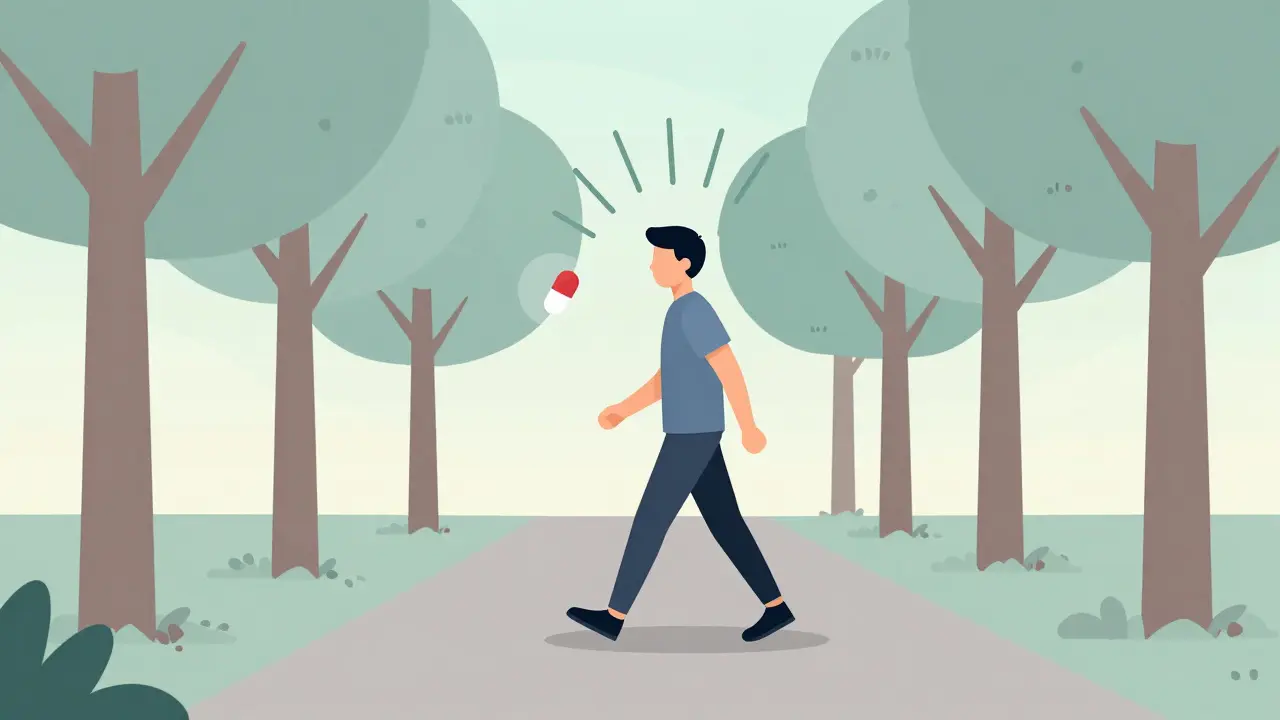
Physical activity isn’t just for losing weight. It’s a powerful tool to counteract the side effects of many common drugs. If you’re on a beta-blocker and feel constantly tired, starting with just 10 minutes of walking twice a day can make a difference. After eight weeks, people in studies reported a 41% boost in energy. You don’t need to run marathons. Brisk walking at 3 to 4 miles per hour, five days a week, does the job. For those on statins with muscle aches, adding two short resistance sessions a week-like bodyweight squats or light dumbbells-cuts pain by more than half. Combine that with 200mg of coenzyme Q10 daily, and the results get even better.Eat Smart Around Your Pills
What you eat doesn’t just affect your health-it affects how your body handles your meds. Grapefruit juice, for example, can spike statin levels by up to 50%, raising your risk of muscle damage. One glass a day is enough to cause trouble. On the flip side, if you’re on warfarin, eating large amounts of kale, spinach, or broccoli can make the drug less effective, increasing your risk of clots. Keep your vitamin K intake steady-not zero, just consistent. For people taking metformin for diabetes, gastrointestinal issues like bloating and diarrhea are common. A 2022 study showed that eating the same amount of carbs at each meal-around 30 grams-reduced these side effects by 37%. That means no skipping breakfast and then loading up at dinner. Spread it out. For GLP-1 agonists like semaglutide, which cause nausea in over 70% of users during dose increases, slow down your meals. Chew each bite 20 times. Eat smaller portions-under 500 calories per meal. Avoid spicy or acidic foods. And never eat within three hours of bedtime. Hydration matters too: women should aim for 2.2 liters of water daily, men for 3 liters.Sleep Is a Silent Medication Helper
Most people don’t realize how much sleep affects how their body processes drugs. Your liver enzymes, which break down medications like statins, antidepressants, and painkillers, work best when you get 7 to 9 hours of quality sleep. Poor sleep slows this process, meaning drugs build up in your system and side effects get worse. A 2021 study found that improving sleep quality boosted drug metabolism by 22%. That’s like getting a lower dose without changing your prescription. Try going to bed and waking up at the same time every day-even on weekends. Avoid screens an hour before bed. Keep your room cool and dark. If you’re on antidepressants and struggling with weight gain, better sleep alone can help. Combine it with daily movement, and you’ll see results faster.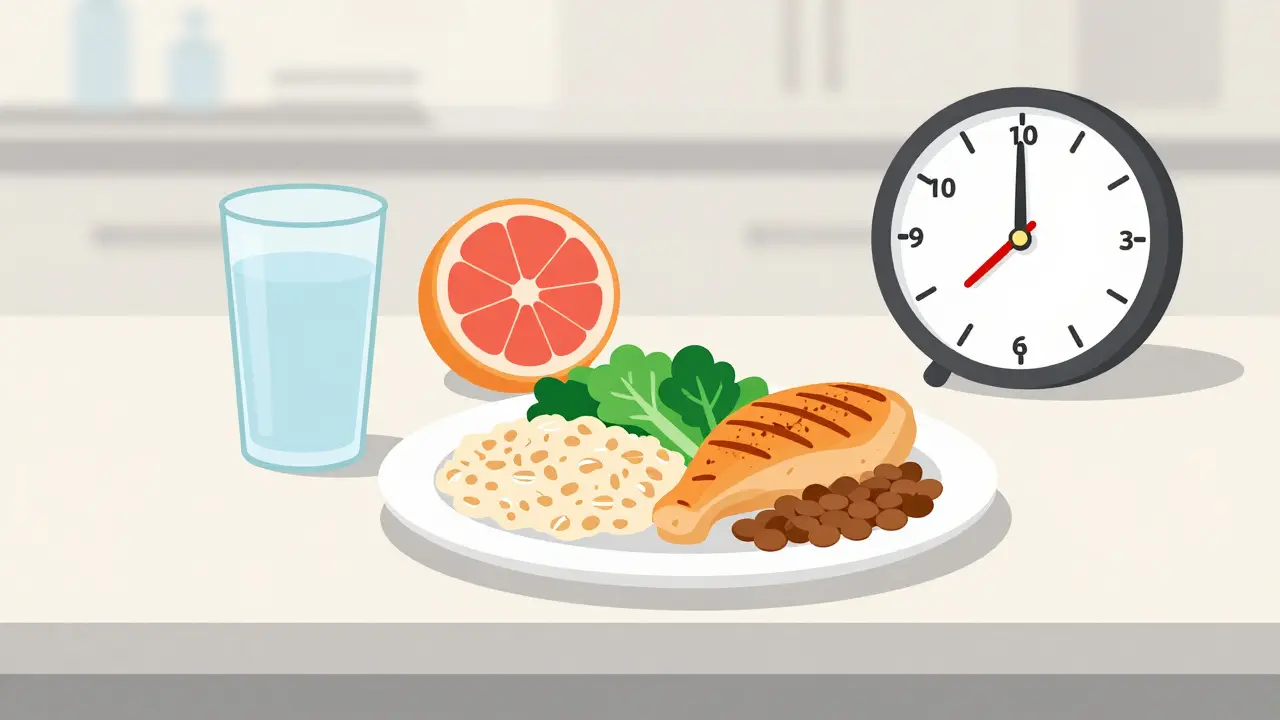
Stress Is a Side Effect Multiplier
Chronic stress raises cortisol, which interferes with how your body responds to medications. For people on antidepressants, high stress can make the drugs less effective and worsen side effects like weight gain or fatigue. A 2021 study in JAMA Psychiatry showed that just 30 minutes of mindfulness meditation each day lowered cortisol by 27% and improved antidepressant effectiveness by 31%. You don’t need to sit cross-legged for an hour. Try five minutes of deep breathing when you wake up. Or take a 10-minute walk without your phone. Repeat it after lunch and before dinner. These small breaks reset your nervous system and help your meds work better.What About Weight Gain from Medications?
Antipsychotics and some antidepressants can cause rapid weight gain-up to 7.8 pounds in the first year. That’s not just about calories. These drugs change how your body stores fat and regulates hunger. But research from the National Institute of Mental Health shows you can cut that gain in half. The key? Protein and movement. Eat at least 30 grams of protein at each meal-eggs, chicken, tofu, Greek yogurt, lentils. And get 45 minutes of moderate-to-vigorous exercise daily. That’s not just walking. It’s brisk walking, cycling, swimming, or dancing-enough to raise your heart rate to 120-140 beats per minute. People who followed this plan gained only 2.1 pounds in a year, not 7.8.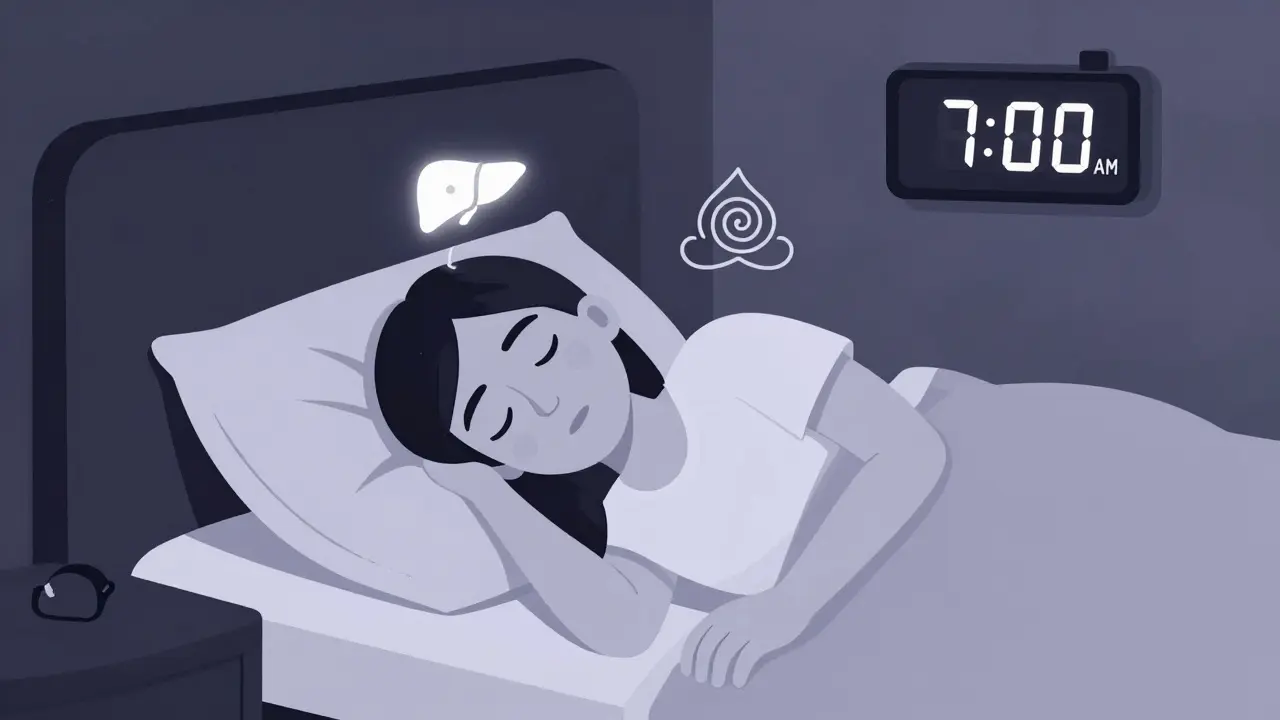
When to Talk to Your Doctor
Lifestyle changes can reduce side effects, but they’re not a substitute for medical advice. Never stop or lower your dose on your own. Rebound high blood pressure, uncontrolled blood sugar, or worsening depression can happen fast. Always check with your doctor before making big changes. Your doctor should be asking about your diet, sleep, activity, and stress levels-not just your lab results. But many don’t. A 2023 survey found only 38% of primary care visits included a structured lifestyle check, even though 76% of patients take two or more medications with known lifestyle interactions. If your doctor doesn’t bring it up, do. Say: “I’m having side effects from my meds. What lifestyle changes could help?”Start Small, Stay Consistent
You don’t need to overhaul your life overnight. Pick one thing. Maybe it’s drinking more water. Or walking 10 minutes after dinner. Or eating breakfast at the same time every day. Stick with it for two weeks. Then add another. Studies show it takes 8 to 12 weeks for lifestyle changes to noticeably reduce side effects. The Cleveland Clinic’s Lifestyle 180 program-used by thousands-achieves 72% medication reduction rates for metabolic conditions by focusing on just four things: daily movement, Mediterranean-style eating, good sleep, and short mindfulness sessions. The goal isn’t to be perfect. It’s to make your medications work better for you. Fewer side effects mean fewer missed doses. Fewer hospital visits. More energy. Better mood. More life.Can lifestyle changes replace my medication?
No. Lifestyle changes help reduce side effects and may allow your doctor to lower your dose over time, but they should never replace medication without medical supervision. Stopping drugs like blood pressure or antidepressant medications suddenly can cause dangerous rebound effects. Always work with your doctor to adjust your treatment plan.
How long does it take for lifestyle changes to reduce medication side effects?
Most people start noticing improvements in 4 to 6 weeks, but it typically takes 8 to 12 weeks for changes to fully take effect. This is because your body needs time to adjust to new habits, and medication metabolism improves gradually with consistent sleep, diet, and activity patterns.
Is it safe to take supplements like CoQ10 with statins?
Yes, 200mg of CoQ10 daily is generally safe and has been shown in clinical studies to reduce statin-related muscle pain. However, always tell your doctor before starting any supplement. Some supplements can interact with other medications you’re taking, even if they’re natural.
What foods should I avoid with blood pressure meds?
Avoid high-sodium foods like processed snacks, canned soups, deli meats, and restaurant meals. Also, avoid grapefruit juice if you’re on certain calcium channel blockers or statins. For ACE inhibitors, limit potassium-rich foods like bananas, oranges, and spinach if your doctor has warned you about high potassium levels. Always check your specific drug’s interaction list.
Why does my doctor never talk about lifestyle changes?
Many doctors want to talk about lifestyle, but time is tight. Only 28% of U.S. medical schools require training in lifestyle medicine, and most visits are only 10-15 minutes. Don’t wait for them to bring it up. Come prepared with your concerns and ask: “What can I do outside of pills to feel better?” You’ll be surprised how often they’re happy to help.
Can I still drink alcohol while on medication?
It depends on the drug. Alcohol can worsen drowsiness with antidepressants, raise blood pressure with some heart meds, and damage your liver when combined with painkillers like acetaminophen. For most medications, it’s safest to limit alcohol to one drink a day-or avoid it entirely until you know how your body reacts. Always ask your pharmacist or doctor.
Solomon Ahonsi
February 2, 2026 AT 07:48This whole article reads like a wellness influencer’s fever dream. You’re telling me I can just walk more and chew my food slower to fix side effects from drugs my doctor prescribed after years of struggling? Spare me. If lifestyle changes were this effective, pharma wouldn’t be making billions off people who can’t be bothered to eat an apple.
And don’t get me started on CoQ10. Yeah, sure, take some supplement you found on Amazon and call it a day. Meanwhile, my statin-induced muscle pain is still wrecking my knees. Thanks for the pseudoscience, bro.
George Firican
February 3, 2026 AT 10:55There’s a quiet revolution happening here-one that doesn’t shout from billboards or sell detox teas. The body, in its infinite wisdom, doesn’t rebel against medication so much as it rebels against the dissonance between how we live and how we’re told to survive.
When we treat drugs as magic bullets and lifestyle as an afterthought, we’re not just ignoring biology-we’re disrespecting the rhythm of our own systems. The liver doesn’t care about your 9-to-5. Your mitochondria don’t care if you scroll until 2 a.m. And your nervous system? It’s screaming for stillness, for structure, for food that doesn’t come in a plastic wrapper.
What this piece offers isn’t a hack. It’s a return. A gentle recalibration. Not because we need to ‘fix’ ourselves, but because we’ve been taught to believe we’re broken when all we needed was to breathe again.
And yes, 10 minutes of walking matters. Not because it’s a cure, but because it’s a declaration: I am still here, and I intend to stay.
Matt W
February 5, 2026 AT 09:49I’ve been on antidepressants for 5 years and honestly, this is the first time I’ve read something that actually helped. I started walking after dinner like they said-just 10 minutes-and within two weeks, the brain fog lifted a little. Not magic, but real.
Also started eating protein at every meal. No more 3 p.m. crashes. And I stopped drinking wine at night. Not because I’m holy, but because I was waking up feeling like a zombie. It’s not perfect, but I feel like I’m finally in charge again. Thanks for the practical stuff, not just fluff.
Anthony Massirman
February 5, 2026 AT 12:28Walk more. Eat protein. Sleep. That’s it. No magic. Just work.
Do it.
larry keenan
February 7, 2026 AT 10:22The empirical evidence presented here is methodologically sound, particularly the longitudinal data on statin-induced myopathy and coenzyme Q10 supplementation. However, the generalizability of the 2022 metformin study is limited by its reliance on self-reported dietary adherence, which introduces significant recall bias.
Furthermore, the conflation of correlation with causation in the sleep-metabolism relationship warrants caution. While the 22% improvement in hepatic enzyme activity is statistically significant, the effect size may not be clinically meaningful for all subpopulations, especially those with comorbid sleep apnea or circadian rhythm disorders.
Recommendation: Integrate these interventions as adjunctive measures, not as primary therapeutic alternatives.
Akhona Myeki
February 7, 2026 AT 20:12How dare you suggest that Africans or Indians or anyone outside the Western wellness bubble can fix their health with ‘walking’ and ‘chewing slowly’? We have real problems-poverty, lack of clean water, healthcare access. You think your 200mg CoQ10 supplement is going to help someone who walks 10 kilometers to get to a clinic that doesn’t even have their meds?
This article is a luxury. A privilege. A distraction. You people need to stop pretending your lifestyle hacks are universal truths. This isn’t self-help. It’s colonialism with yoga pants.
Chinmoy Kumar
February 8, 2026 AT 03:36i relly liked this artical, i am on metformin and the bloating was killing me… i started eatin the same carbs at each meal like they said and omg its better!! i still forget sometimes and eat a whole plate of rice at dinner but now i know why it hurts 😅
also i started drinkin more water and i dont feel so dizzy in the afternoons. its small things but they add up!! thank you for writting this!! 🙏
jay patel
February 10, 2026 AT 02:45Oh wow, so if I just chew my food 20 times and avoid grapefruit, my doctor will magically lower my dose? That’s the plan? That’s the whole strategy?
Let me get this straight-I’m supposed to believe that the same people who prescribed me 12 pills a day, who never asked about my sleep or stress or if I even have time to cook, are suddenly going to be thrilled when I ‘follow the protocol’?
Don’t get me wrong-I’m glad people feel better. But this feels like putting a Band-Aid on a bullet wound and calling it ‘empowerment.’
Meanwhile, the system keeps churning out pills and ignoring the root causes: stress, poverty, food deserts, 80-hour workweeks. You want to reduce side effects? Fix the world. Not just your dinner plate.
…but hey, chew your food. It’s better than nothing, I guess. 😏
Ansley Mayson
February 10, 2026 AT 16:40Convenient narrative. No data on dropout rates. No mention of how many people can’t afford protein or safe sleep environments. No accountability for doctors who don’t listen. Just another feel-good listicle wrapped in medical jargon. I’ve seen this script before. It’s designed to make patients feel guilty for not being perfect. Not helpful. Not even close.
Also, CoQ10? Seriously? Next you’ll tell me to take vitamin D and meditate to cure cancer.
Solomon Ahonsi
February 11, 2026 AT 15:45And yet, here I am, still alive. Still on my meds. Still walking. Still chewing. Still not buying your bullshit either.
But I did start eating protein. And it helped. So screw you, I’m doing it anyway.