
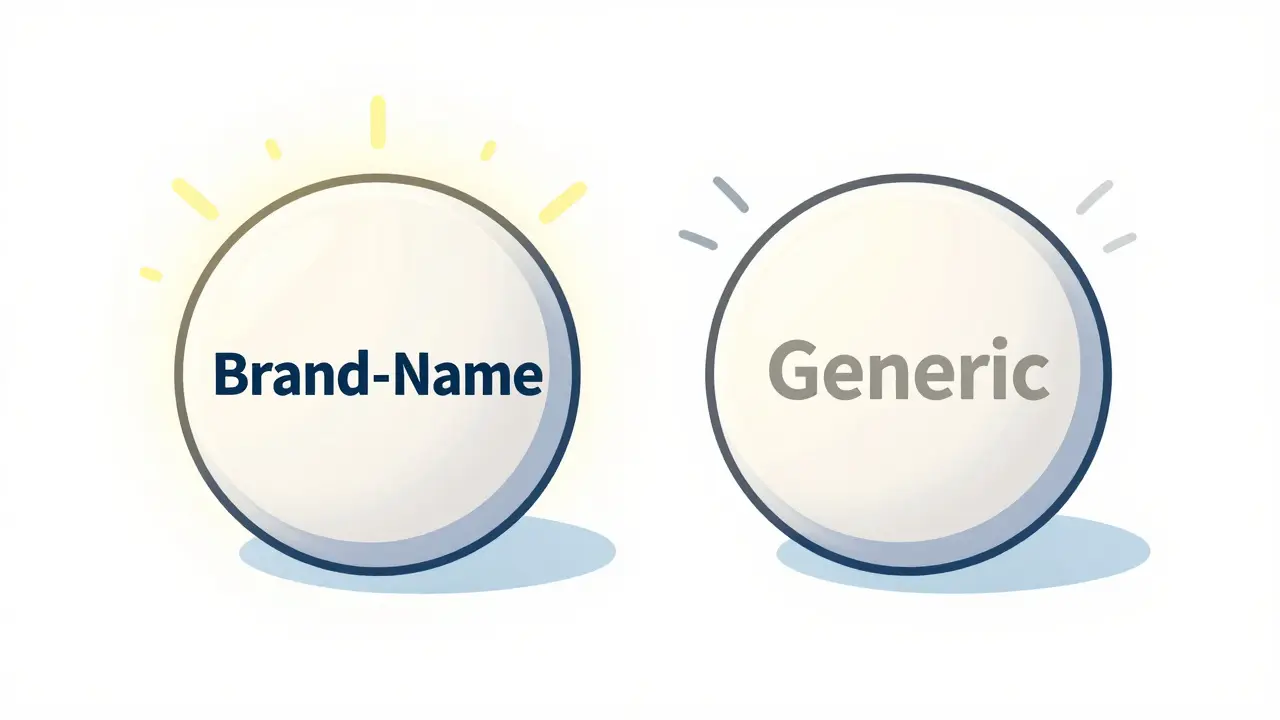
Have you ever looked at your prescription bottle and thought, ‘This isn’t the same as the brand I used to take’-even though the name on the pill is identical? You’re not alone. Millions of people feel this way, and science shows it’s not just in their head. The labeling effect is real: simply seeing the word ‘generic’ on a pill bottle can change how your body responds-even when the medicine inside is chemically identical to the brand-name version.
Why a Generic Label Feels Like a Weaker Medicine
It sounds illogical. Two pills, same active ingredient, same dosage, same manufacturer under contract. Yet, in controlled studies, people taking a placebo labeled as ‘generic’ reported more pain, more side effects, and were far more likely to stop taking it than those taking the exact same placebo labeled as ‘brand-name.’ One 2019 study with 72 participants found that 54% of people stopped taking a placebo labeled as generic within seven days. Only 33% quit when it was labeled as brand-name. That’s a 21-percentage-point difference-just from the label. This isn’t about quality. It’s about perception. Your brain has learned, over years of marketing and experience, that brand-name drugs cost more because they’re better. When you see ‘generic,’ your brain doesn’t see ‘same medicine.’ It sees ‘cheaper,’ ‘less effective,’ and sometimes-‘risky.’Placebo Power, No Active Ingredient Needed
Here’s the wild part: in a 2016 study, researchers gave people identical placebo pills-no active ingredient at all-and labeled them either ‘brand-name’ or ‘generic.’ Those who got the brand-name-labeled placebo reported nearly the same pain relief as people who took real ibuprofen. The generic-labeled placebo? Almost no pain relief. The difference wasn’t small-it was statistically significant. The brand-name label created a placebo effect so strong, it matched real medicine. The generic label? It canceled it out. And it gets stranger. People who got the generic-labeled placebo were more likely to report side effects like dizziness or nausea-even though they took nothing but sugar. That’s the nocebo effect: expecting harm makes you feel it. This isn’t just about headaches. It applies to antidepressants, blood pressure meds, and even insulin. If you believe your drug won’t work, your body often responds as if it doesn’t.Who’s Most Affected-and Why
The labeling effect hits harder for some people. Studies show patients with lower health literacy are nearly twice as likely to stop taking generic meds. In one trial, 67% of people with low health literacy quit their generic blood pressure pill, compared to just 41% of those with higher health literacy. Why? Because they’re less likely to understand what ‘bioequivalent’ means. They don’t know the FDA requires generics to match brand-name drugs within 80-125% of absorption rate. They see ‘generic’ and think ‘second-rate.’ Older adults are also more vulnerable. Many remember when generics used to be unreliable. That old stigma sticks-even though today’s generics are held to the same strict standards as brand-name drugs.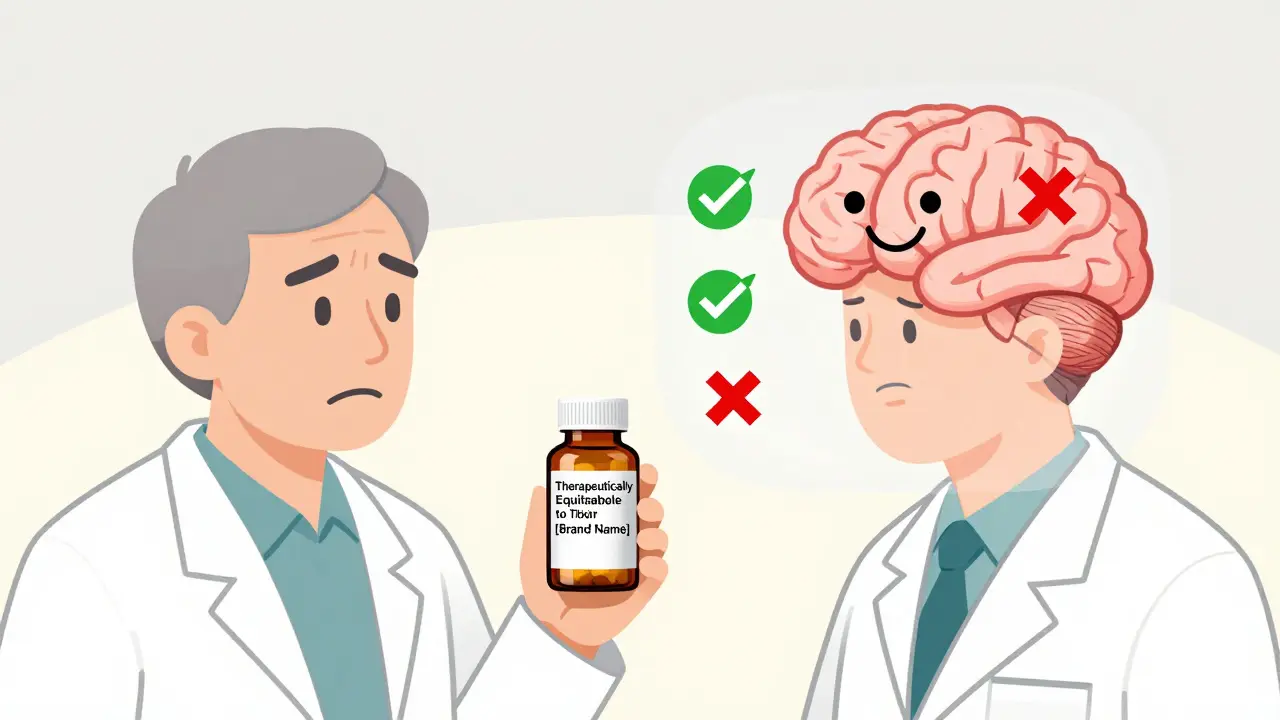
The Cost vs. Perception Trade-Off
Generics save the U.S. healthcare system about $373 billion a year. That’s billions in savings because generics cost 80-85% less than their brand-name equivalents. But if patients stop taking them because they think they don’t work, those savings vanish. Worse, when people quit their generic meds, they often switch back to expensive brand-name drugs-or skip doses entirely. That leads to hospital visits, emergency care, and higher long-term costs. A 2024 Stanford study estimated that if the labeling effect isn’t addressed, the U.S. could lose up to $15 billion a year in potential savings from reduced adherence. Hospitals and insurers know this. That’s why 78% of U.S. health systems now have ‘generic-first’ policies. But they’re also investing in education-because forcing people to take generics without explaining why just makes the problem worse.Labeling Isn’t Just a Word-It’s a Message
Here’s something most people don’t realize: generic drug labels aren’t always identical to brand-name ones. While the active ingredient must match, the inactive ingredients, pill shape, color, and even the fine print can differ. A 2020 study found that nearly half of generic drug labels had discrepancies with their brand-name counterparts. Some differences were minor. Others? Potentially dangerous. For example, a generic label might omit a warning about a rare but serious interaction that’s clearly stated on the brand-name label. Or it might use different language to describe side effects, making them sound more alarming. And then there’s ‘skinny labeling’-where generic makers remove patent-protected uses from their labels. That can confuse doctors and patients. A pill labeled for high blood pressure might not mention it’s also used for heart failure, even though it’s the same drug.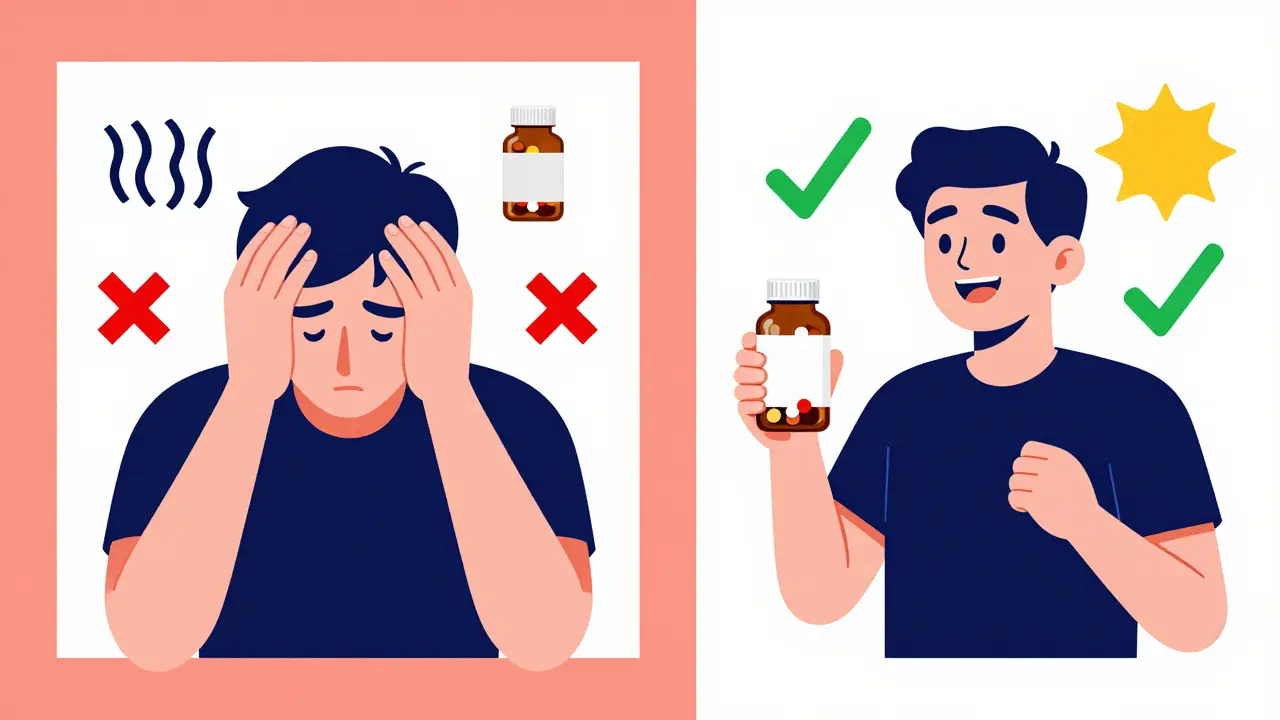
What’s Being Done to Fix It
The FDA and other health agencies aren’t ignoring this. In 2020, they launched the ‘It’s the Same Medicine’ campaign. It showed real patients explaining how generics saved them money without sacrificing results. In pilot programs, patient concerns dropped by 28%. In 2023, the FDA proposed new labeling rules: adding phrases like ‘therapeutically equivalent to [Brand Name]’ right on the generic bottle. A 2023 trial found that this simple change cut discontinuation rates from 52% to 37%. The Generic Pharmaceutical Association also launched ‘Generic You Can Count On’ in January 2024-a $50 million public education push. But the biggest change? Doctors and pharmacists talking about it. When your pharmacist says, ‘This is the same medicine as the brand, just cheaper,’ and explains why, adherence jumps. When they just hand you the bottle and say, ‘It’s generic,’ the labeling effect kicks in.What You Can Do
If you’re on a generic drug and feel like it’s not working:- Don’t assume it’s the pill. Ask your pharmacist: ‘Is this exactly the same as the brand?’
- Check the FDA’s Orange Book online-it lists all approved generics and their brand equivalents.
- Keep a simple symptom log: note how you feel before and after switching.
- If you still feel unsure, ask your doctor to write ‘Dispense as written’ on the prescription. That blocks automatic substitution.
The Bottom Line
The labeling effect isn’t about the medicine. It’s about the mind. Your brain doesn’t care about chemical formulas. It cares about trust. And right now, too many people don’t trust generics-not because they’re unsafe, but because they’ve been told, directly or indirectly, that they’re second-best. The science is clear: generic drugs work. They’re safe. They’re the same. But if we don’t fix how we talk about them, we’ll keep losing billions in savings-and worse, we’ll keep losing patients to misunderstanding. It’s time to stop letting a label decide your health.Are generic drugs really the same as brand-name drugs?
Yes. The FDA requires generic drugs to contain the same active ingredient, strength, dosage form, and route of administration as the brand-name version. They must also meet the same strict standards for purity, stability, and bioequivalence-meaning they’re absorbed in your body at the same rate and to the same extent. The only differences are in inactive ingredients (like dyes or fillers), pill shape, color, and packaging-all of which have no effect on how the drug works.
Why do some people feel generic drugs don’t work as well?
It’s called the labeling effect. When people see ‘generic’ on the bottle, their brain associates it with lower quality-even if the drug is identical. This triggers a nocebo effect: expecting less results in feeling less. Studies show people report more side effects and less relief from generic-labeled pills, even when they’re placebos. This isn’t about the medicine-it’s about perception shaped by marketing, cost assumptions, and outdated beliefs.
Can generic labels be misleading or inaccurate?
Sometimes. While active ingredients must match, generic labels can differ in wording, side effect descriptions, or omitted warnings. A 2020 study found nearly half of generic drug labels had discrepancies compared to brand-name versions. Some differences were minor, but 12.9% could lead to life-threatening risks-like failing to mention a dangerous interaction. This happens because generic manufacturers aren’t always required to update their labels when the brand-name version does.
Should I avoid generic drugs because of the labeling effect?
No. The labeling effect is a psychological barrier, not a medical one. Generic drugs are safe, effective, and responsible for 90% of prescriptions in the U.S. Avoiding them because of perception means paying more and risking worse health outcomes if you skip doses. The solution isn’t to avoid generics-it’s to understand them. Talk to your pharmacist. Ask questions. Use the FDA’s resources. Knowledge reduces fear.
What’s being done to improve generic drug labeling?
The FDA proposed new labeling rules in 2023 requiring generic labels to include phrases like ‘therapeutically equivalent to [Brand Name].’ A 2023 trial showed this simple change reduced patient discontinuation by 15 percentage points. The Generic Pharmaceutical Association also launched a $50 million public education campaign in early 2024. Hospitals and pharmacies are training staff to explain the equivalence clearly. These efforts are slowly changing public perception.
Do doctors and pharmacists understand the labeling effect?
Many do. A 2022 survey found 63% of pharmacists had directly dealt with patients who refused generics because they believed they were less effective. But not all providers are trained to address this. The best approach? Ask your pharmacist to explain why the generic is safe and equivalent. If they can’t, ask for a different one. Your understanding matters more than you think.
Jacob Milano
January 3, 2026 AT 03:43Okay, but have you ever taken a generic pill that looked like a rainbow unicorn exploded on it and still felt like your body was screaming for the blue oval you used to know? I did. Not because it didn’t work-but because my brain went full horror movie: 'This isn’t the same. This is the impostor.' The science is wild-your mind literally rewires your pain response based on packaging. It’s like drinking the same coffee from a Starbucks cup vs. a paper cup at a gas station. Same beans. Different soul.
And the weirdest part? The placebo effect isn’t just ‘positive thinking.’ It’s cultural conditioning. We’ve been sold the myth that expensive = better since we were kids. Even when logic says otherwise, your lizard brain still whispers, 'They’re lying to you.'
Also-why do generic labels look like they were designed by someone who hates joy? No wonder people panic. If the bottle looked like it came from a sci-fi pharmacy, we’d all be chill.
TL;DR: Pills don’t lie. Our marketing-saturated brains do.
Cassie Tynan
January 3, 2026 AT 20:44So let me get this straight-we’ve spent decades convincing people that ‘brand’ means quality, and now we’re shocked when they believe it? Genius. We built a religion around logos and price tags, then acted surprised when the congregation stopped showing up for the cheap communion wafers.
Next up: ‘Why do people think a $1000 watch tells better time than a $10 one?’ Spoiler: it doesn’t. But your ego? It’s got a PhD in self-delusion.
Also, ‘skinny labeling’? That’s not a regulatory loophole-it’s corporate cowardice. They’re not just cutting corners. They’re cutting trust. And now we’re all paying for it in ER visits and anxiety.
PS: The FDA campaign should just put a meme on the bottle. ‘This pill is the Beyoncé of generics.’
Stephen Craig
January 5, 2026 AT 03:35It’s not about the drug. It’s about control. People feel powerless in healthcare. A label is one of the few things they can react to. If the pill changes, they lose a sense of stability-even if the medicine doesn’t. The real issue isn’t perception. It’s trauma.
Doctors don’t explain. Pharmacists rush. Patients are left alone with a bottle and a fear they can’t articulate.
Fix the system, not the label.
Connor Hale
January 6, 2026 AT 20:08Interesting how we treat medicine like a luxury product instead of a basic tool. We don’t question if a hammer works because it’s not branded. But a pill? Suddenly it’s got a personality. We’ve turned healthcare into a brand war, and the patients are the collateral.
I’ve been on generics for 8 years. Same results. Same side effects. Same life. The label didn’t change my body. But it sure changed how I felt about taking it.
Education helps. But so does just… not making the bottle look like a warning sign.
Rory Corrigan
January 7, 2026 AT 04:51So… our minds are the real drug? 😵💫
Like… if I believe the generic is magic, does it become magic? 🤔
Also-what if the brand name was just a placebo too? 😏
Maybe we’re all just walking placebo machines with insurance cards.
Also also-why do generic pills always look like they were made by a robot who hates humans? 🤖💊
Catherine HARDY
January 8, 2026 AT 23:10Did you know the FDA doesn’t require generic manufacturers to update their labels when the brand updates theirs? That’s not an accident. That’s a backdoor for corporate liability. The same company that makes the brand? Often makes the generic. But they hide the scary stuff on the label. Why? So when you have a bad reaction, they can say, ‘It wasn’t in the instructions.’
And the ‘therapeutically equivalent’ phrase? That’s PR spin. Equivalent doesn’t mean identical. It means ‘close enough to not get sued.’
They’re not trying to fix the labeling effect. They’re trying to stop you from suing them.
Check the FDA’s database. Look up the exact batch numbers. You’ll be surprised what’s missing.
Jack Wernet
January 10, 2026 AT 05:52I’ve worked in pharmacy for 17 years. I’ve seen patients cry because their generic pill was a different color. Not because they were sick-because they felt betrayed. One elderly woman told me, ‘My husband took the blue one for 12 years. He died. Now I’m on the white one. I’m scared it’s killing me too.’
It wasn’t the medicine. It was the grief. The label triggered her trauma.
When I explain-‘This is the same pill, just made by a different factory, same FDA checks, same chemistry’-she calms down. But I have to sit with her. I have to listen.
That’s the real solution. Not campaigns. Not slogans. Human connection.
And yes, I’ve had patients switch back to brand-name just so they could sleep at night. I don’t judge. I just make sure they know they’re not alone.
Roshan Aryal
January 10, 2026 AT 21:26Let’s be real-Americans are the only ones who think ‘generic’ means ‘bad.’ In India, we’ve been using generics for decades. Cheaper? Yes. Less effective? Never. Our doctors prescribe them without a second thought. We don’t have the luxury of brand worship.
Meanwhile, you guys are paying $150 for a pill that costs $2 to make, then blaming the $2 version when your brain plays tricks on you.
It’s not the label. It’s your privilege talking.
And don’t get me started on ‘skinny labeling.’ That’s not a regulatory gap-that’s American capitalism eating its own patients alive. You want solutions? Stop treating medicine like a status symbol and start treating it like a human right.