
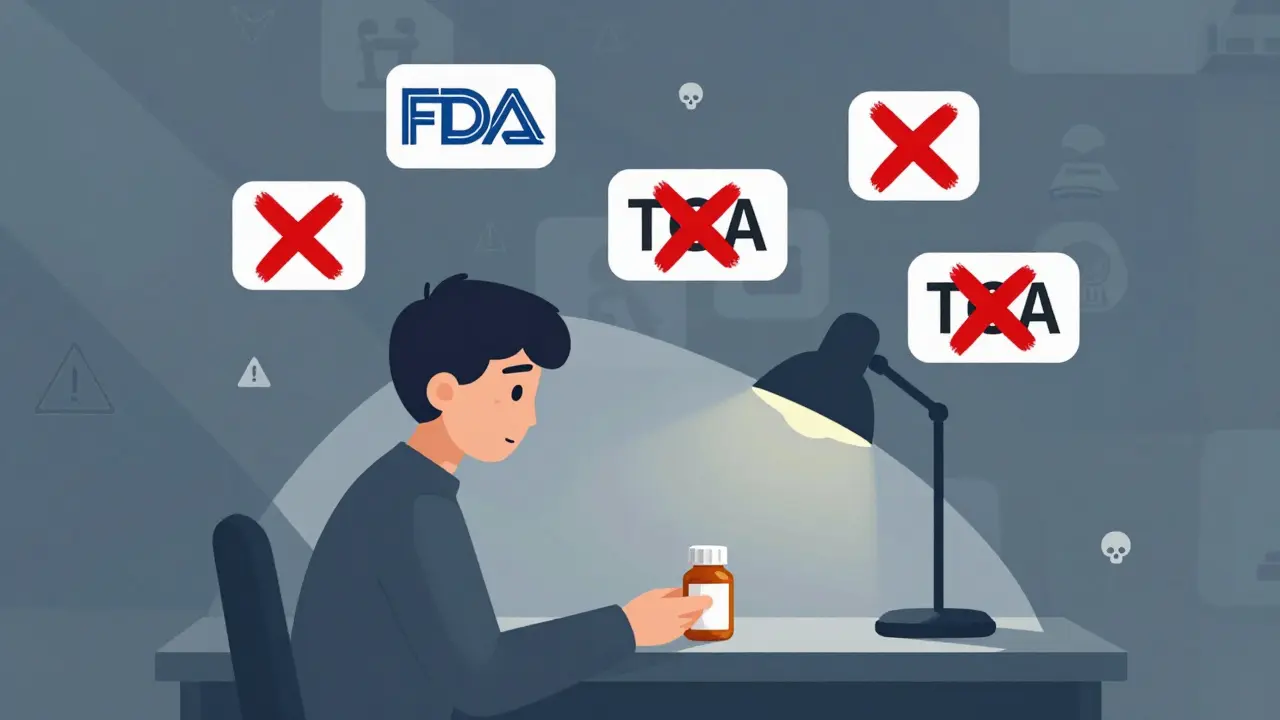
Every year, millions of people around the world order prescription drugs from websites based in other countries. They do it because the prices are lower. Maybe they don’t have insurance. Maybe their local pharmacy won’t fill the script. Or maybe they just think it’s easier. But what they don’t realize is that counterfeit drugs are hiding in plain sight - packaged like the real thing, shipped with fake receipts, and sold by sites that look completely legitimate.
The truth is, if you buy medication from an unverified international source, you’re playing Russian roulette with your health. These aren’t just expired pills or slightly off-brand generics. These are dangerous fakes - sometimes laced with rat poison, sometimes filled with chalk, sometimes containing ten times the dose they claim. And they’re everywhere.
What Exactly Are Counterfeit Drugs?
Counterfeit drugs aren’t just fake versions of real medicine. They’re anything that doesn’t match what’s supposed to be inside the bottle. The World Health Organization breaks it down into two categories: substandard and falsified.
Substandard drugs are made by legitimate manufacturers but fail quality checks - maybe they were stored wrong, expired, or got mixed up in shipping. Falsified drugs? Those are outright frauds. They’re made in secret labs, often in Southeast Asia, with no oversight. They might have the right color, shape, and logo - but inside? It could be anything: sugar, paint, industrial chemicals, or even a tiny bit of the real drug mixed in to trick you.
INTERPOL’s 2025 operation seized over 50 million doses of these fake pills. In Australia alone, customs and health officials stopped more than 5.2 million units. Many were erectile dysfunction pills, weight loss drugs, and stimulants like modafinil - the exact types people are most likely to buy online without a prescription.
Why You Can’t Trust Online Pharmacies
There are over 35,000 online pharmacies out there. Less than 3% meet international safety standards. The rest? They’re scams.
Here’s how they fool you:
- They copy the look of real pharmacies - same fonts, same logos, even fake seals from the FDA or TGA.
- They offer ‘no prescription needed’ - which is illegal for most drugs in every country.
- They use PayPal, crypto, or wire transfers to avoid traceability.
- They appear at the top of Google searches because they pay for ads - even though they’re not licensed.
A 2024 study found that 68% of people who ordered from non-certified sites got packaging that looked wrong. One in three got pills that didn’t match the description. Some users reported taking pills that were supposed to be 50mg of sildenafil - but tested at 198mg. That’s not a boost. That’s a medical emergency. Priapism. Vision loss. Heart attacks.
And the worst part? You won’t know until it’s too late. If you get a fake antibiotic, you might not get better. You might develop a superbug. If you get a fake cancer drug? You’re not just wasting money. You’re letting the disease spread unchecked.
The Real Cost: Lives Lost, Resistance Built
Counterfeit drugs don’t just hurt individuals. They hurt entire health systems.
WHO estimates that substandard and falsified anti-malarial drugs alone cause over 116,000 deaths each year. Fake antibiotics contribute to antimicrobial resistance - a global crisis that could make simple infections deadly again. A 2020 OECD report linked counterfeit medicines to between 72,000 and 169,000 child deaths from pneumonia annually.
And it’s not just developing countries. People in Australia, the U.S., Canada, and the UK are buying these drugs too. A Kaiser Family Foundation survey found that 18% of Americans have ordered prescription drugs from overseas. But 72% of them didn’t check if the pharmacy was real.
Pfizer has blocked over 302 million counterfeit doses since 2004. That’s not a number. That’s 302 million people who might have died - or worse, become permanently disabled - because someone bought a pill off a shady website.
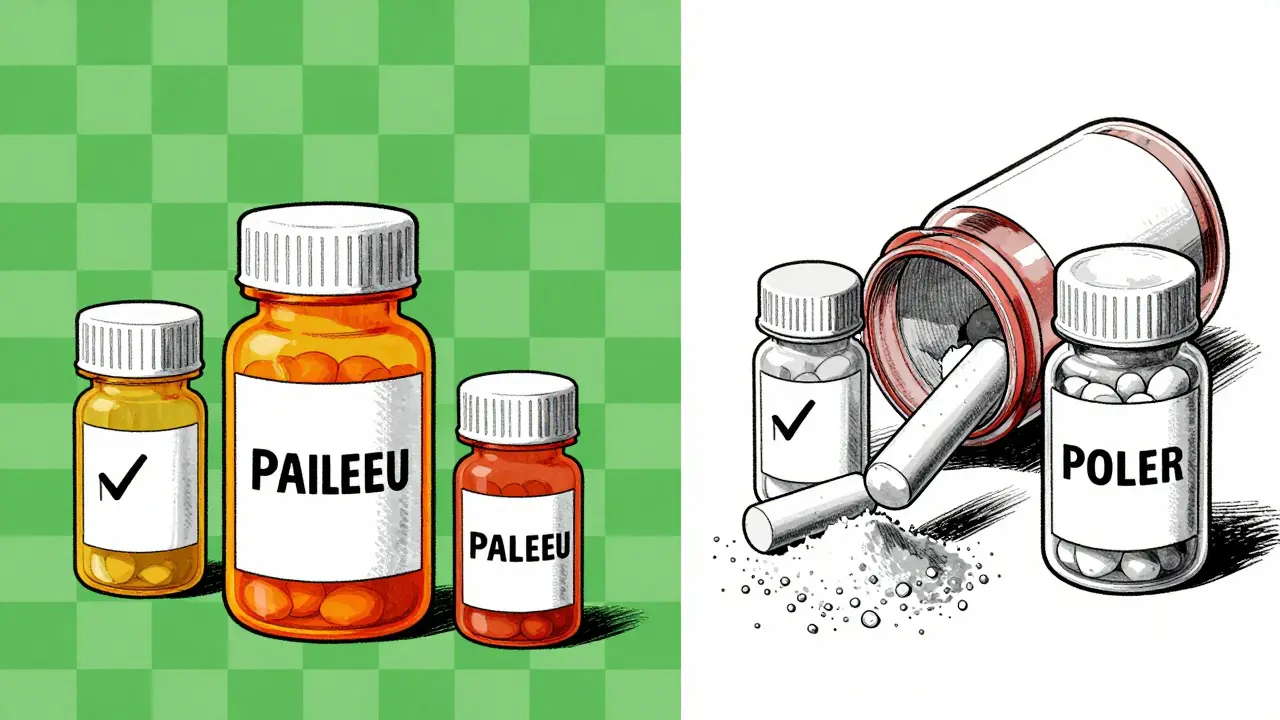
How to Spot a Fake Pharmacy (Even If It Looks Real)
You can’t tell a fake pharmacy by how fancy its website looks. The best ones look like hospitals. Here’s how to check for real ones:
- Look for a physical address - not just a PO box. Call it. If they don’t answer, walk away.
- Check if they require a valid prescription. If they don’t, it’s illegal and dangerous.
- Verify the pharmacy through your country’s official regulator. In Australia, use the Therapeutic Goods Administration. In the U.S., use the NABP’s VIPPS program. In Canada, check the Canadian International Pharmacy Association.
- Look for a licensed pharmacist you can talk to. Real pharmacies offer live consultations.
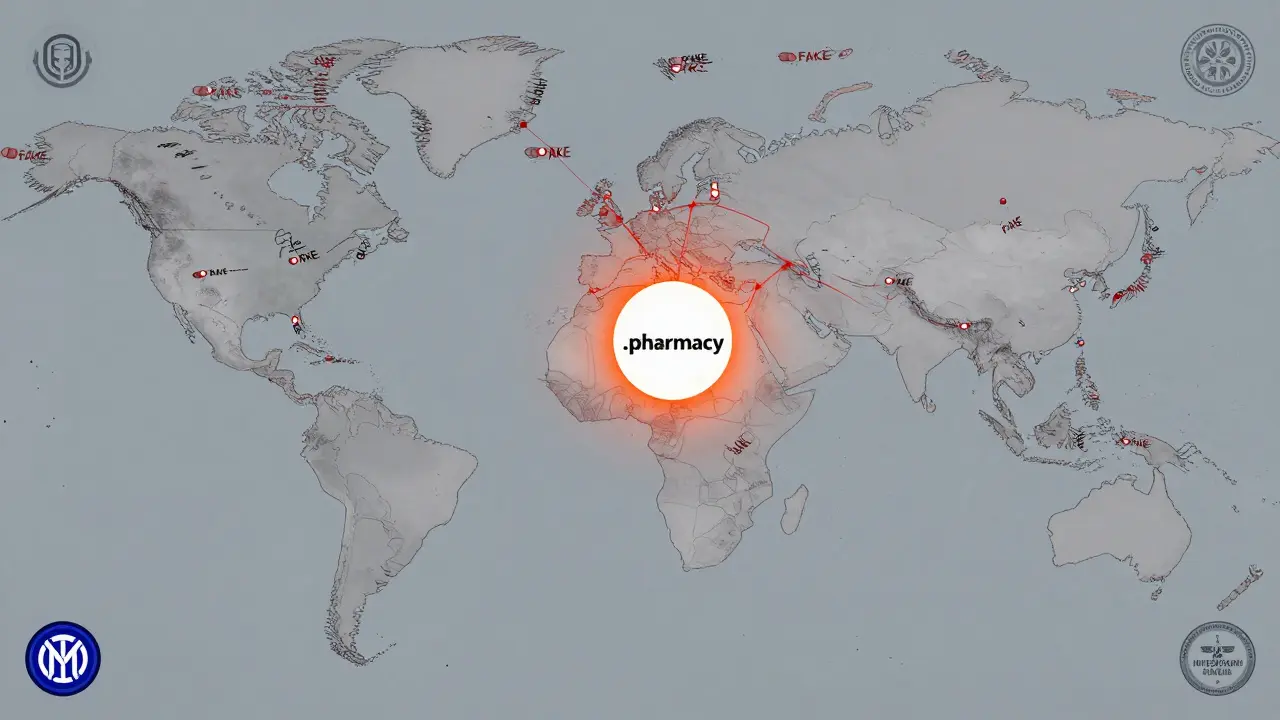
- Check if the site has a .pharmacy domain. It’s a trusted seal only given to verified pharmacies.
LegitScript has verified over 2.1 million pharmacies since 2010. Only 14% passed. That’s how rare the real ones are.
What to Do If You Already Bought Something Suspicious
If you’ve ordered from a site that now feels off - maybe the pills look different, taste strange, or didn’t work - don’t throw them away. Don’t take more. Don’t panic. Do this:
- Stop taking the medication immediately.
- Save the packaging, receipt, and any emails.
- Contact your local health authority. In Australia, report it to the TGA via their online portal.
- See your doctor. Tell them exactly what you took and where you got it.
- Report the website to INTERPOL’s I-CAN portal or your national cybercrime unit.
One person reporting a fake drug can help stop a whole network. These criminals rely on silence.
Why This Keeps Happening - And What’s Being Done
Counterfeit drugs are a $467 billion global industry. That’s bigger than most national economies. Criminals make up to 9,000% profit on fake pills. For them, it’s low risk, high reward.
But the fight is growing. INTERPOL’s Operation Pangea XVI in May 2025 shut down 13,000 websites and arrested 769 people across 90 countries. The EU now requires every prescription medicine to have a unique serial code and anti-tamper seal. The WHO is building a global tracking system to log every fake drug report.
Still, the problem grows. Criminals use encrypted apps, cryptocurrency, and dark web marketplaces. They ship packages through multiple countries to avoid detection. And they’re targeting high-value drugs - cancer treatments, insulin, biologics - where the profit margin is highest and the consequences are deadliest.
Until every country has strong regulatory systems - and until consumers stop treating online pharmacies like Amazon - this will keep happening.
What You Can Do Right Now
You don’t need to be an expert to stay safe. Here’s your checklist:
- Never buy prescription drugs without a valid prescription.
- Only use pharmacies listed on your country’s official health website.
- If the price seems too good to be true, it is.
- Don’t trust pop-up ads or social media influencers selling pills.
- Ask your doctor about patient assistance programs - many drug companies offer discounts for those who can’t afford their meds.
There’s no shortcut to safety. But there’s a clear path: stick to trusted sources. Your life isn’t worth risking for a few dollars saved.
Can I get in trouble for ordering drugs from another country?
It depends. In many countries, importing prescription drugs without a valid license is technically illegal - even if the drug is legal in your home country. While individuals are rarely prosecuted for personal use, customs can seize your package, and you may be flagged for future monitoring. More importantly, the real risk isn’t legal - it’s health. You’re not breaking the law to save money. You’re risking your life.
Are online pharmacies in Canada or the UK safer than others?
Only if they’re certified. A Canadian pharmacy that’s part of the Canadian International Pharmacy Association (CIPA) and follows strict standards is much safer than one that’s just based in Canada. The same goes for UK pharmacies registered with the General Pharmaceutical Council. Location doesn’t guarantee safety - certification does. Always verify through official regulator websites, not the pharmacy’s own claims.
How do I know if my medicine is fake after I’ve taken it?
Some signs include: no effect when it should work, sudden side effects you’ve never had before, pills that look or taste different from your usual brand, or packaging with spelling errors, blurry logos, or missing batch numbers. If you feel worse after taking it - stop immediately and contact a doctor. Don’t wait. Fake drugs can cause internal damage you won’t feel until it’s too late.
Can I trust pharmacies that offer free shipping or discounts?
No. Legitimate pharmacies don’t need to lure customers with outrageous deals. Real drug companies set prices based on manufacturing, testing, and distribution costs. If a site offers 80% off insulin or 90% off cancer drugs, it’s either a scam or selling fake pills. The same goes for ‘free shipping’ offers on controlled substances - that’s not a perk. It’s a red flag.
What should I do if my doctor won’t prescribe the medication I want?
Ask why. There may be safer alternatives, generic versions, or financial assistance programs available. Many drug manufacturers offer patient support programs that reduce or eliminate costs. Some clinics have sliding scale fees. Don’t turn to illegal sources because your doctor said no - talk to them again, or ask for a referral to a specialist. Your health is worth the effort.
Marilyn Ferrera
December 31, 2025 AT 01:56It’s not just about price-it’s about trust. If you wouldn’t let a stranger fill your prescription at a gas station, why trust a website with no license? I’ve seen people risk their lives for $20 savings. That’s not frugal. That’s fatal.
Harriet Hollingsworth
December 31, 2025 AT 06:11People are dying because they’re too lazy to call their doctor. No prescription? No problem! Just order from some shady site in India. And then they wonder why they’re in the hospital. Wake up. This isn’t a Netflix binge-it’s your life.
Aaron Bales
December 31, 2025 AT 14:32Real talk: most people don’t know how to verify a pharmacy. The info’s out there-VIPPS, TGA, CIPA-but nobody checks. If we made it as easy as checking Amazon reviews, this problem would shrink fast. Education > fear-mongering.
Paul Huppert
January 2, 2026 AT 03:56I used to buy modafinil online because my insurance wouldn’t cover it. Then I got a batch that tasted like chalk. I stopped. Called my doctor. Got a discount program. Took me three weeks. Worth it. Don’t wait until you feel weird to act.
Hanna Spittel
January 3, 2026 AT 12:20EVERYTHING IS A GOVERNMENT PLOT. 🤡 But also… fake pills are REAL. I saw a video of someone’s kid vomiting after taking ‘Adderall’ from Instagram. It was just glitter and rat poison. 🚨
Brady K.
January 4, 2026 AT 00:40Let’s be real-this isn’t a public health crisis. It’s a capitalist failure. Pharma companies charge $1,200 for a pill that costs $2 to make. Of course people go offshore. The system’s rigged. But yeah… still don’t buy from sketchy sites. Just saying.
John Chapman
January 4, 2026 AT 11:11YOU CAN DO THIS! 💪 Stop scrolling and start calling your doctor. There are programs. There are options. You’re not alone. And your life? Way more valuable than a $15 shortcut. Let’s get you safe. 🙌
Emma Hooper
January 4, 2026 AT 23:19My aunt took fake insulin from a ‘Canadian’ site. Thought she was saving cash. Ended up in the ER with diabetic ketoacidosis. They had to pump her stomach. The packaging had a typo: ‘Glucose Level: 90-120’ - they wrote ‘Glucos Level’. That’s not a mistake. That’s a death sentence.
Martin Viau
January 5, 2026 AT 13:28Why are we even talking about this? Canada’s got better drug pricing. If you’re American and buying from us, you’re just exploiting our system. Stop. Go lobby your government. Don’t be a free-rider.
Robb Rice
January 5, 2026 AT 21:29i've been taking my meds from a verified pharmacy for 7 years. they're not cheap. but they're real. i don't know why people think the internet is a pharmacy. it's not. it's a casino.
Deepika D
January 6, 2026 AT 17:52Let me tell you something-I work in a hospital in Mumbai, and we see this every day. People come in with fake antibiotics, thinking they’re treating pneumonia. Instead, they’re seeding superbugs. One bottle of fake azithromycin can kill a whole community. It’s not just about you. It’s about your neighbor, your child, your elderly parent. The fake drug trade is a silent genocide. And it’s being fueled by convenience. We need global awareness, not just individual warnings. People need to understand that when they buy a pill online without checking, they’re not just gambling with their life-they’re gambling with public health infrastructure. And when that collapses? No one is safe. Not even the rich. Not even the privileged. Not even the ones who think they’re too smart to get caught. We’re all connected. One fake pill can ripple across continents. We need better education, better access, better systems. Not just fear. Not just outrage. Real change.
Bennett Ryynanen
January 6, 2026 AT 18:49My buddy took fake Viagra and ended up in the hospital with a stroke. He’s lucky he didn’t die. Now he’s got a permanent limp and a $200k bill. And he thought he was saving $50. Bro. Just… no. Don’t be that guy.