
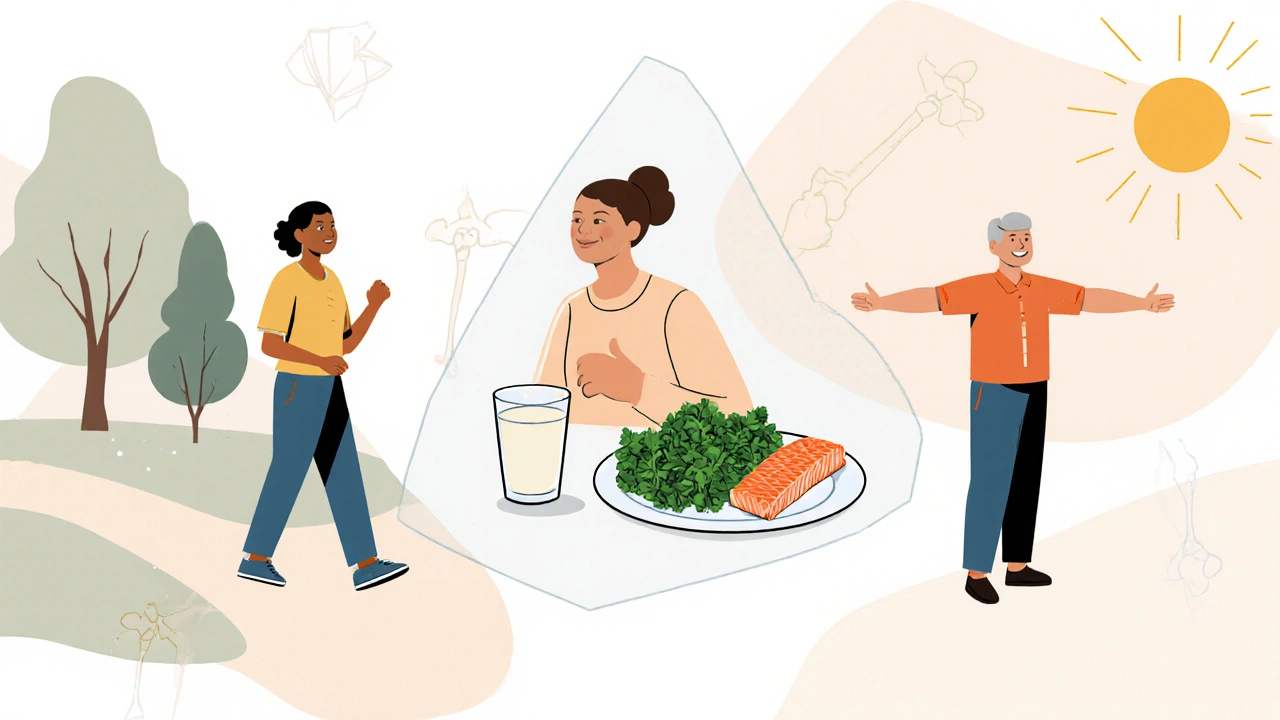
One in three women and one in five men over 50 will break a bone because of osteoporosis. It’s not just about getting older-it’s about what you’ve been doing (or not doing) for years. The good news? Most cases of osteoporosis are preventable. You don’t need expensive treatments or magic pills. You need consistent, simple habits that build strong bones early and keep them strong as you age.
Understand What Osteoporosis Really Is
Osteoporosis isn’t just weak bones. It’s when your bones lose density and become porous, like a sponge with big holes. This makes them fragile and prone to fractures-even from a simple fall, a cough, or bending over. The most common fracture sites are the hip, spine, and wrist. Many people don’t know they have it until they break a bone. That’s why prevention starts long before symptoms show.
Bone density peaks around age 30. After that, you slowly lose bone mass. For women, bone loss speeds up after menopause due to dropping estrogen levels. Men lose bone too, but more slowly. The goal isn’t to stop aging-it’s to slow down bone loss and build as much bone as you can before age 30.
Get Enough Calcium-But Not Just Any Calcium
Your body doesn’t make calcium. You have to get it from food or supplements. Adults need about 1,000 mg of calcium daily. Women over 50 and men over 70 need 1,200 mg. That’s not hard if you know where to look.
- One cup of milk or fortified plant milk = 300 mg
- One cup of cooked kale or bok choy = 180 mg
- Three ounces of canned salmon with bones = 180 mg
- One-half cup of tofu made with calcium sulfate = 400 mg
- One ounce of cheddar cheese = 200 mg
Most people in Australia get less than half the recommended amount. If you’re not eating dairy or leafy greens regularly, you’re falling short. Supplements can help-but only if your diet is still lacking. Too much calcium from pills (over 2,000 mg a day) can increase heart attack risk. Stick to food first. Use supplements only to fill the gap.
Vitamin D Is Non-Negotiable
Calcium won’t do anything without vitamin D. This vitamin tells your body how to absorb calcium from your gut and where to deposit it-in your bones, not your arteries. Most Australians are low in vitamin D, especially in winter or if they stay indoors.
The body makes vitamin D from sunlight. You need about 10-30 minutes of midday sun on your arms, legs, or back, two to three times a week. Darker skin needs more time. In Sydney, from May to August, sunlight isn’t strong enough for your skin to make vitamin D. That’s when supplements become essential.
Most adults need 600-800 IU daily. People over 70, those with dark skin, or those who rarely go outside may need 1,000 IU. Blood tests can confirm your levels, but if you’re unsure, a daily 1,000 IU supplement is safe and effective. Don’t wait for a fracture to realize you were deficient.

Movement Is Medicine
Bones respond to stress. If you don’t use them, they weaken. Weight-bearing and muscle-strengthening exercises are the most powerful tools you have to prevent bone loss.
Weight-bearing means your feet and legs support your body weight. Examples: walking, jogging, dancing, stair climbing, hiking. Aim for at least 30 minutes, five days a week. Even brisk walking helps. If you can’t walk far, try walking faster or adding hills.
Muscle-strengthening exercises include lifting weights, using resistance bands, or doing bodyweight moves like squats, lunges, and push-ups. Do these two to three times a week. Start light. Focus on form. Even 10 minutes of resistance training twice a week can slow bone loss.
Studies show people who do both types of exercise regularly have 1-3% higher bone density than those who don’t. That might sound small, but it’s the difference between a fracture and staying independent.
Stop What’s Hurting Your Bones
Some habits directly damage bone health. Quitting smoking is one of the best things you can do. Smokers lose bone faster and heal slower after fractures. Alcohol is another problem. More than two drinks a day increases fracture risk by 30-40%. Cutting back helps-even if you don’t quit completely.
Too much caffeine? One or two coffees a day are fine. But if you’re drinking five espressos and skipping meals, you’re replacing calcium-rich drinks with a diuretic that leaches calcium from your bones.
Some medications also weaken bones. Long-term use of corticosteroids (like prednisone), certain seizure meds, and proton pump inhibitors (PPIs) for acid reflux can reduce bone density. If you’re on these drugs long-term, talk to your doctor. Ask if you need a bone density test or extra calcium and vitamin D.
Know Your Risk-and Get Tested
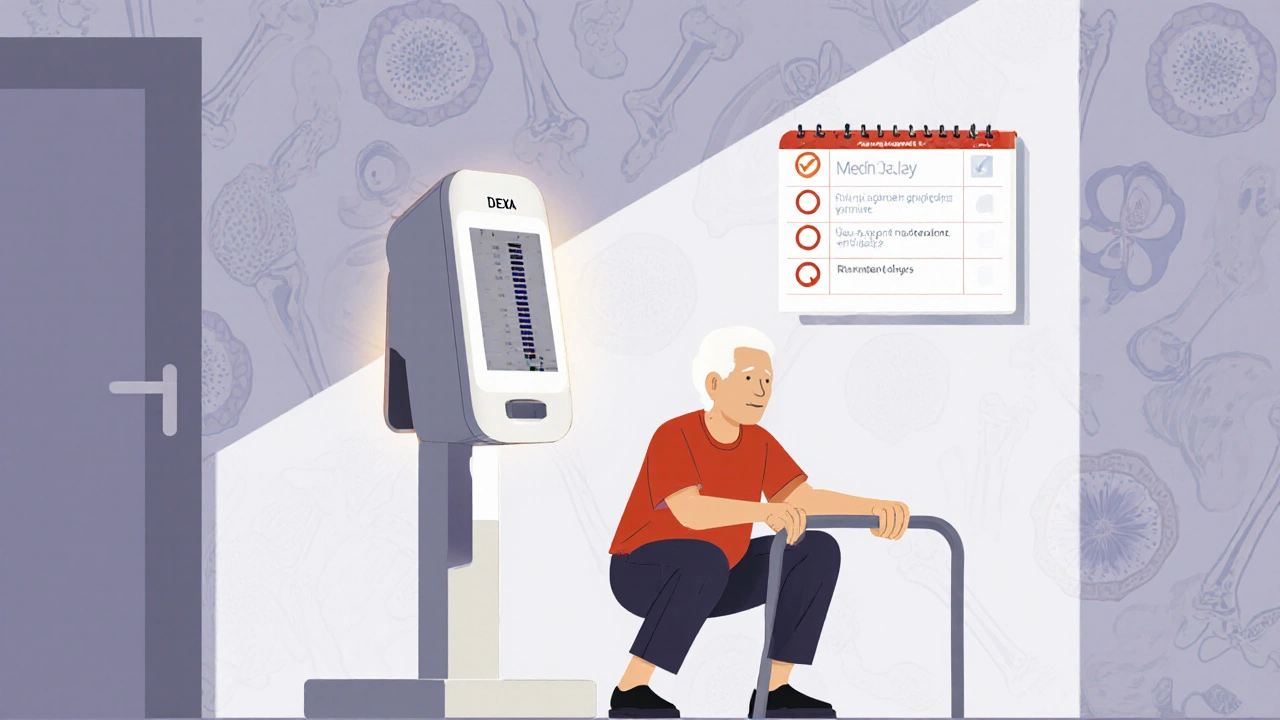
Not everyone needs a bone scan. But if you’re a woman over 65, a man over 70, or you’ve had a fracture after 50, get a DEXA scan. It’s a quick, painless X-ray that measures bone density in your hip and spine.
Other red flags: losing more than 1.5 inches in height, a curved spine (dowager’s hump), or a family history of hip fractures. If you’re on long-term steroids, have rheumatoid arthritis, or had early menopause before 45, you’re at higher risk.
Don’t wait for pain. Osteoporosis doesn’t hurt until it breaks. A DEXA scan takes 10 minutes. It’s covered by Medicare in Australia for people who meet the criteria. If your doctor says you don’t need it, ask why. You deserve to know your bone health.
Food and Lifestyle Are Your Best Defense
There’s no single superfood that prevents osteoporosis. It’s about the whole pattern. Eat a variety of whole foods: vegetables, fruits, lean proteins, nuts, seeds, and dairy or fortified alternatives. Avoid processed foods high in salt-too much sodium makes your body dump calcium through urine.
Stay active. Don’t sit for hours. Take the stairs. Walk to the store. Stand up every hour. These small actions add up. Build muscle. Protect your spine. Avoid falls. Remove rugs, install grab bars, and get good lighting at home. Most fractures happen indoors, not on the street.
Preventing osteoporosis isn’t about fear. It’s about control. You can’t stop aging, but you can decide how your bones age. Every step you take today-whether it’s walking, eating yogurt, or stepping outside for sun-builds a stronger future for your body.
Can osteoporosis be reversed?
You can’t fully reverse osteoporosis, but you can stop it from getting worse-and even rebuild some bone density. Weight-bearing exercise, adequate calcium and vitamin D, and quitting smoking can improve bone strength. Medications like bisphosphonates can also help, but they work best when combined with lifestyle changes. The earlier you act, the better the results.
Is walking enough to prevent bone loss?
Walking helps, but it’s not enough on its own. It’s a weight-bearing activity, so it does slow bone loss. But to build or maintain bone density, you need to add resistance training. Try adding squats, lunges, or light dumbbells twice a week. Studies show people who combine walking with strength training have significantly better bone density than those who walk alone.
Do I need a bone density test if I’m young?
Most people under 50 don’t need a DEXA scan unless they have a medical condition that affects bone health-like long-term steroid use, early menopause, Crohn’s disease, or a history of fractures. If you’re young and healthy, focus on building peak bone mass through diet, exercise, and avoiding smoking. That’s your best defense later in life.
Can plant-based diets cause osteoporosis?
Not if they’re well-planned. Vegans and vegetarians can have strong bones if they get enough calcium from fortified plant milks, tofu, leafy greens, almonds, and tahini. They also need vitamin D and protein. Some plant foods contain oxalates and phytates that bind calcium, so variety matters. A vegan who eats kale, fortified orange juice, and almonds daily can have better bone health than a meat-eater who skips dairy and never exercises.
Are calcium supplements safe?
Yes, if taken correctly. The safest way is to get most calcium from food and use supplements only to meet your daily goal. Don’t take more than 500 mg at once-your body can’t absorb more. Take them with food for better absorption. Avoid calcium carbonate if you have low stomach acid. Calcium citrate is better absorbed on an empty stomach. Always pair calcium with vitamin D. Too much (over 2,000 mg/day) can raise heart risks, so stick to recommended doses.
What to Do Next
Start today. Don’t wait for a diagnosis. Walk for 30 minutes. Eat one serving of calcium-rich food. Step outside for 15 minutes of sun. Write down your daily habits for a week. Are you getting enough movement? Enough sun? Enough protein and calcium?
If you’re over 50, ask your doctor about a DEXA scan. If you’re under 50, start building habits now. Your bones are counting on you-not just for next year, but for the next 30 years. Prevention isn’t dramatic. It’s daily. And it works.
Tara Stelluti
November 18, 2025 AT 17:51This post is basically a 2000-word ad for dairy and sunlight. What about people who live in Alaska or are lactose intolerant? Also, why no mention of vitamin K2? You think I'm gonna chug milk like a 1950s housewife just because some blog says so?
Margaret Wilson
November 18, 2025 AT 19:51OMG I JUST REALIZED I’VE BEEN DOING EVERYTHING WRONG 😭 I drink 5 coffees a day, never lift weights, and my only ‘calcium’ is that sad almond milk I bought because it’s ‘trendy.’ My bones are probably just dust at this point. I need to start now!! 🙏💪 #bonegoals
Mary Follero
November 20, 2025 AT 09:55Love this breakdown! I’m 48 and just started walking 45 minutes a day and doing 10-minute resistance bands sessions after work. I used to think osteoporosis was just for ‘old people’-turns out it’s a slow burn, and I was already on the path. Small changes = big results. Also, I switched to fortified oat milk and now I eat kale in smoothies. No regrets. You got this.
Arun Mohan
November 20, 2025 AT 21:31How quaint. You assume everyone has access to ‘fortified plant milk’ or ‘kale’ or ‘safety in sunlight.’ In rural India, most people get calcium from whatever’s cheap and available-chuna, sometimes, or crushed eggshells. Your ‘practical steps’ are a luxury for Westerners who can afford organic produce and personal trainers. This isn’t prevention-it’s privilege.
Abdula'aziz Muhammad Nasir
November 22, 2025 AT 09:30While the article presents useful guidelines, it's important to recognize that bone health is influenced by a broader set of factors including genetics, hormonal balance, and systemic inflammation. Calcium and vitamin D are foundational, but without addressing underlying metabolic conditions-such as insulin resistance or chronic low-grade inflammation-bone density improvements may be limited. A holistic approach that includes sleep hygiene, stress management, and gut health is equally critical. Prevention is not merely dietary; it's systemic.
Tyrone Luton
November 24, 2025 AT 05:02They never tell you the truth. The pharmaceutical industry makes billions from osteoporosis drugs. They push calcium supplements because they can patent them. But the real solution? Move your body. Eat real food. Stop living in a plastic bubble. The system wants you dependent. Don’t be fooled. Your bones don’t need a pill-they need movement, sunlight, and silence.
Will Phillips
November 26, 2025 AT 02:53Anyone who takes calcium supplements is asking for a heart attack. The FDA knew this in 2010. The dairy industry paid off the NIH. Your doctor is complicit. I stopped taking my pills after reading a leaked memo from 2007. Now I eat spinach and walk barefoot on concrete. My DEXA scan improved 12% in 18 months. No meds. No lies. Just truth.
Brad Samuels
November 27, 2025 AT 09:27It’s funny how we treat our bodies like machines that need maintenance. But bones aren’t just structural-they’re alive. They remember. They respond. They heal. The real question isn’t ‘how do I prevent osteoporosis?’ It’s ‘how do I live in a way that honors the body I’ve been given?’ Maybe it’s not about fixing what’s broken, but about choosing to show up for yourself every day.
Herbert Scheffknecht
November 29, 2025 AT 00:17What if the whole idea of ‘bone density’ is a myth? What if the body isn’t supposed to last 80 years? We evolved to die young, to make room for the next generation. Maybe osteoporosis isn’t a disease-it’s nature’s way of saying ‘your time is up.’ Or maybe we’re just too addicted to control. I don’t know. I just walk. I eat. I breathe. I let go.
Jeff Moeller
November 29, 2025 AT 22:01My grandma broke her hip at 82 from sneezing. She never took a supplement. She walked 5 miles every day. She ate rice, lentils, and whatever grew in her garden. She didn’t know what DEXA meant. She just lived. Maybe the answer isn’t more science. Maybe it’s less noise.
william volcoff
December 1, 2025 AT 00:22Walking isn’t enough? Okay, but what if you have arthritis? Or a bad knee? Or you’re 70 and scared to fall? The article reads like it’s written for people who still have functional hips. Real life isn’t a gym commercial. Maybe the real problem is we don’t make environments safe for aging bodies-not just tell people to ‘do squats.’
Ankita Sinha
December 1, 2025 AT 19:35Thank you for mentioning oxalates in plant foods! So many vegan blogs ignore this. I used to eat raw spinach daily thinking I was being healthy-until my doctor said my calcium absorption was near zero. Now I blanch greens, rotate my calcium sources, and take my vitamin D with dinner. Small tweaks, big difference. Knowledge is power.
Jessica Engelhardt
December 2, 2025 AT 05:10Let’s be real-this is all just woke wellness propaganda. You think your bones care if you drink oat milk? In America we’ve turned health into a religion and osteoporosis into a moral failing. I’m 62, I smoke, I drink, I sit all day-and I’ve never broken a bone. Maybe the real epidemic is guilt, not bone loss.