
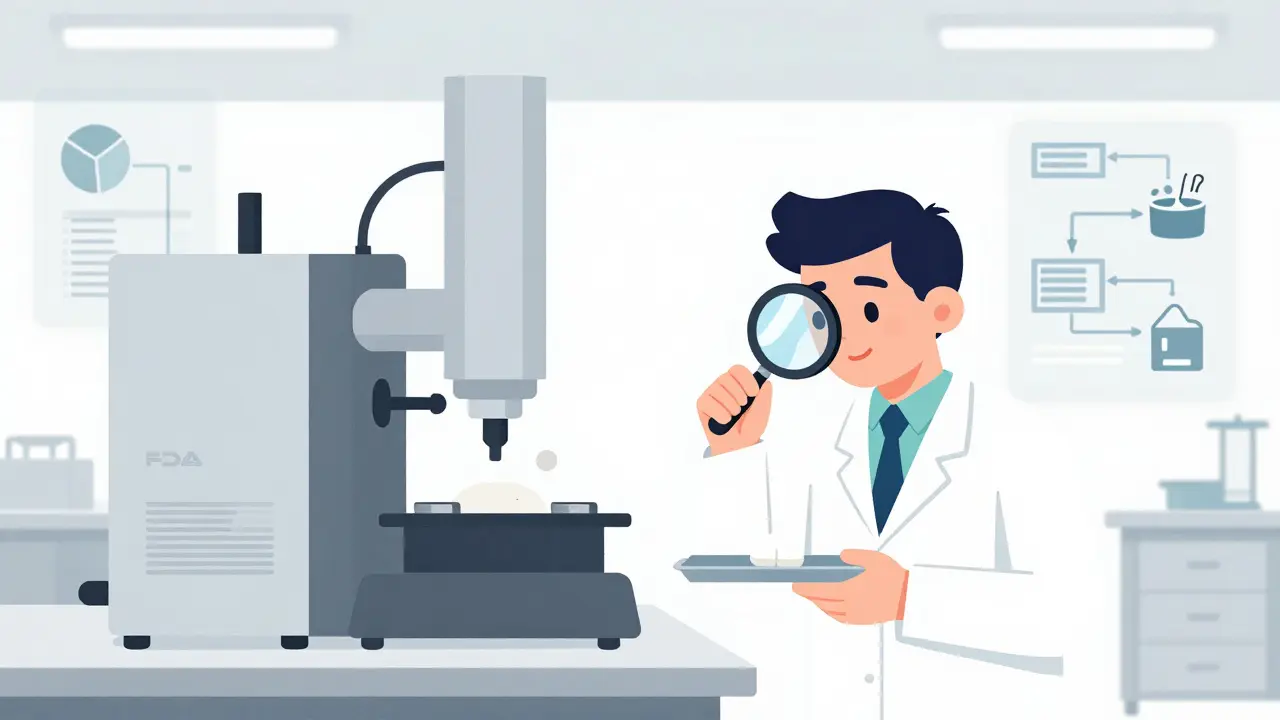
When you pick up a generic pill at the pharmacy, you expect it to work just like the brand-name version. That’s not luck. It’s the result of strict CGMP rules enforced by the FDA. These aren’t suggestions-they’re legal requirements that every generic drug maker must follow, no matter where they’re located. If they don’t, the product gets pulled, the company gets fined, or worse, they’re shut down.
What Exactly Is CGMP?
CGMP stands for Current Good Manufacturing Practices. The "current" part is key. It means manufacturers can’t just use old methods from 20 years ago. They have to use up-to-date technology, equipment, and procedures to make sure every batch of drug is safe, pure, and effective. These rules are written into federal law under 21 CFR Parts 210 and 211. They apply equally to brand-name drugs and generics. There’s no separate, easier set of rules for generics. If a brand-name drug has to be made in a clean room with calibrated machines and trained staff, so does the generic version.
The FDA doesn’t just trust companies to follow these rules. They inspect facilities regularly. Domestic plants get inspected about 1.3 times per year on average. Foreign facilities? They’re inspected less often-but that’s changing. The FDA’s 2023-2027 plan is pouring more resources into checking overseas factories, especially after incidents like the 2022 metformin recalls linked to toxic contaminants.
The Core Rules: What Manufacturers Must Do
CGMP covers every single step of making a drug-from the raw ingredients to the final pill in the bottle. Here’s what it demands:
- Written procedures for everything. No guessing. Every step-mixing, filling, packaging, testing-must be documented. If it’s not written down, it didn’t happen.
- Trained staff. Employees must be qualified and get at least 80-120 hours of CGMP training every year. They can’t just be hired and thrown into a production line.
- Controlled environment. Air quality, temperature, and humidity are monitored. Dust, microbes, and cross-contamination are kept out. Even the cleaning of equipment has to be validated.
- Testing every batch. Every component-like the active ingredient or even the filler-must be tested before use. You can’t just take a supplier’s word for it.
- Process validation. The manufacturing process must be proven to work consistently. Most companies use three consecutive batches to prove it, even though the FDA doesn’t require a specific number.
- Stability testing. Drugs must be tested over time to make sure they don’t break down or lose strength before their expiration date.
- Full records. Every batch record, test result, and maintenance log must be kept for at least one year after the drug expires. Electronic records? They have to follow 21 CFR Part 11-meaning audit trails, secure logins, and no backdating.
One of the most powerful parts of CGMP is the Quality Unit. This team has the final say. They can reject a batch, stop production, or demand changes-even if management says otherwise. That’s intentional. It keeps profit motives from overriding safety.
Why CGMP Matters for Generic Drugs
Generic drugs make up 90% of all prescriptions filled in the U.S. In 2022, Americans spent $105.7 billion on them. That’s huge. But without CGMP, this system would collapse.
Imagine a generic manufacturer cuts corners: uses cheaper ingredients, skips testing, doesn’t clean equipment properly. That batch could be weaker, contaminated, or even dangerous. People would get sick. Trust in generics would vanish. CGMP prevents that. It ensures that a generic metformin tablet from India has the same active ingredient, strength, and absorption rate as the brand-name version. The FDA doesn’t just rely on chemistry-they verify the entire system that produces it.
That’s why every Abbreviated New Drug Application (ANDA) includes a full CGMP review. No compliance? No approval. It’s that simple.
Where Things Go Wrong
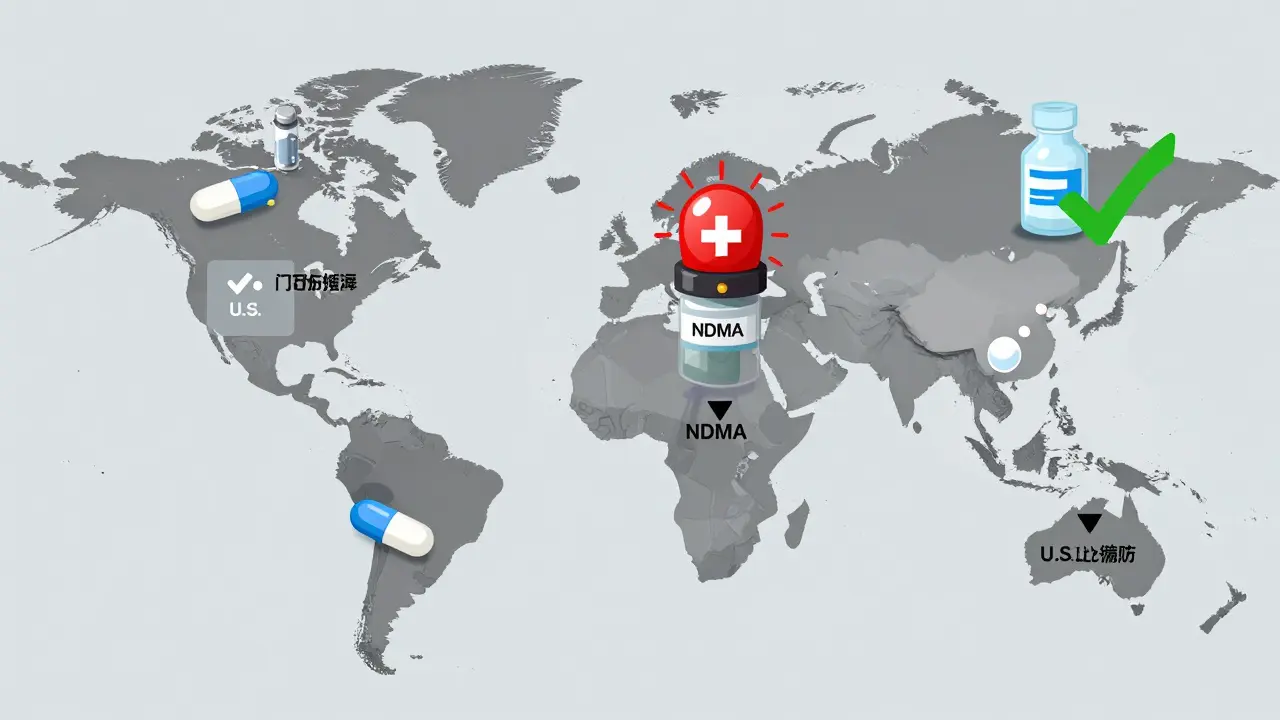
Even with strict rules, failures happen. In 2022, 12 generic metformin products were recalled because of NDMA-a probable carcinogen. The FDA’s investigation found inadequate process controls and unvalidated cleaning procedures. That’s a direct CGMP violation.
Another common issue? Data integrity. In 2022, nearly half of all CGMP violations cited by the FDA were about falsified or missing data. Some manufacturers delete test results, backdate records, or use manual logs that can be easily altered. The FDA calls this "ALCOA+"-records must be Attributable, Legible, Contemporaneous, Original, Accurate, and complete with additional attributes like consistency and availability.
Foreign facilities account for 63% of all data integrity warning letters. That’s not because foreign manufacturers are worse-it’s because oversight is harder. But the FDA is catching up. Their 2023 guidance on testing for toxic contaminants like diethylene glycol in ingredients like glycerin was issued immediately after deaths in Pakistan were linked to contaminated cough syrup. That’s the FDA reacting fast to real-world harm.
Challenges for Manufacturers
Compliance isn’t cheap. A mid-sized generic drug maker spends an average of $2.3 million a year just to meet CGMP rules. For smaller companies, that’s a huge burden. One Reddit user from a 50-person facility said implementing electronic batch records took 14 months and cost $1.2 million.
Another pain point? Inconsistent inspections. A 2023 survey found 57% of manufacturers felt different FDA inspectors interpreted the rules differently. One inspector might call a missing signature a major violation. Another might not even notice. That unpredictability makes planning hard.
Then there’s technology. Most generic manufacturers still use batch manufacturing. But newer methods like continuous manufacturing-where the drug flows through a system without stopping-are more efficient and less prone to variation. Teva, for example, switched to continuous manufacturing for a heart drug and cut batch failures from 4.2% to 0.7%. But getting FDA approval for these new systems is slow. The agency is working on updated guidance, but it’s still catching up.
What’s Next for CGMP
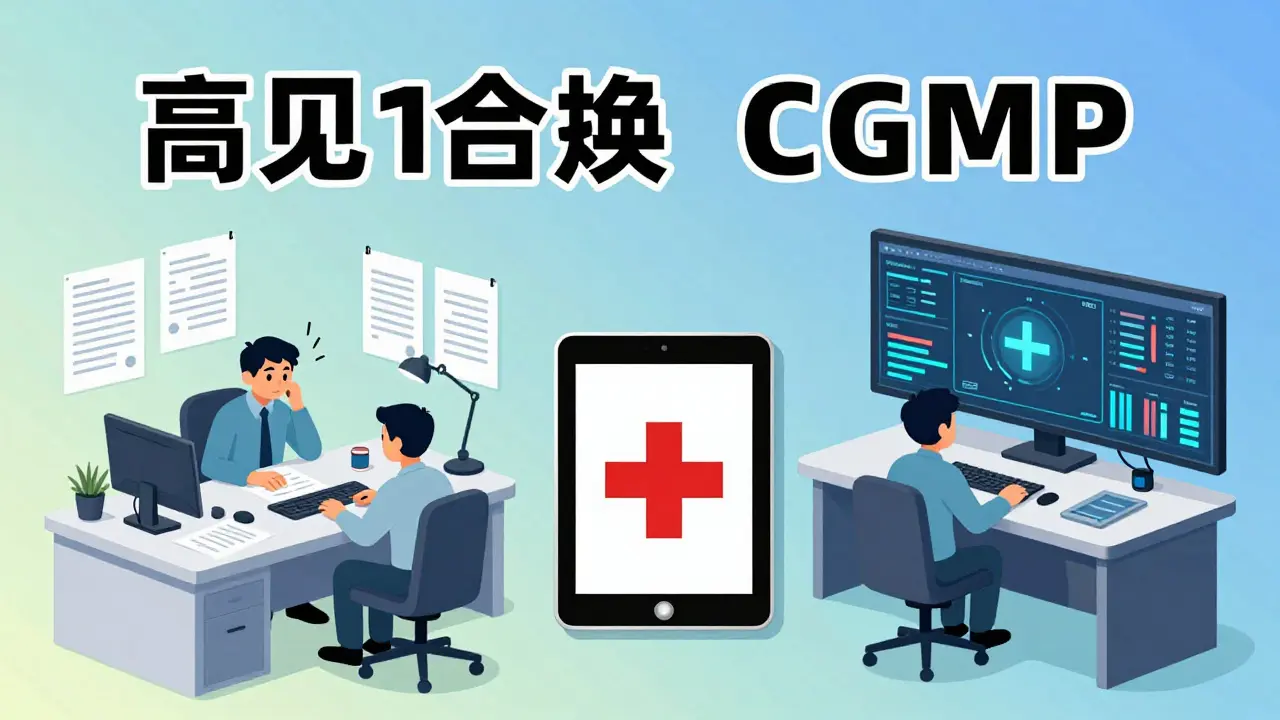
The future of CGMP is digital. The FDA is pushing for real-time quality monitoring using AI and predictive analytics. By 2028, 65% of manufacturers are expected to use these systems to catch problems before they happen-instead of testing after the fact.
Supply chain security is also getting tighter. The Drug Supply Chain Security Act is being rolled out, and by 2024, every generic drug will need full traceability from raw material to pharmacy shelf. That means more testing of active ingredients and stricter vendor audits.
And while the FDA is aligning more with international standards through ICH, it still demands more documentation than Europe or Japan. That’s a cost-but also a shield. It’s why U.S. generic drugs are trusted globally. Even countries that make most of the world’s generics rely on FDA standards to ensure quality.
Bottom Line: CGMP Is Non-Negotiable
There’s no shortcut to CGMP compliance. It’s not a box to check. It’s a culture-of documentation, accountability, and constant improvement. For generic drug makers, it’s the price of doing business. For patients, it’s the guarantee that the cheapest pill in the bottle is just as safe and effective as the most expensive one.
The FDA doesn’t inspect every batch. But they inspect the system that makes every batch. And as long as that system is strong, generics will keep saving lives-and billions of dollars-every year.
Are generic drugs held to the same manufacturing standards as brand-name drugs?
Yes. The FDA requires that generic drugs be manufactured under the exact same Current Good Manufacturing Practices (CGMP) as brand-name drugs. There is no separate or lower standard for generics. Every step-from ingredient testing to packaging-must meet identical requirements to ensure safety, strength, purity, and consistency.
What happens if a generic drug manufacturer violates CGMP rules?
Violations can lead to multiple consequences. The FDA may issue a Warning Letter, demand a product recall, or block new drug approvals. In serious cases, the facility can be barred from selling drugs in the U.S. Companies can also face civil penalties of up to $1 million per violation. Repeated or intentional violations may lead to criminal charges.
How often does the FDA inspect generic drug factories?
Domestic facilities are inspected about 1.3 times per year on average. Foreign facilities are inspected less frequently, but the FDA is increasing resources for overseas inspections. The agency uses a risk-based approach, so facilities with past violations or producing high-risk drugs get inspected more often.
Do CGMP requirements apply to raw materials too?
Yes. Every component-active pharmaceutical ingredients (APIs), excipients, packaging materials-must be tested and approved before use. The FDA requires manufacturers to verify the quality of their suppliers and conduct batch-specific testing. In 2023, new guidance required testing for toxic contaminants like diethylene glycol in high-risk ingredients like glycerin and propylene glycol.
Why do some generic drugs get recalled?
Recalls happen when a product fails to meet CGMP standards. Common causes include contamination (like NDMA in metformin), incorrect potency, mislabeling, or data falsification. Most recalls are discovered during internal testing or FDA inspections-not by patients. The FDA works with manufacturers to remove unsafe products from the market quickly.
Is it harder for small companies to comply with CGMP?
Yes. Small manufacturers often struggle with the cost and complexity of CGMP compliance. Documentation, electronic record systems, validation, and staff training can cost millions. A 2022 survey found 68% of small to mid-sized firms reported major difficulties with documentation requirements. Many rely on consultants or partner with larger firms to share resources.
What’s the difference between CGMP and GMP?
GMP (Good Manufacturing Practices) is a general term used worldwide. CGMP (Current Good Manufacturing Practices) is the FDA’s version, with the word "current" meaning manufacturers must use modern technology and methods-not outdated ones. The FDA’s CGMP rules are legally binding in the U.S. and are updated regularly to reflect new science and risks.
Anna Pryde-Smith
January 22, 2026 AT 22:55Let me tell you something-I worked in a generic pharma lab for three years. The pressure to cut corners? Insane. I saw batch records get ‘adjusted’ because the boss wanted to hit quarterly targets. One guy got fired for reporting a contaminated excipient. They called him a whistleblower. I called him brave. The FDA doesn’t inspect every batch-but someone should’ve inspected the culture.
Oladeji Omobolaji
January 23, 2026 AT 19:35Man, I live in Nigeria and we get a lot of these generics. Some work, some don’t. I used to think it was just bad luck. Now I see it’s not always about the pill-it’s about the whole system. If the factory’s in a place where inspectors can’t get in easily, or the power keeps going out, how’s CGMP supposed to hold up? Just saying.
Dawson Taylor
January 24, 2026 AT 06:09The philosophical underpinning of CGMP is not regulatory compliance-it’s epistemological certainty. We do not trust the pill; we trust the process that produces it. The FDA’s insistence on documentation, validation, and traceability is not bureaucracy-it is the institutionalization of empirical rigor. To question CGMP is to question the very possibility of reliable pharmacology.
charley lopez
January 24, 2026 AT 19:27Per 21 CFR 211.188, batch record integrity is non-negotiable. Deviations must be documented, justified, and approved by the Quality Unit. Inadequate process validation-particularly in continuous manufacturing transitions-poses a significant risk to product quality attributes. The absence of real-time release testing (RTRT) in 87% of generic facilities remains a systemic vulnerability.
Kerry Evans
January 25, 2026 AT 13:51People act like generics are safe because they’re cheap. That’s the myth. I’ve read the FDA warning letters. Half of them are from Indian and Chinese plants with ‘ALCOA+’ violations. They backdate logs. They delete test results. They use unqualified staff. And you’re taking these pills because they’re $4? You’re gambling with your liver. Wake up.
Susannah Green
January 27, 2026 AT 12:44For anyone wondering why some generics taste weird or give you a headache-check the excipients. They’re not always the same as the brand. And if the filler isn’t tested properly? You’re ingesting trace heavy metals. I’ve seen it. The FDA doesn’t test every pill-but they should test every supplier. Period.
Kerry Moore
January 28, 2026 AT 14:43Thank you for this comprehensive breakdown. I’m particularly struck by the role of the Quality Unit as an independent gatekeeper. In corporate environments, this structural separation of oversight from profit motive is rare-and essential. It’s not just about compliance; it’s about ethical infrastructure. The fact that this exists in generic manufacturing is, in many ways, a quiet triumph of public health policy.
Janet King
January 30, 2026 AT 03:27CGMP saves lives. That’s it.