
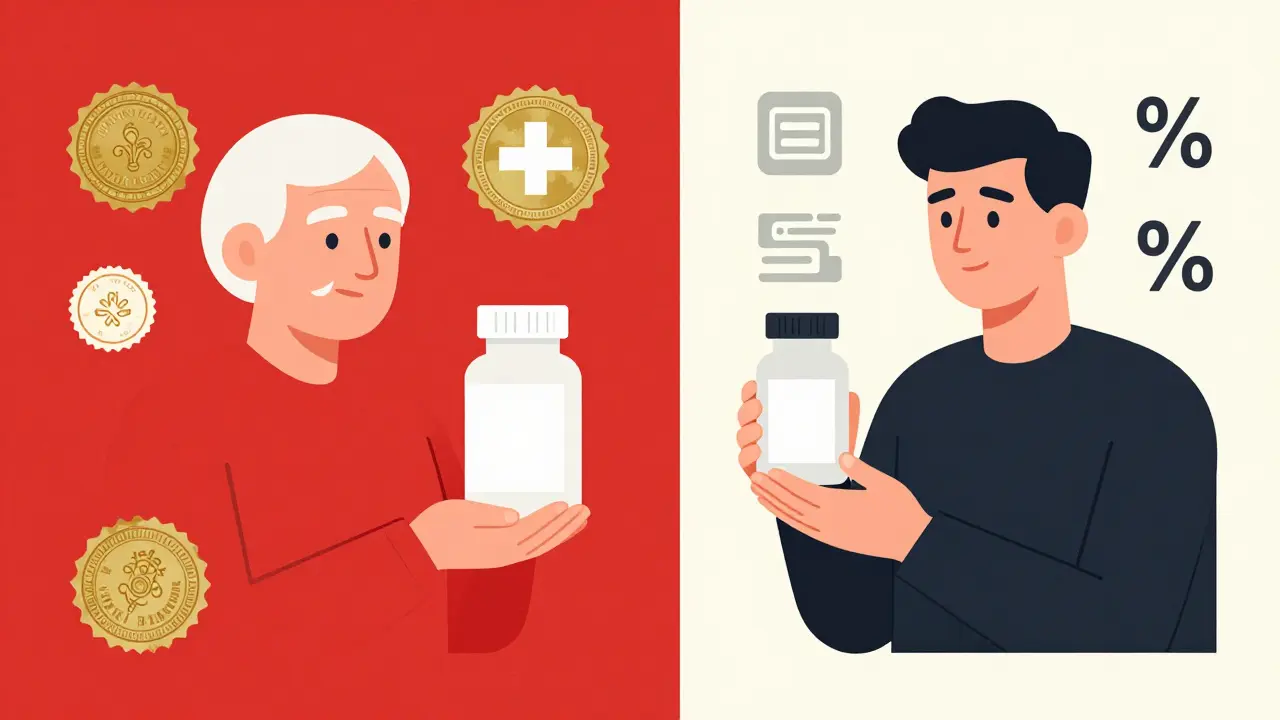
The reality is that Generic Medications is pharmaceutical products developed to match brand-name drugs in active ingredients, quality, safety, and strength, but sold at a lower cost. While the science of bioequivalence proves they produce the same clinical effect, the human brain doesn't always follow the data. We carry psychological baggage based on our generation's experience with marketing, healthcare, and authority.
The Trust Divide Across Generations
Different age groups approach the concept of "generic" through different lenses. While there isn't a one-size-fits-all rule, we can see clear patterns in how experience and era shape these views.
Older generations, such as Baby Boomers, often grew up in an era of intense brand loyalty. In the mid-20th century, a brand name was a seal of quality and a guarantee of safety. For many in this group, the "original" drug is the gold standard. Transitioning to a generic can feel like a downgrade in care, even if the active molecules are identical. This is often tied to subjective product category knowledge-the belief that because they have used a brand for decades, they "know" it works better, even if objective data says otherwise.
Millennials and Gen Z, on the other hand, are the "digital native" generations. They are used to comparing specs, reading reviews, and finding the best value for their money online. For them, the brand name is often seen as an unnecessary markup-a "marketing tax." They are generally more comfortable with the idea of a generic product because they apply the same logic to their electronics or skincare as they do to their medicine: if the specs match, the brand doesn't matter.
| Generation | Primary Driver | View on Generics | Psychological Barrier |
|---|---|---|---|
| Baby Boomers | Brand Loyalty | Skeptical / Cautious | Fear of reduced efficacy |
| Gen X | Value / Pragmatism | Mixed / Open | Need for professional reassurance |
| Millennials/Gen Z | Cost-Efficiency | Positive / Default | Mistrust of "Big Pharma" pricing |
The Bioequivalence Paradox
Here is the strange part: knowing that a drug is bioequivalent doesn't always fix the problem. Bioequivalence is the scientific standard ensuring that a generic drug delivers the same amount of active ingredient into the bloodstream at the same rate as the brand name.
Research shows a persistent "trust deficit." Even when patients are told by a doctor that the drugs are the same, some still report that the brand-name version feels more effective or causes fewer side effects. This is a classic case of the placebo (or nocebo) effect. If you believe the cheaper drug is inferior, your brain can actually manifest physical symptoms of that belief. This psychological barrier is often stronger in older patients who have a long history with a specific medication, making the switch feel riskier than it actually is.
How Health Literacy Changes the Game
Our attitude toward generics is heavily influenced by Health Literacy, which is the ability of an individual to obtain, process, and understand basic health information needed to make appropriate health decisions.
There is a big difference between subjective knowledge (what you think you know) and objective knowledge (the facts). Older adults often have high subjective knowledge because they've dealt with the healthcare system for years. However, they may have outdated objective knowledge because pharmaceutical regulations and manufacturing standards have improved drastically since the 1980s.
When health literacy is low, people rely on "heuristics"-mental shortcuts. One common shortcut is: "Expensive = Better." By breaking this mental link through education, healthcare providers can help patients move from a fear-based decision to a value-based one. This is why positive framing-emphasizing the safety and cost-savings rather than just saying "it's the cheap version"-works so well.
The Role of the Healthcare Provider
It's not just patients who struggle with this; doctors and pharmacists do too. Interestingly, a professional's attitude often depends on their role and years of experience. Pharmacists are generally more positive about generics because they see the direct impact of cost reductions on patient adherence. If a drug is too expensive, the patient simply doesn't take it.
Physicians, however, may sometimes be more reserved. Some more experienced doctors have seen rare cases where a specific patient didn't react well to a generic switch, and that single negative experience can outweigh a thousand positive ones. This "experience-based skepticism" can be passed down to the patient during a consultation, reinforcing the patient's own doubts.
Overcoming the "Generic Stigma"
If we want to bridge this generational gap, we have to stop treating all patients the same. A 22-year-old and an 82-year-old need different conversations.
- For the Brand-Loyal: Focus on the evolution of manufacturing. Explain that today's generics are produced with the same rigorous standards as the originals. Use "positive framing" to describe generics as "clinically identical" rather than "substitutes."
- For the Value-Seeker: Provide the data. Show the cost difference and the bioequivalence studies. This group responds well to transparency and logic.
- For the Skeptic: Acknowledge the fear of side effects. Suggest a trial period or a gradual transition to build trust in the new formulation.
When we address the psychological roots of these attitudes, we don't just save money-we improve healthcare access. The high cost of brand-name drugs is a devastating barrier for many. By dismantling the stigma around generics, we make it easier for people of all ages to get the treatment they need without choosing between their health and their wallet.
Are generic drugs actually less effective than brand-name drugs?
No. By law, generic medications must be bioequivalent to the brand-name version. This means they have the same active ingredients, strength, and dosage form, and they work in the body in the same way to provide the same clinical benefit.
Why do some people feel like generics don't work as well?
This is often due to the "nocebo effect," where negative expectations lead to a perceived decrease in efficacy. Additionally, while the active ingredient is the same, the inactive ingredients (fillers or dyes) can differ, which may cause slight differences in how some people perceive the medication.
Do older people tend to trust generics less?
Generally, yes. Older generations often have stronger brand loyalties developed during eras of different pharmaceutical marketing and may rely on a belief that "original" means "better," regardless of the current scientific evidence.
How can I tell if a generic is right for me?
The best approach is to discuss it with your pharmacist or doctor. Ask about the bioequivalence of the specific drug and whether your specific health condition requires a brand-name version (which is rare but happens with some "narrow therapeutic index" drugs).
Why is there such a big price difference if the drugs are the same?
Brand-name companies spend billions on research, development, and marketing. Once the patent expires, generic manufacturers can produce the drug without those massive R&D costs, allowing them to sell the medication at a much lower price.