
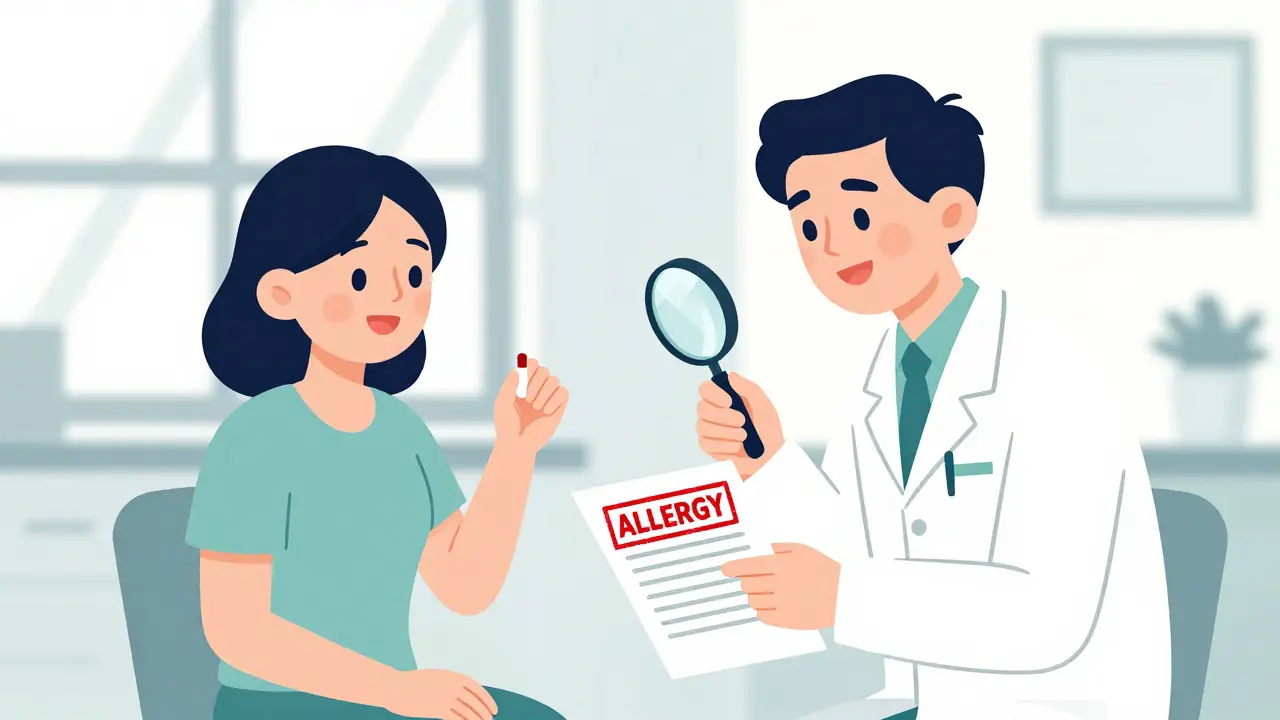
Millions of people believe they’re allergic to penicillin-or amoxicillin, or another common antibiotic. But the truth? Over 95% of them aren’t. That label, often stuck on medical records from childhood rashes or vague reactions, isn’t just outdated-it’s dangerous. It limits your treatment options, pushes doctors toward stronger antibiotics, and increases your risk of serious infections like C. diff. The good news? There’s a simple, safe way to find out if you’re truly allergic: drug allergy testing.
Why False Allergy Labels Are a Big Problem
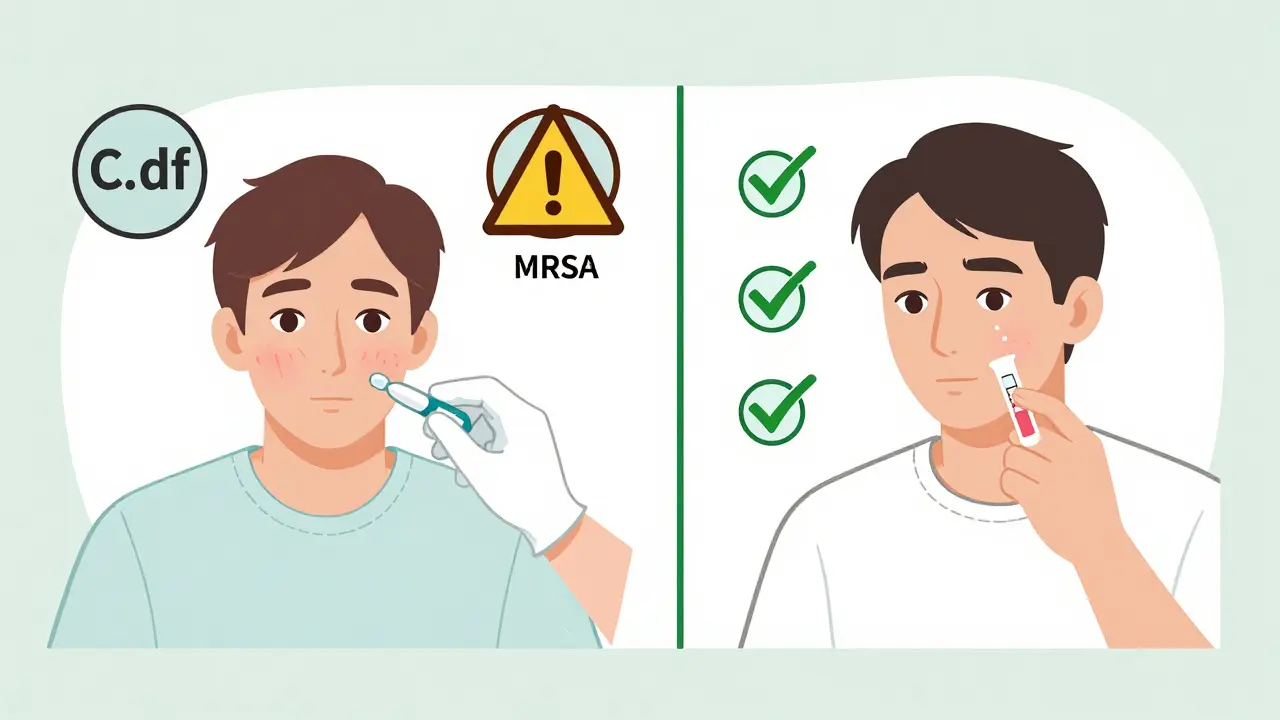
If your chart says "penicillin allergy," you’ll likely be given a different antibiotic. That might sound harmless, but it’s not. Doctors avoid penicillin-type drugs because they fear a life-threatening reaction. But here’s the catch: true IgE-mediated penicillin allergies are rare. Only 1-2% of people labeled as allergic actually have one. The rest? Their reaction was probably a viral rash, a side effect, or something that faded years ago. In the U.S., 10-15% of hospitalized patients carry a penicillin allergy label. In Europe, it’s far lower-under 3%. Why? Because European hospitals test more. And they’ve seen the results: patients who get tested and are cleared can safely take first-line antibiotics. Those without testing? They get stronger, broader-spectrum drugs like vancomycin or fluoroquinolones. These drugs cost more, cause more side effects, and fuel antibiotic resistance. CDC data from 2023 shows that false allergy labels contribute to 50,000 extra cases of C. diff infection each year in the U.S. alone. That’s a serious, sometimes deadly gut infection. Patients with these labels also get clindamycin 69% more often and fluoroquinolones 28% more often than those without. That’s not just inconvenient-it’s driving up resistance in bacteria like MRSA and E. coli.How Do You Know If You’re Really Allergic?
You can’t rely on memory. A rash at age 5 doesn’t mean you’re allergic now. Many people outgrow allergies-even ones they thought were severe. The only way to know for sure is testing. There are three main ways to confirm or remove a false allergy label:- Skin testing: A small amount of the drug is placed on the skin, then lightly pricked or injected just under the surface. If you’re allergic, a red, itchy bump appears within 20 minutes. This test is highly accurate for immediate reactions (within an hour).
- Drug provocation test: You’re given a tiny, gradually increasing dose of the drug under medical supervision. If you tolerate the full dose without reaction, you’re cleared. This is the gold standard for non-immediate reactions.
- Combined approach: Skin test first, then oral challenge if the skin test is negative. This is the most reliable method and has a 98% negative predictive value.
Most people tolerate these tests perfectly. Studies show over 94% of patients with a history of penicillin allergy can safely take it after testing. Less than 2% have any reaction-and most of those are mild, like a small rash or stomach upset.
Who Should Get Tested?
You don’t need to be sick to get tested. If you’ve ever been told you’re allergic to penicillin, amoxicillin, or any beta-lactam antibiotic, you should consider testing-even if it happened decades ago. The PEN-FAST tool helps doctors decide who’s low-risk:- P - Penalty: Was the reaction more than 5 years ago? (Yes = 1 point)
- E - Epinephrine: Was epinephrine needed? (No = 1 point)
- N - Non-immune: Was it a rash, not anaphylaxis? (Yes = 1 point)
- FAST - Was it a fast reaction (within an hour)? (No = 1 point)
If your score is 3 or less, you’re low-risk. You can likely skip skin testing and go straight to an oral challenge. If it’s 4 or 5, skin testing is recommended. This tool is used in hospitals across the U.S. and Australia because it’s simple, fast, and cuts down on unnecessary referrals.
What Happens During Testing?
Testing is done in a clinic or hospital setting. It usually takes 1-2 hours.- Step 1: History review - Your doctor asks about your reaction. Was it a rash? Swelling? Trouble breathing? When did it happen? How long did it last?
- Step 2: Skin test - If appropriate, a small amount of the drug is placed on your skin. No needles, no pain. Just a tiny prick.
- Step 3: Oral challenge - If the skin test is negative, you swallow a small dose of the antibiotic. You’re watched for 30-60 minutes. If nothing happens, you get a full dose.
You’ll be monitored for signs of reaction: hives, wheezing, swelling, nausea. If you react, the test stops immediately and you’re treated. But this is rare. In one study of over 1,800 patients, there were zero severe reactions.
What Happens After Testing?
If you’re cleared, your allergy label is removed. This isn’t just paperwork-it changes your care forever.- Your doctor can now prescribe amoxicillin for sinus infections, strep throat, or ear infections-instead of a Z-pack or another broad-spectrum drug.
- If you’re hospitalized in the future, you’ll get the most effective, safest antibiotic right away.
- You’ll likely avoid side effects like diarrhea, yeast infections, or C. diff.
One patient from Massachusetts General Hospital had a 40-year-old penicillin label. She kept getting complicated UTIs because doctors avoided the best antibiotic. After testing, she was cleared. Within months, she avoided two hospitalizations. Her care costs dropped by $28,500 over two years.
Barriers to Testing-and How to Overcome Them
Even though testing is safe and effective, fewer than 40% of eligible patients get tested. Why?- Lack of access - Allergists are hard to find, especially outside big cities. In rural areas, there’s less than one allergist per 500,000 people.
- Long wait times - The average wait for an allergy appointment is 14 weeks. That’s too long for someone who needs antibiotics now.
- Electronic health record issues - Many systems don’t let doctors easily remove old allergy labels. They’re stuck in the record like a permanent stamp.
The good news? New tools are changing this. Epic Systems, used in 84% of U.S. hospitals, now has an automated penicillin allergy module. It flags patients who might be eligible and suggests testing. Since 2021, it’s helped remove 198,000 false labels.
Telemedicine is also helping. A study in the Netherlands showed 897 patients completed remote assessments with a 96% success rate. No travel. No long waits. Just a video call and a home test dose.
What If You Have a Real Allergy?
Testing isn’t just about removing labels-it’s also about confirming real ones. If you’ve had a true anaphylactic reaction, you’ll know it. Symptoms like swelling of the throat, trouble breathing, or a sudden drop in blood pressure are signs of a real IgE-mediated allergy. In those cases, testing confirms the danger. You’ll be given a medical alert bracelet and advised to avoid the drug forever.But if your reaction was just a rash, a stomachache, or a headache? Those aren’t true allergies. They’re side effects. And you can safely take the drug again.
What’s Next for Drug Allergy Testing?
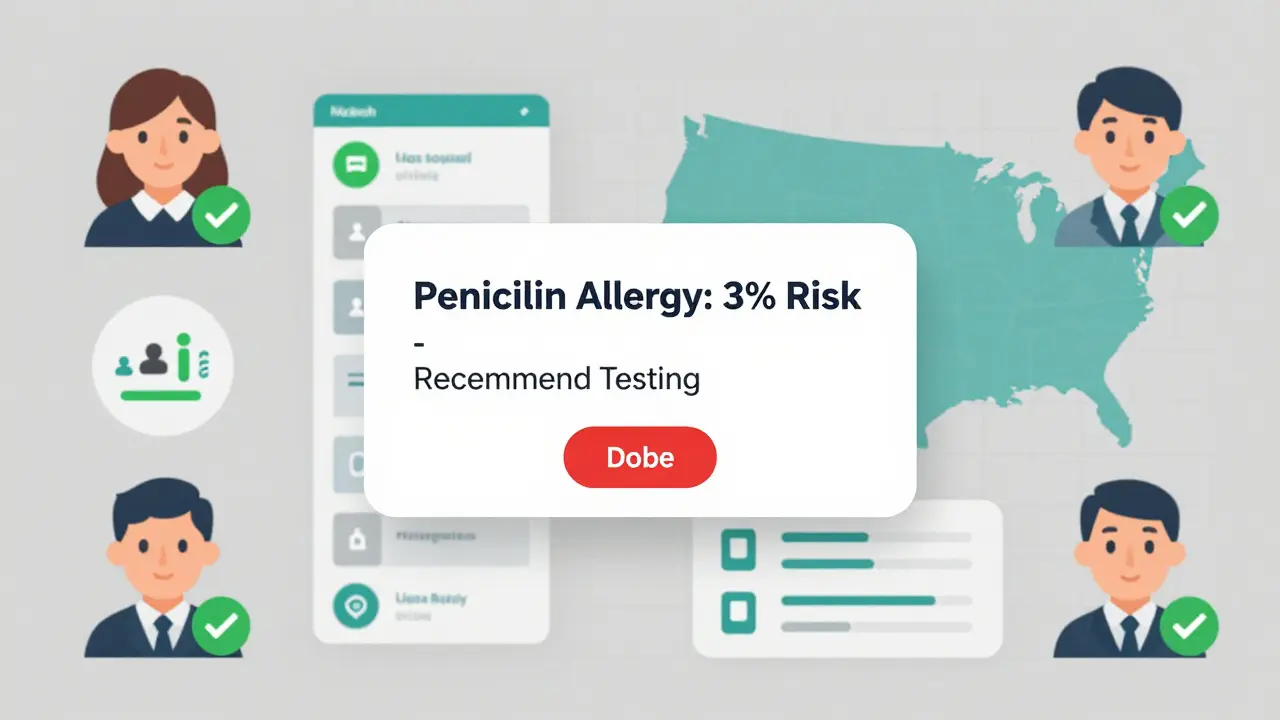
By 2028, experts predict 70% of penicillin allergy assessments will be done through EHR alerts-not specialist visits. Hospitals are being paid to reduce inappropriate antibiotic use. Medicare now tracks this as a performance metric starting in 2025. That means more hospitals will push testing.And new tech is emerging. The FDA-cleared Xreactbase database uses AI to predict cross-reactions between drugs based on millions of patient records. It’s 92% accurate. Soon, your doctor might get a pop-up: "This patient has a penicillin label. Risk of true allergy: 3%. Recommend testing."
The message is clear: if you’ve been told you’re allergic to penicillin, don’t assume it’s true. Ask your doctor about testing. It’s safe. It’s simple. And it could save your life-or at least, your next infection.
Emily Wolff
February 25, 2026 AT 22:23Stop the madness.
Lou Suito
February 27, 2026 AT 09:43Joseph Cantu
February 27, 2026 AT 22:28They’ll tell you it’s safe. Then you get anaphylaxis and they’ll say ‘you were in the 2%’
Don’t trust the algorithm. Trust your body.
Jacob Carthy
March 1, 2026 AT 16:17Also-penicillin isn’t magic. It’s just the best tool. Use it.
Lisandra Lautert
March 2, 2026 AT 05:28David McKie
March 3, 2026 AT 04:17This isn’t innovation. It’s basic hygiene.
Southern Indiana Paleontology Institute
March 3, 2026 AT 22:35Also-why are we letting algorithms decide what’s ‘safe’? I’ve seen kids get penicillin after a rash at 3 and be fine. But now they’re on cipro for a UTI. That’s not progress.
Anil bhardwaj
March 4, 2026 AT 11:11lela izzani
March 4, 2026 AT 12:42It’s not about fear. It’s about evidence. And evidence says: test. Then treat.
Joanna Reyes
March 6, 2026 AT 06:47Stephen Archbold
March 6, 2026 AT 18:37kirti juneja
March 8, 2026 AT 03:13Thank you for writing this. My cousin just got cleared. She cried. I cried. We’re all just trying to live.