
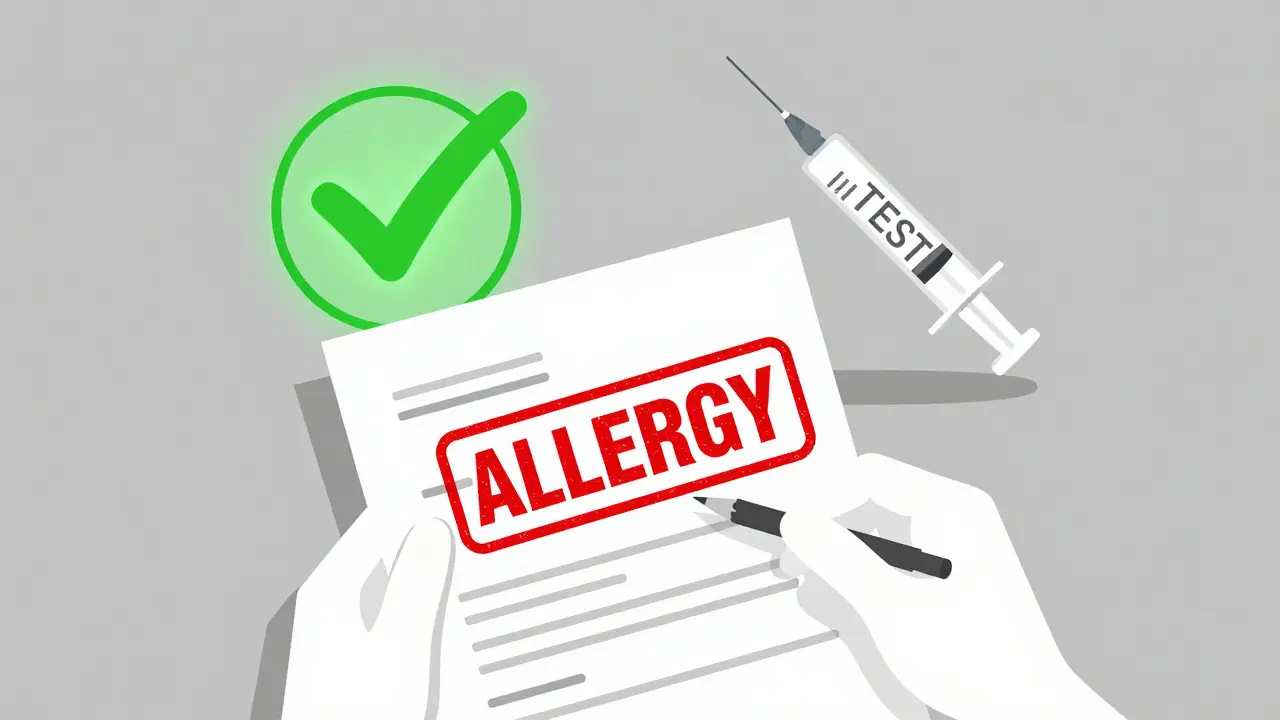
More than 1 in 10 people in the U.S. believe they’re allergic to penicillin. But here’s the truth: over 95% of them aren’t. That label? It’s probably wrong. And it’s costing lives, money, and effective treatment options.
If you’ve been told you’re allergic to penicillin because of a rash as a kid, a stomach ache after an antibiotic, or just because someone in your family said so-you might be carrying a false label. And that label is doing more harm than good.
Why False Allergy Labels Are a Big Problem
When doctors see "penicillin allergy" in your chart, they avoid the most effective, safest, and cheapest antibiotics for common infections. Instead, they reach for broader-spectrum drugs like vancomycin, clindamycin, or fluoroquinolones. These aren’t just more expensive-they’re riskier.
Patients with false penicillin allergy labels are 30% more likely to develop antibiotic-resistant infections like MRSA or ESBL-producing E. coli. They’re also 28% more likely to get a dangerous C. diff infection, which can turn a simple hospital stay into a months-long battle. The CDC estimates that false allergy labels contribute to 50,000 extra C. diff cases every year in the U.S. alone.
And the cost? Around $1,000 more per patient annually in extra care, longer hospital stays, and complications. That adds up to billions. Meanwhile, the real solution-testing-is safe, simple, and underused.
How Do You Know If Your Allergy Label Is Real?
True penicillin allergies are rare. Only 1-2% of people have a real IgE-mediated reaction. That means anaphylaxis, hives, swelling, or trouble breathing within minutes of taking the drug. Most people who think they’re allergic had something else: a viral rash, a side effect, or a reaction from childhood that faded over time.
Here’s what most people think they remember:
- A rash after taking amoxicillin as a child
- Feeling sick after a dose
- "My mom said I was allergic"
- A doctor said "don’t take penicillin" without testing
None of those are proof of a true allergy. In fact, a 2023 study from Singapore found that 75% of people with a penicillin allergy label had no evidence of real allergy after testing.
So how do you find out? It’s not guesswork. It’s science.
The Testing Process: Skin Tests and Oral Challenges
The gold standard for confirming or removing a penicillin allergy label is a two-step process:
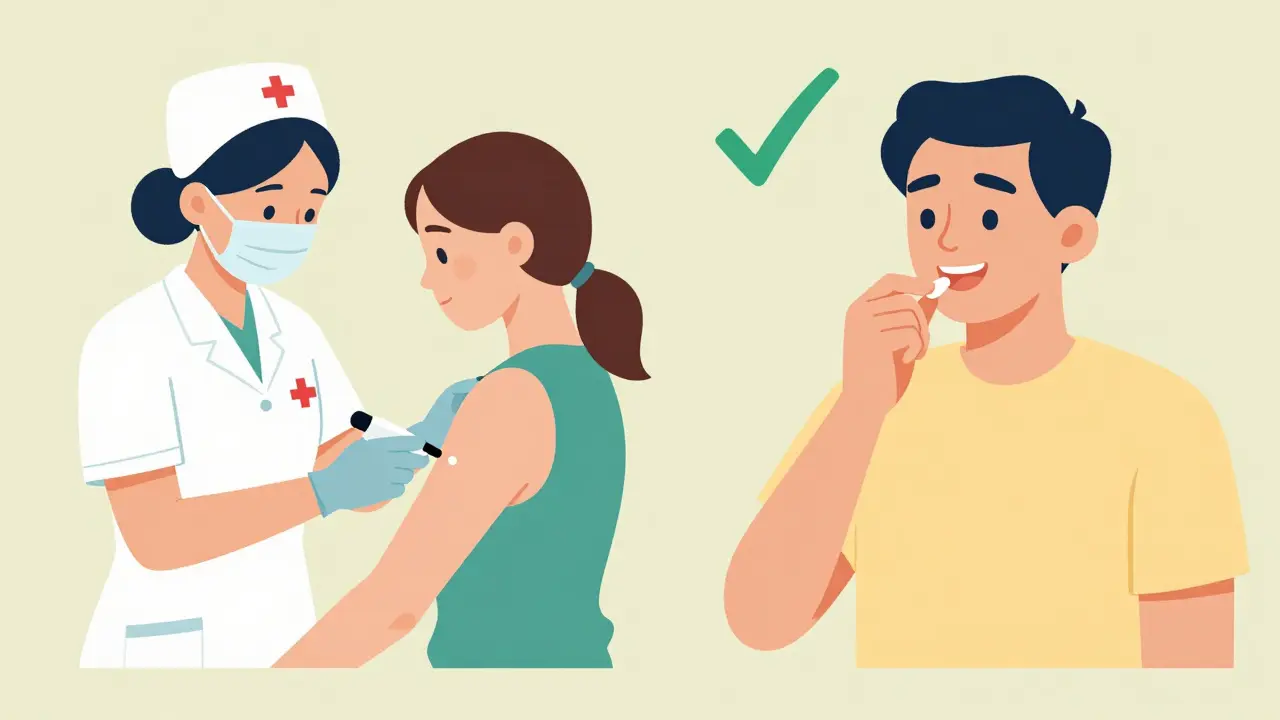
- Skin testing-a tiny drop of penicillin is placed on your skin, then lightly pricked. If you’re truly allergic, a small red bump appears within 15 minutes. No reaction? That’s a strong sign you’re not allergic.
- Oral challenge-if skin testing is negative, you’re given a small dose of penicillin (like amoxicillin) under observation. After 30-60 minutes, you get a full therapeutic dose. If you tolerate it without symptoms, your allergy label is removed.
This process is safe. In studies involving over 10,000 patients, less than 2% had any reaction at all-and most of those were mild, like a slight rash or stomach upset. No one died. No one needed ICU care.
For people with low-risk histories (like a rash from childhood with no breathing problems), doctors can skip skin testing and go straight to the oral challenge. A tool called PEN-FAST helps doctors decide: if your score is under 3, you’re low risk. No skin test needed.
What About Other Antibiotics?
Penicillin isn’t the only drug with false allergy labels. But it’s the most common-and the most fixable. Other beta-lactams like amoxicillin, cephalexin, and ampicillin are often avoided because of a penicillin label. But cross-reactivity? It’s rare. Less than 10% of people allergic to penicillin react to cephalosporins. And even that number is shrinking as we test more.
Testing for other drugs is more complex. For sulfa drugs, vancomycin, or NSAIDs like ibuprofen, skin testing isn’t reliable. But for penicillin? The tests are accurate, fast, and widely available.
Who Can Do the Testing?
You don’t need to see a specialist. While allergists can do it, many primary care clinics, pharmacies, and even hospital teams are now trained to perform de-labeling safely. The American Academy of Allergy, Asthma & Immunology updated its guidelines in 2022 to say: Non-allergists can and should do this.
At the University of Pennsylvania, nurses and pharmacists run a "Penicillin Allergy Relief Program." They’ve tested over 1,800 patients since 2020. Zero severe reactions. 99% successfully de-labeled.
Electronic health records are helping too. Epic Systems, used in 84% of U.S. hospitals, now has built-in tools that pop up when a penicillin allergy is entered: "Have you been tested?" It prompts doctors to ask the right questions.
Real Stories: What Happens When You Get Tested
One woman in Massachusetts, 68, had a penicillin label for 40 years. She got urinary tract infections every few months. Each time, she was given a strong, expensive antibiotic. After testing, she was cleared. The next infection? She took amoxicillin. No side effects. No hospital stay. Saved over $28,000 in two years.
Another Reddit user, "PenicillinCurious22," was told she was allergic after a rash at age 5. She avoided penicillin for 17 years-until she got a sinus infection and was given a Z-Pak. It gave her stomach pain. She tested. Negative. Now she takes amoxicillin. No side effects. No anxiety.
But not everyone has a smooth experience. One person on HealthUnlocked had a mild wheezing reaction during a direct challenge without skin testing. That’s why the step-by-step approach matters. Skin test first. Then challenge. Always under supervision.
Barriers to Testing-And How to Overcome Them
Why don’t more people get tested?
- Wait times-average 14 weeks to see an allergist
- Lack of awareness-many doctors still don’t know the guidelines
- Fear-patients worry about having a reaction
- System issues-EHRs don’t always update allergy status after testing
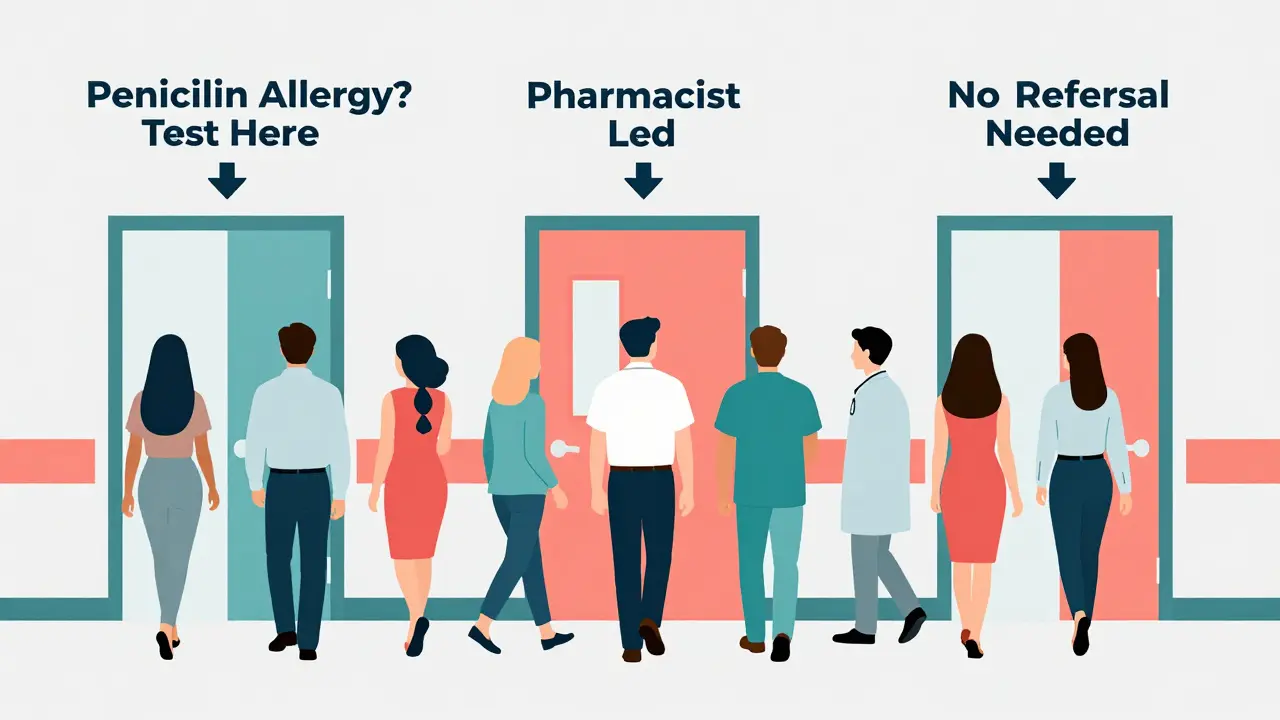
The fix? Start simple. Ask your doctor: "Can I get tested for my penicillin allergy?" If they say no, ask for a referral to a pharmacist or clinic that does de-labeling. Many hospitals now offer walk-in testing. In Australia, some pharmacies in Sydney have started pilot programs to test for penicillin allergies-no referral needed.
And if you’re told you’re allergic because of a rash? Ask: "Was it hives? Was it breathing trouble? Did it happen right after the medicine?" If the answer is no, you’re likely not allergic.
The Future: Testing Is Becoming Routine
The CDC, IDSA, and CMS are pushing hard. Starting in 2025, Medicare will reward hospitals that reduce inappropriate antibiotic use by removing false allergy labels. The FDA approved a machine-learning tool in 2025 that predicts cross-reactivity with 92% accuracy. Telemedicine testing is now covered in Europe and coming to the U.S.
By 2028, most penicillin allergy checks will happen automatically in your electronic record. You’ll get a notification: "Your penicillin allergy label hasn’t been confirmed. Would you like to get tested?"
That’s not science fiction. It’s the next step in smarter, safer care.
What You Can Do Today
If you’ve ever been told you’re allergic to penicillin:
- Don’t assume it’s true
- Don’t avoid all antibiotics because of it
- Ask your doctor: "Can I be tested?"
- Bring your history: When? What happened? Was it a rash? Breathing trouble? Nausea?
- If your doctor says no, ask for a referral to a pharmacy or clinic with a de-labeling program
Getting tested isn’t risky. Not getting tested is.
Natanya Green
February 26, 2026 AT 04:58Steven Pam
February 26, 2026 AT 18:42Timothy Haroutunian
February 28, 2026 AT 16:16Michael FItzpatrick
March 1, 2026 AT 02:39Brandice Valentino
March 2, 2026 AT 23:23Nandini Wagh
March 4, 2026 AT 00:41Holley T
March 4, 2026 AT 18:13Ashley Johnson
March 5, 2026 AT 04:24