
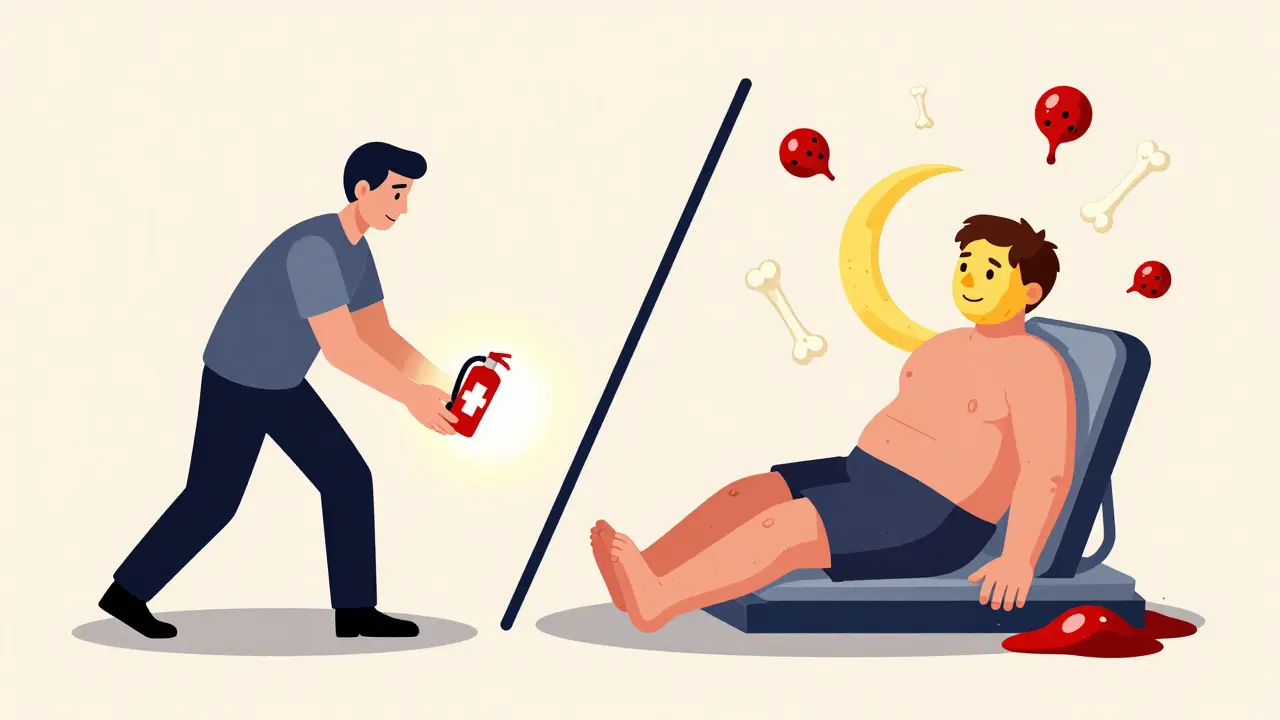
Everyone knows someone who took prednisone for a flare-up and swore by it - "It saved my life," they say. But then they also mention the moon face, the sleepless nights, the weight gain that wouldn’t go away. Corticosteroids are one of those medicines that work too well - fast, powerful, and with consequences you can’t ignore.
These drugs, like prednisone, hydrocortisone, and dexamethasone, are synthetic versions of cortisol, the hormone your body makes naturally to handle stress and inflammation. They were first developed in the 1940s and quickly became the go-to for sudden, severe inflammation. Today, they’re still the fastest tool doctors have to shut down autoimmune attacks, asthma flare-ups, or severe allergic reactions. But here’s the catch: the same power that makes them lifesaving in the short term turns dangerous if they stick around too long.
How Fast Do They Work? (And Why That’s Both a Gift and a Curse)
Think of corticosteroids as a fire extinguisher. When you’re in the middle of a blaze - say, a lupus flare that’s making your joints swell and your fever spike - they drop in and put it out in 24 to 48 hours. That’s faster than almost any other treatment. Compare that to DMARDs, the slow-acting drugs used for rheumatoid arthritis: they take weeks or even months to kick in. In emergency situations, corticosteroids are unmatched.
Even injections - like the cortisone shot you get in your knee or shoulder - start working within a week for 85% of people. The relief? Real. For many, it’s the difference between being stuck on the couch and walking again. But here’s what nobody tells you: the moment you feel better, your body starts paying the price.
The Hidden Cost: What Happens After the Relief
Short-term use - under 30 days - isn’t harmless. A study of 1.5 million patients found that even a brief course increases your risk of:
- Sepsis by 430%
- Blood clots by 230%
- Bone fractures by 90%
And those aren’t rare outcomes. They’re common enough that doctors now track them. One patient I spoke to - a 58-year-old woman from Melbourne - started 10mg of prednisone for a bad sinus infection. Two weeks later, her blood sugar spiked to 180 mg/dL. She’d never had diabetes before. By month three, she’d gained 14 pounds, couldn’t sleep, and developed a round, puffy face. She stopped the pills, but the damage? Some of it stuck.
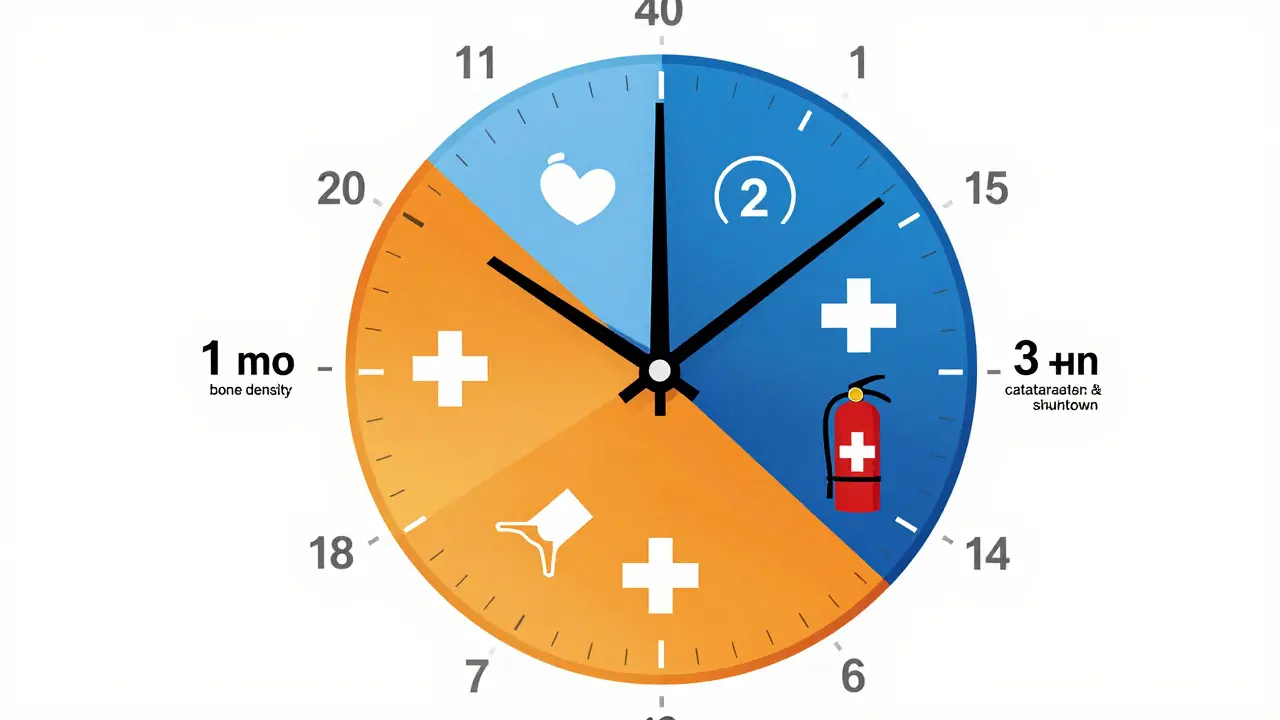
Long-term use - over three months - brings even worse risks. Bone density can drop 3-5% per month. That’s not gradual aging. That’s accelerated osteoporosis. The Arthritis Foundation says 8% of long-term users develop osteoporosis, and 12% get cataracts. Even worse, 7% end up with steroid-induced diabetes. And once it’s there? It doesn’t always go away.
Who Gets Prescribed These? And Why So Often?
Here’s the uncomfortable truth: corticosteroids are overprescribed. About 21% of U.S. adults get at least one prescription for them every few years. And nearly half of those prescriptions? For conditions where they don’t help - like the common cold, bronchitis, or simple back pain.
Doctors sometimes reach for them because they’re easy. A quick shot. A 5-day pill pack. It feels like a solution. But research shows that for most upper respiratory infections, corticosteroids offer no real benefit. Yet they’re still given. Why? Because patients expect something strong. And doctors want to satisfy them.
It’s worse for older adults. People over 65 get these prescriptions 2.3 times more often than younger people. And in rural areas, inappropriate use is 1.7 times higher than in cities. That’s not just overprescribing - it’s systemic.
Real People, Real Side Effects
On Healthgrades, corticosteroids have a 3.2 out of 5 rating. Why so low? Because 79% of users report side effects. Let’s break down what people actually experience:
- 87% gain weight - average of 12.4 pounds in just 8 weeks
- 63% struggle with insomnia
- 41% see blood sugar rise
- 29% say they have permanent changes - cataracts, bone loss, or diabetes
One Reddit user wrote: "Prednisone saved me from hospitalization during my lupus flare. Within 48 hours, my fever broke. But then I couldn’t stop eating. I gained 20 pounds. My skin broke out. I felt like a stranger in my own body."
Another, from a patient forum, said: "I was on 10mg for 6 weeks. When I stopped, my body shut down. I couldn’t get out of bed for days. My doctor never told me about adrenal insufficiency. I almost died."
That’s not an outlier. It’s standard.
How to Use Them Without Getting Hurt
There’s a way to use corticosteroids safely - but it requires discipline, not just from the patient, but from the doctor too.
Rule #1: Never use them for conditions they don’t help. If you have a cold, bronchitis, or mild back pain, they’re not the answer. Ask for alternatives.
Rule #2: Keep it short. The American College of Rheumatology says no more than 12 weeks for systemic use. For most flares, 2-4 weeks is enough.
Rule #3: Always taper. If you’ve been on them for more than 14 days, you can’t just stop. Your adrenal glands forget how to make cortisol. Suddenly quitting can cause shock, low blood pressure, even death. Tapering over 7+ days is non-negotiable.
Rule #4: Monitor like your life depends on it. If you’re on more than 7.5mg of prednisone daily for over 3 months, you need:
- A DEXA scan to check bone density
- Monthly blood sugar checks
- Quarterly eye exams
- Calcium (1200mg/day) and vitamin D (800IU/day)
- Annual bone-strengthening shots like zoledronic acid
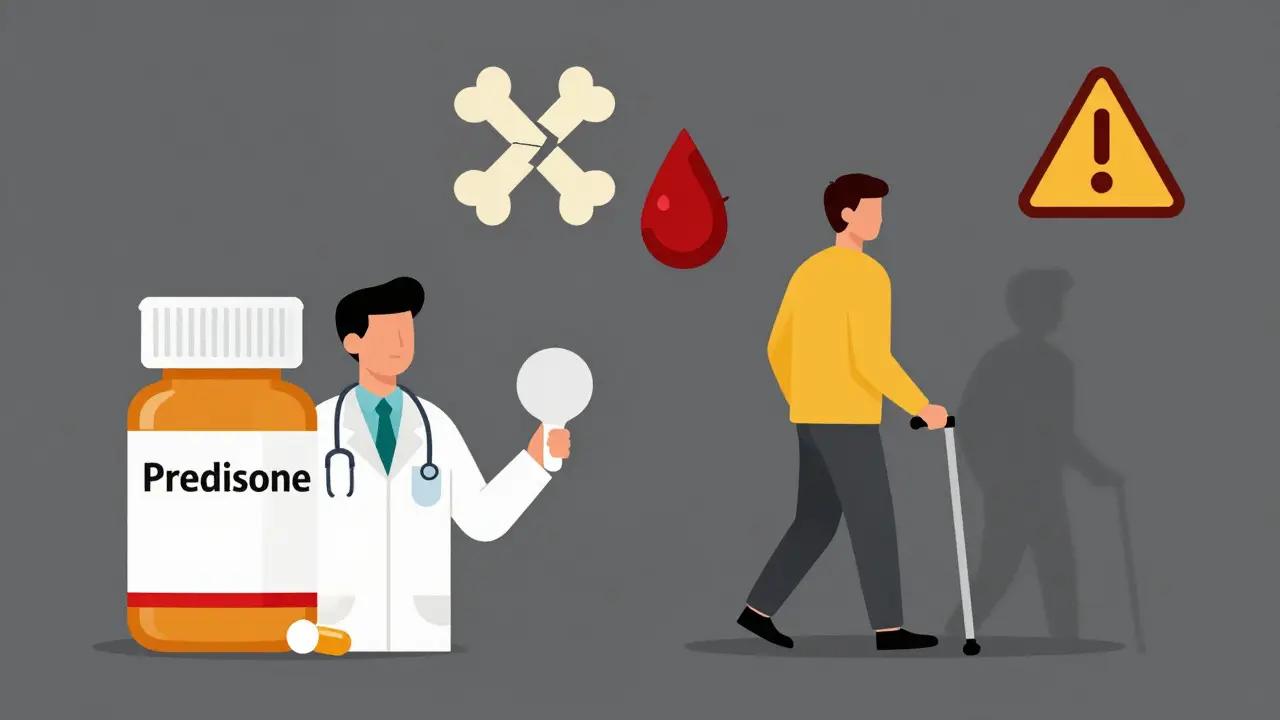
Yet only 42% of primary care doctors follow these guidelines. That’s not patient error - that’s system failure.
The Future: Better Alternatives Are Here
There’s new hope. In December 2023, the FDA approved the first selective glucocorticoid receptor modulator (SGRM): fosdagrocorat. It works like prednisone to fight inflammation - but cuts the risk of high blood sugar by 63%. That’s huge. It’s not a magic bullet, but it’s a step toward treatments that don’t wreck your body.
Health systems are catching on too. In early 2024, major U.S. insurers started requiring pre-approval for any corticosteroid course longer than 10 days. Electronic health records now flag inappropriate prescriptions. Hospitals using these alerts cut bad prescribing by 31%.
But the bottom line hasn’t changed: corticosteroids are powerful, but they’re not for long-term use. They’re emergency tools. Like a defibrillator - you don’t keep it running all day. You use it once, then get to the real fix.
What Should You Do?
If you’ve been prescribed corticosteroids:
- Ask: "Is this the right condition for this drug?"
- Ask: "How long should I take it?"
- Ask: "What monitoring do I need?"
- Never stop cold turkey.
- Track your weight, mood, and blood sugar.
If you’re a caregiver for someone on these drugs - especially older adults - watch for swelling, confusion, extreme thirst, or sudden weakness. These aren’t "just side effects." They’re warning signs.
The truth? Corticosteroids saved millions. But they’ve also harmed millions who didn’t need them - or stayed on them too long. The key isn’t to avoid them. It’s to respect them.
Jacob Carthy
February 22, 2026 AT 21:39David McKie
February 23, 2026 AT 05:28Southern Indiana Paleontology Institute
February 24, 2026 AT 22:37Anil bhardwaj
February 26, 2026 AT 10:57lela izzani
February 27, 2026 AT 21:36Joanna Reyes
February 28, 2026 AT 13:08Stephen Archbold
March 2, 2026 AT 04:52Nerina Devi
March 4, 2026 AT 03:58Dinesh Dawn
March 5, 2026 AT 23:21Nick Hamby
March 6, 2026 AT 10:35kirti juneja
March 7, 2026 AT 13:08Haley Gumm
March 7, 2026 AT 17:07