
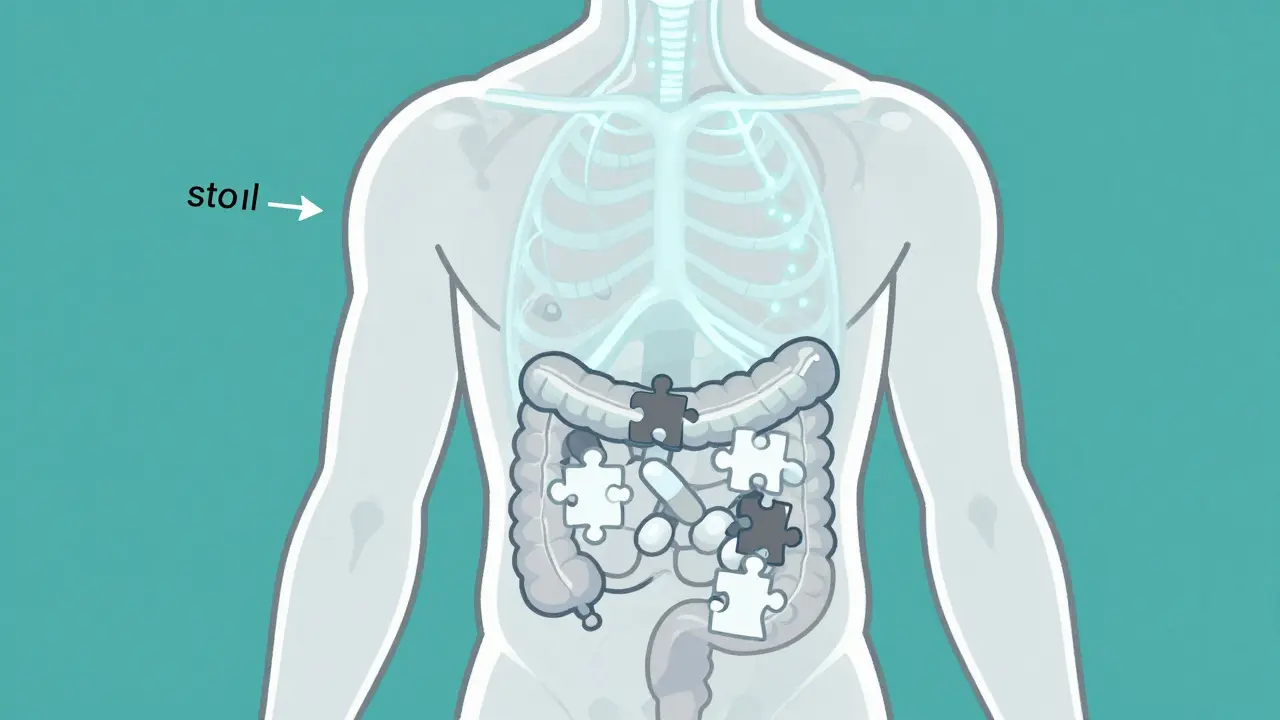
More than half of people taking opioids for chronic pain experience constipation so bad they consider quitting their medication. It’s not just opioids-antihistamines, antidepressants, blood pressure pills, and even iron supplements can turn your bowels into a slow-moving train. And here’s the catch: most over-the-counter remedies don’t fix the real problem. You can’t just eat more fiber and hope it goes away. If your constipation started after you began a new medication, it’s not coincidence. It’s science.
Why Your Medication Is Slowing You Down
Your gut has its own nervous system-called the enteric nervous system-that works like a second brain. Many medications don’t just target your brain or your joints; they interfere with this gut network. Opioids, for example, bind to receptors in your intestines that normally help move stool along. When those receptors are blocked, your gut slows down. Fluid gets sucked out of your stool. It becomes hard, dry, and stuck. This isn’t just uncomfortable-it’s dangerous if left untreated. Anticholinergic drugs like diphenhydramine (Benadryl), some antidepressants, and even certain antipsychotics like clozapine do something similar. They block acetylcholine, a chemical your body uses to trigger muscle contractions in the gut. Without those contractions, nothing moves. Calcium channel blockers like verapamil relax the smooth muscles in your intestines, making them sluggish. Diuretics? They drain your body of water. Less water means drier stool. Iron supplements? They irritate the gut lining and disrupt the microbiome, which can stall digestion for days. The result? Bowel movements drop from daily to once every three or four days. Straining. Bloating. Feeling full even when you haven’t eaten. Some people describe it as a constant pressure in their abdomen. And because these side effects are so common, many patients think it’s just "normal"-until they can’t take it anymore.What Doesn’t Work (And Why)
You’ve probably tried fiber supplements. Maybe you bought Metamucil or started eating more oats, apples, and bran. But if your constipation is caused by medication, fiber alone often makes things worse. Why? Because fiber adds bulk-but if your gut isn’t moving, that bulk just sits there. It increases pressure, causes more bloating, and can even lead to impaction. Studies show that up to 30% of people with medication-induced constipation get worse when they rely on fiber alone. Same goes for herbal teas or "natural" laxatives like senna without medical guidance. They might give you a quick rush, but they don’t fix the root cause. And if you’re on opioids or anticholinergics, stimulant laxatives alone can lead to dependency or electrolyte imbalances over time. The biggest mistake? Waiting. People often wait until they haven’t had a bowel movement in five or six days before doing anything. By then, stool is packed in tight. Reversing it takes more effort-and more medication.What Actually Works: Science-Backed Solutions
The key to managing medication-induced constipation isn’t guessing. It’s matching the treatment to the mechanism. For opioids: The gold standard is peripheral mu-opioid receptor antagonists, or PAMORAs. These drugs-like methylnaltrexone (Relistor), naloxegol (Movantik), and naldemedine (Symproic)-block opioid effects in the gut without touching pain relief in the brain. They work fast. Most people have a bowel movement within 4 to 6 hours after the first dose. Clinical trials show they increase spontaneous bowel movements by 30-40% compared to placebo. They’re not cheap-about $1,200 a month without insurance-but for many, they’re the only thing that lets them stay on their pain medication. If PAMORAs aren’t an option, the next best choice is a combination of osmotic and stimulant laxatives. Polyethylene glycol (PEG 3350, like MiraLAX) pulls water into the colon to soften stool. Sennosides (like Senokot) gently stimulate contractions. Together, they work in 60-70% of cases. A common effective dose is 17g of PEG daily plus 17mg of sennosides. Many cancer patients on long-term opioids use this combo successfully for years. For anticholinergics: If you’re taking diphenhydramine for sleep or allergies, switch to a non-sedating antihistamine like loratadine (Claritin) or cetirizine (Zyrtec). These cause constipation in only 2-3% of users, versus 15-20% with Benadryl. Same goes for older antidepressants like amitriptyline-switching to SSRIs like sertraline can reduce GI side effects dramatically. For calcium channel blockers: Not all of them cause constipation equally. Verapamil is the worst offender, with 10-15% of users affected. Amlodipine, on the other hand, causes constipation in only 5-7%. If you’re on verapamil and struggling, ask your doctor if switching is possible. For iron supplements: Try switching to a different form-ferrous bisglycinate or iron polysaccharide-both are gentler on the gut. Take them with vitamin C to improve absorption and reduce irritation. Some people find taking iron every other day instead of daily helps enough to avoid laxatives altogether.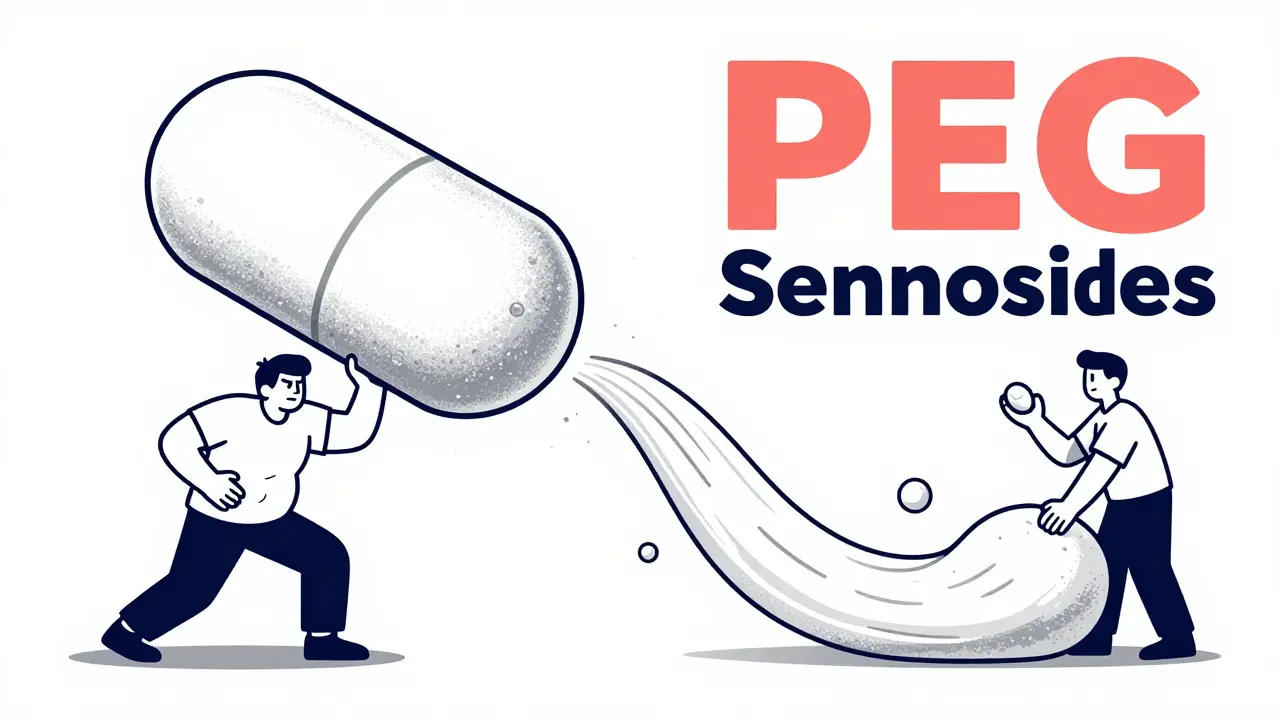
When to Start Treatment: Don’t Wait
The best time to treat medication-induced constipation? Right when you start the medication. Prophylaxis works. BC Cancer guidelines recommend starting a laxative on day one of opioid therapy. Same goes for anyone starting clozapine or high-dose anticholinergics. If you’re already constipated, don’t panic. But don’t delay either. Start with PEG 3350 (17g daily) and sennosides (17mg daily). If no improvement in 48 hours, talk to your doctor about PAMORAs. Most primary care providers still don’t know this protocol. Don’t be afraid to bring up the research. You’re not asking for a luxury-you’re asking to stay on the medication you need.What to Avoid
- Don’t rely on fiber alone. It’s not the answer for drug-related constipation. - Don’t use enemas or suppositories regularly. They’re okay for emergencies, but not long-term solutions. They can damage the rectum or train your body to need them. - Don’t ignore dehydration. Even if you’re taking diuretics, aim for 2-3 liters of water a day. Sip slowly. Don’t chug. Your body absorbs water better that way. - Don’t assume your doctor knows. Only 35-40% of primary care providers follow evidence-based guidelines for medication-induced constipation. Bring printed info. Ask specifically about PAMORAs if you’re on opioids.Real Stories, Real Relief
On Reddit’s r/ChronicPain, one user wrote: "I stopped oxycodone after 8 months because I couldn’t go to the bathroom. I was in more pain from constipation than from my original injury. Then my pain specialist prescribed Relistor. First dose-within 5 hours, I had my first real bowel movement in months. I’m back on my meds and actually living again." A cancer patient in Australia shared: "I take oxycodone for bone pain and iron for chemo anemia. I was stuck for days. My oncologist put me on PEG + sennosides. Now I go every day. No more bloating. No more fear." These aren’t outliers. They’re the people who found the right fix.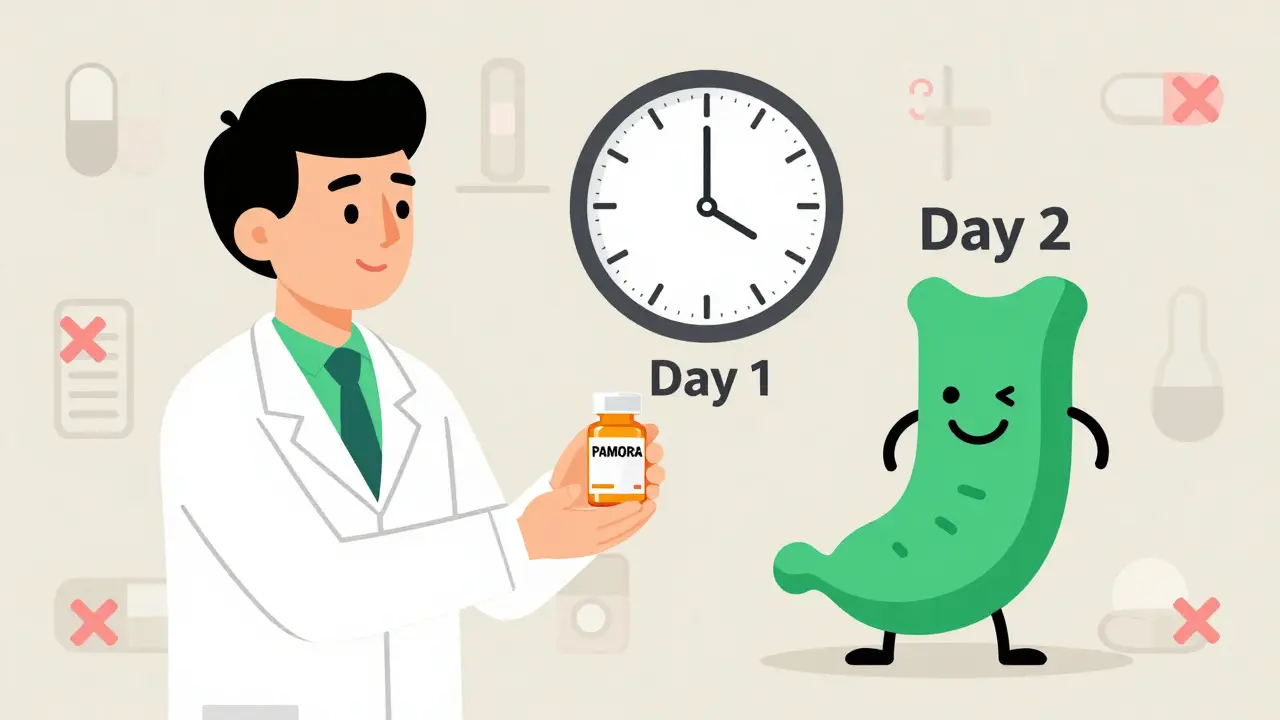
What’s Next in Treatment
Researchers are looking at gut microbiome therapies. A drug called SER-287 is in clinical trials and has shown 40-50% improvement in constipation symptoms by restoring healthy bacteria. Mayo Clinic has already started using AI tools in their electronic records to flag patients at risk for medication-induced constipation and auto-suggest prophylactic laxatives. That’s how medicine is evolving-personalized, proactive, and precise. The future isn’t just about stronger laxatives. It’s about preventing the problem before it starts.Frequently Asked Questions
Can I just stop my medication if it causes constipation?
Stopping your medication without medical advice can be dangerous. Opioids for pain, antipsychotics for mental health, or blood pressure drugs-these aren’t optional. The goal isn’t to quit the drug, but to manage the side effect. With the right laxative strategy, you can usually stay on your medication safely. Talk to your doctor about alternatives or add-ons before making any changes.
Are over-the-counter laxatives safe for long-term use?
Osmotic laxatives like polyethylene glycol (PEG) are generally safe for long-term use because they don’t irritate the bowel or cause dependency. Stimulant laxatives like sennosides can be used daily under medical supervision, but prolonged use without monitoring may lead to electrolyte imbalances. Avoid stimulants like cascara or senna if you’re also on diuretics or heart medications. Always check with your pharmacist or doctor before using any laxative regularly.
Why doesn’t prune juice or high fiber help with my constipation?
Prune juice and fiber work well for occasional constipation caused by diet or inactivity. But when your gut’s nerves are being blocked by medication, adding bulk without movement just creates pressure. Think of it like trying to push a stalled car with more weight-it won’t move. Medication-induced constipation needs a solution that restores motility or draws water into the colon. That’s why osmotic and stimulant laxatives work better than fiber.
How do I know if I have medication-induced constipation?
If you started a new medication and within 1-2 weeks your bowel habits changed-fewer than three bowel movements per week, hard or lumpy stools, straining, or feeling incomplete after going-you likely have medication-induced constipation. Common culprits include opioids, anticholinergics, calcium channel blockers, iron, and some antidepressants. Keep a log of your medications and bowel movements. Bring it to your doctor.
Is there a way to prevent constipation before it starts?
Yes. If you’re starting an opioid, anticholinergic, or calcium channel blocker, ask your doctor for a prophylactic plan. Start with polyethylene glycol (17g daily) and sennosides (17mg daily) on day one. Drink plenty of water. Move your body-even a 10-minute walk after meals helps. Don’t wait for symptoms. Prevention is easier, cheaper, and less painful than treating severe constipation later.
Next Steps
If you’re on one of these medications and struggling with constipation:- Make a list of every medication you take, including supplements.
- Track your bowel movements for 7 days: frequency, consistency, effort.
- Bring both to your doctor and say: "I think my medication is causing constipation. What’s the right treatment?"
- Ask specifically about PAMORAs if you’re on long-term opioids.
- If your doctor says "just eat more fiber," ask: "What does the latest research say about fiber for drug-induced constipation?"
Matt Davies
December 18, 2025 AT 13:19Man, I was stuck for months on oxycodone until my pain doc hooked me up with Movantik. First dose? I finally felt like a human again. No more bloating, no more dread before every meal. It’s not magic-it’s science. And yeah, it’s pricey, but so is missing out on life because your guts are on vacation.
Ashley Bliss
December 19, 2025 AT 21:27Let me tell you something about modern medicine-it’s a circus. We’ve got people taking five pills a day just to survive, and then we act shocked when their bodies revolt. Constipation isn’t a side effect-it’s a symptom of our broken system. We treat symptoms, not souls. You can’t fix a broken gut with a laxative when your entire lifestyle is a chemical warzone.
holly Sinclair
December 21, 2025 AT 02:04It’s fascinating how the enteric nervous system is so often overlooked in pharmacology. We design drugs to target receptors in the brain, but we forget that the gut has more neurons than the spinal cord. The real tragedy isn’t just the constipation-it’s that we treat the body like a machine with separate parts, when it’s actually this beautiful, interconnected ecosystem. When you block acetylcholine in the gut, you’re not just slowing motility-you’re disrupting a whole neural network that’s been evolving for millions of years. And we wonder why people feel ‘off’? It’s not all in their head-it’s in their gut.
Monte Pareek
December 22, 2025 AT 12:48Allison Pannabekcer
December 24, 2025 AT 05:11I really appreciate how detailed this is. I’ve been on amitriptyline for years and never realized it was the culprit behind my constant bloating. Switching to sertraline changed everything. I still get a little sluggish sometimes, but now I can actually feel like myself again. And honestly? Just knowing this stuff exists makes me feel less alone. Thank you for writing this.
Sarah McQuillan
December 25, 2025 AT 12:43Interesting how you assume everyone has access to PAMORAs or can afford $1200/month. In the real world, most people are choosing between insulin and laxatives. And don’t get me started on how the FDA approves drugs that wreck your gut but won’t approve cheaper alternatives because Big Pharma doesn’t profit from them. This isn’t science-it’s capitalism with a stethoscope.
Aboobakar Muhammedali
December 25, 2025 AT 15:09Mark Able
December 26, 2025 AT 05:26Hey, I’m a nurse and I’ve seen this a thousand times. People come in saying they’re constipated and I ask what meds they’re on and 90% of them are on something that causes it. Here’s the thing-you don’t have to suffer. Bring this article to your doctor. Print it out. Hand it to them. Don’t wait until you’re in the ER with an impaction. You’re not being dramatic-you’re being smart.
Chris Clark
December 27, 2025 AT 12:29so i was on verapamil for years and my doc said just eat more fiber i was like bro its not a salad problem then i switched to amlodipine and boom no more constipation like its literally the same class of drug but one wrecks your gut and the other barely touches it why do docs not know this???
Dorine Anthony
December 29, 2025 AT 12:02My grandma took sennosides for 15 years. She thought it was normal. Then one day she stopped and just… started going on her own. She said she didn’t even realize she’d been dependent. This article made me cry. I’m going to talk to my mom about her blood pressure meds. She deserves better than feeling like a brick factory.
William Storrs
December 29, 2025 AT 12:54You got this. Seriously. If you’re reading this and you’re stuck, don’t give up. The fact that you’re here means you care about your body. That’s huge. Start with PEG and sennosides. Talk to your doctor. Bring this page. You’re not weak for needing help-you’re brave for seeking it. One bowel movement at a time. You’re not alone.
James Stearns
December 30, 2025 AT 00:33It is, of course, both lamentable and emblematic of the contemporary medical-industrial complex that such a fundamental physiological process as gastrointestinal motility is so routinely disregarded in pharmacological design. One might posit that the modern physician, burdened by administrative exigencies and time constraints, has become an unwitting accomplice in the commodification of human corporeality. The reliance upon pharmacological palliatives rather than systemic reevaluation represents not merely a therapeutic failure, but an epistemological one.
Nina Stacey
December 31, 2025 AT 08:34Dominic Suyo
January 1, 2026 AT 11:31Let’s be real: this whole article is just Big Pharma’s way of selling you $1200/month drugs while ignoring the fact that we’ve turned the human body into a chemical dump. Opioids? Anticholinergics? Diuretics? These are not ‘medications’-they’re band-aids on a ruptured artery. The real solution isn’t PAMORAs. It’s rethinking why we’re prescribing these things in the first place. Your gut isn’t broken-it’s been poisoned by a system that prioritizes profit over physiology.