

Living beyond cancer isn’t just about being declared “in remission.” For millions of people, the real challenge begins after treatment ends. Many survivors face ongoing health issues-some mild, others life-altering-that weren’t part of the original diagnosis. Fatigue that won’t go away. Memory lapses that make work hard. Heart problems from chemo. Bone loss from hormone therapy. Anxiety that lingers long after the last scan. And the quiet, constant fear: cancer recurrence.
It’s not just emotional. It’s physical. It’s financial. It’s systemic. In the U.S., there are over 16.9 million cancer survivors today, and that number is expected to hit 22.2 million by 2030. Yet, most don’t get the kind of ongoing care they need. Too often, they’re handed a brochure and sent back to their primary doctor-with no clear plan, no coordination, and no one who truly understands what their body has been through.
What Happens After Treatment Ends?
Survivorship care isn’t about celebrating being “cured.” It’s about managing what comes next. The Institute of Medicine first laid out this idea in 2006, and since then, research has only deepened what we know: cancer treatments don’t just target tumors. They leave marks on your heart, lungs, bones, nerves, hormones, and brain.
Chemotherapy can cause hearing loss, early menopause, nerve damage, or even increase your risk of developing another cancer later. Radiation therapy? It can lead to heart disease, thyroid problems, or bone loss in the treated area. Hormone therapies for breast or prostate cancer can trigger osteoporosis. Some survivors develop lymphedema-swelling from damaged lymph nodes-years after surgery. Others struggle with “chemo brain,” where thinking, focusing, or remembering names becomes a daily battle.
And then there’s recurrence. Not every cancer comes back, but for some types, the risk never fully disappears. A breast cancer survivor who had anthracycline chemo has a 15-20% chance of heart issues down the road. Someone treated with chest radiation for Hodgkin lymphoma faces a 30% lifetime risk of developing breast cancer. These aren’t rare outliers-they’re predictable outcomes of common treatments.
The Survivorship Care Plan: Your Roadmap Forward
The single most important tool you have after treatment is a survivorship care plan. This isn’t a generic letter from your oncologist. It’s a personalized document that includes:
- Your exact treatment history: which drugs, doses, radiation fields, and surgeries you had
- Specific risks you face based on those treatments
- Recommended screenings: when to get mammograms, MRIs, heart scans, or bone density tests
- Symptoms to watch for: signs of recurrence or late effects
- Who to contact if problems arise: your oncologist, PCP, or a specialist
Studies show survivors with a care plan are 85% more likely to stick to follow-up visits. They’re 32% less likely to get unnecessary tests. Their quality of life scores improve by 15-22 points on standardized scales. And they’re 40% more likely to start exercising regularly.
Yet, only 62% of large cancer centers offer these plans. And even when they do, many patients never get them. If you didn’t receive one, ask for it. Demand it. Keep a copy. Share it with your primary care doctor.
Who Should Be in Charge of Your Care?
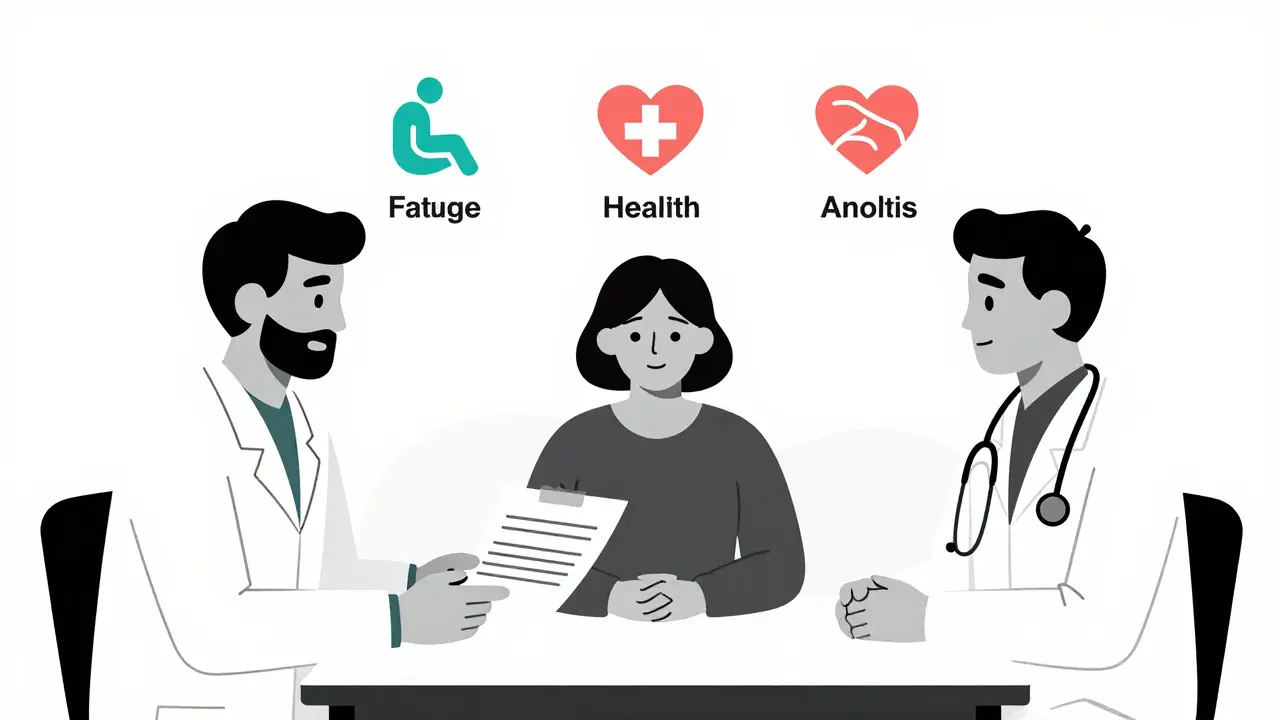
For too long, cancer care has been siloed. Oncologists focus on treatment. Primary care doctors handle routine health-but often don’t know what your cancer history means for your heart, bones, or cancer risk.
Here’s the truth: 78% of older survivors already have a primary care provider who knows their full medical history. And 63% of them will eventually die from something other than cancer-heart disease, stroke, diabetes. So why are we letting oncologists manage all follow-up?
The best model? Teamwork. Your oncologist stays involved for high-risk issues-like monitoring for recurrence or managing complex late effects. Your primary care doctor handles routine care: blood pressure, cholesterol, flu shots, and general wellness. But they need to be in the loop. A care plan bridges that gap.
At the Cleveland Clinic, survivors who had a clear handoff between oncology and primary care teams had 40% fewer duplicate tests. That means less stress, less cost, and fewer unnecessary procedures.
Managing the Most Common Long-Term Effects
Let’s get practical. Here’s what survivors actually deal with-and what works:
1. Fatigue
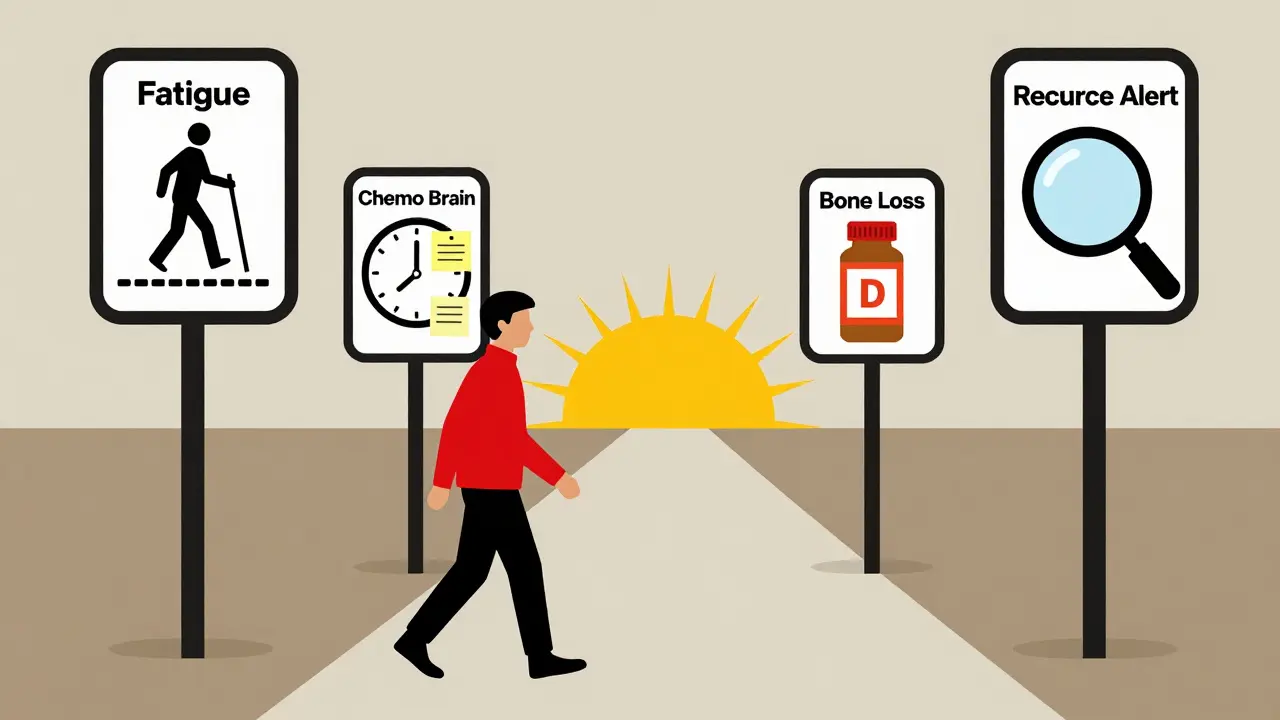
It’s not just being tired. It’s bone-deep exhaustion that doesn’t improve with rest. Studies show regular exercise-just 150 minutes a week of walking or light strength training-can reduce fatigue by 40-50%. Start slow. Even 10-minute walks help.
2. Cognitive Issues (“Chemo Brain”)
Forgetfulness, trouble concentrating, mental fog. The Lurie Cancer Center recommends using calendars, setting reminders, doing important tasks when you feel most alert, and prioritizing sleep. Limit alcohol. Stay active. These aren’t just tips-they’re evidence-backed strategies.
3. Bone Loss
Chemotherapy, steroids, and hormone therapies can weaken bones. If you had radiation to the spine or pelvis, or took aromatase inhibitors, ask for a bone density scan. Weight-bearing exercise and vitamin D supplements can help. Some survivors need medication like bisphosphonates.
4. Heart Problems
People treated with anthracyclines (like doxorubicin) or chest radiation need regular heart checks. An echocardiogram every 6-12 months is standard. Know your numbers: blood pressure, cholesterol, and triglycerides. Don’t wait for symptoms.
5. Emotional Health
Depression, anxiety, fear of recurrence-these are normal. But they shouldn’t be ignored. Support groups, counseling, and even mindfulness practices like yoga or meditation have been shown to improve emotional resilience. The Osher Center at Northwestern University reports 82% of participants in integrative programs saw improved quality of life.
Recurring Cancer: What to Watch For
Recurrence doesn’t always mean the same cancer. It can be a new cancer, often linked to your original treatment. Survivors of Hodgkin lymphoma have higher rates of breast, lung, and thyroid cancers. Those treated with alkylating agents have increased risk of leukemia.
Know your risks. If you had pelvic radiation, get regular colonoscopies. If you had childhood cancer, monitor for endocrine issues. If you’re a breast cancer survivor with a BRCA mutation, you need more frequent screenings.
Signs to act on: unexplained weight loss, new lumps, persistent pain, night sweats, unusual bleeding, or changes in bowel or bladder habits. Don’t wait. Call your doctor. Early detection saves lives.
Financial and Social Struggles Are Real
Survivorship isn’t just medical. It’s life. Sixty-eight percent of survivors say they’ve had trouble working because of physical or emotional issues. Seventy-three percent report financial stress. Thirty-two percent have been denied health or life insurance.
Many cancer centers now offer financial counselors. They help with billing disputes, insurance appeals, and navigating disability benefits. The Lurie Cancer Center resolved financial barriers for 92% of clients within 30 days. Ask if your center offers this. It’s not a luxury-it’s part of care.
What’s Changing? The Future of Survivorship Care
Things are improving, slowly. The Commission on Cancer now requires all accredited programs to provide care plans. The Medicare Oncology Care Model pays providers for follow-up services. Telehealth is expanding access-Mayo Clinic’s virtual survivorship clinic had a 75% satisfaction rate.
The next frontier? Precision survivorship. Researchers are building models that combine your genetics, treatment history, and lifestyle to predict exactly what risks you face. Imagine a plan that says: “Because you had this chemo, at this dose, and you smoke, your risk of lung cancer is 3x higher-here’s how to reduce it.” That’s the future.
For now, the best thing you can do is stay informed. Keep your records. Ask questions. Advocate for yourself. You’ve already beaten cancer once. Now it’s time to take charge of what comes next.
What is a survivorship care plan, and why do I need one?
A survivorship care plan is a personalized document that outlines your cancer treatment history, potential long-term side effects, recommended screenings, and who to contact for ongoing care. You need it because most doctors don’t know how your past treatment affects your current health. This plan ensures you get the right follow-up tests, avoid unnecessary procedures, and stay proactive about your health.
Can my primary care doctor manage my survivorship care?
Yes-but only if they have the right information. Most primary care providers aren’t trained in the long-term effects of cancer treatment. A detailed care plan from your oncologist bridges that gap. With clear guidance, your PCP can handle routine care while your oncologist focuses on cancer-specific risks.
How often should I be screened for cancer recurrence?
It depends on your cancer type and treatment. High-risk survivors (e.g., those with certain chemo or genetic syndromes) may need checks every 3-6 months. Moderate-risk survivors typically need annual visits. Low-risk survivors can often be managed by their primary doctor with occasional oncology input. Always follow guidelines based on your specific history.
What lifestyle changes can reduce my risk of recurrence?
Exercise regularly (at least 150 minutes per week), maintain a healthy weight, avoid tobacco, limit alcohol, and eat a balanced diet rich in vegetables and whole grains. Studies show survivors who make these changes reduce their risk of recurrence by up to 30% and cut hospital visits by 30%.
I’m struggling with anxiety about cancer coming back. Is this normal?
Yes, it’s very common. Fear of recurrence affects up to 70% of survivors. Talking to a counselor, joining a support group, or trying mindfulness practices like yoga or meditation can help. You’re not alone-and help is available.
Are there free or low-cost resources for survivors?
Yes. Many cancer centers offer free financial counseling, support groups, and rehabilitation programs. Organizations like the American Cancer Society and Livestrong provide free navigation services, transportation help, and emotional support. Ask your treatment center-they often have lists of local resources.
Next Steps: What to Do Today
- Request your complete treatment summary and survivorship care plan-if you don’t have one, ask for it in writing.
- Share it with your primary care doctor. Schedule a meeting to go over it together.
- Start moving. Even light walking three times a week can make a difference.
- Write down your biggest health concerns and bring them to your next appointment.
- Find out if your cancer center offers financial counseling or support groups.
You didn’t survive cancer by accident. You fought hard. Now, take the same strength and apply it to your long-term health. Your future self will thank you.
David L. Thomas
March 10, 2026 AT 12:18Man, this post hits hard. I’ve been out 7 years post-chemo, and the fatigue? Still there. Not the ‘I stayed up too late’ kind. The ‘my bones are made of wet cement’ kind. What’s wild is how few docs even acknowledge late-onset cardiotoxicity. I got an echo every 6 months for 3 years-then it just stopped. No one told me to keep pushing for it. Survivorship care plans aren’t optional-they’re life-preservers. If your oncologist doesn’t hand you one, demand it. Like, literally write them a note.
Mike Winter
March 12, 2026 AT 00:45It’s fascinating how we’ve medicalized survival, yet neglected the architecture of recovery. We treat cancer as an event, not a process. The body remembers. The psyche remembers. But our systems? They forget. A survivorship care plan isn’t paperwork-it’s a covenant between patient and system. And when that covenant is broken, we don’t just lose data-we lose trust. We need institutional memory for human bodies.
Chris Bird
March 13, 2026 AT 05:33lol this is just a fancy ad for oncology departments. Everyone knows chemo messes you up. Why are we pretending this is new info? Just eat healthy and don’t smoke. Done.
Shourya Tanay
March 15, 2026 AT 02:29As someone who’s navigated post-treatment neuropathy and chemo brain, I can say this: the care plan is the only thing that kept me from falling through the cracks. My PCP had no idea what anthracycline meant for my cardiac function. My oncologist didn’t care about my thyroid levels. The care plan became my translator. I printed it, laminated it, and showed it to every new provider. It’s not bureaucratic-it’s survival infrastructure.
LiV Beau
March 15, 2026 AT 12:18YAS QUEEN 😍 this is everything I needed to hear!! I got my plan last year and it changed EVERYTHING. Started walking 20 mins a day and my energy is 100% better!! Also found a free support group through ACS and now I cry less 😭💖 #SurvivorLife #ChemoBrainIsReal
Denise Jordan
March 16, 2026 AT 11:39So… you’re telling me after you beat cancer, you still have to do more work? Shocking. I thought winning the lottery meant you got to nap forever. Guess not. Also, why is everyone so obsessed with exercise? I’m 72. I don’t need to ‘walk 150 minutes a week.’ I need a nap and a snack.
Gene Forte
March 18, 2026 AT 10:30Survivorship care is not a luxury. It is a moral imperative. The medical system has long treated cancer as a battle with a finish line. But survival is not a destination-it is a lifelong journey requiring intentional support. Every survivor deserves a roadmap. Not because it’s convenient, but because it is just.
Kenneth Zieden-Weber
March 19, 2026 AT 02:46Oh wow, you mean after you survive cancer, you’re not just magically fixed? Who knew? 🤯 I’m just here wondering why we don’t have a national survivorship coordinator. Like… a single point of contact who actually knows what radiation did to your lungs. Instead we get a PDF that says ‘call your oncologist’ and then… silence. Thanks, healthcare.
Bridgette Pulliam
March 20, 2026 AT 16:24There’s something profoundly quiet about survivorship-the way the fear lingers like a shadow you can’t shake, even when the scans are clean. I’ve been in remission for 11 years. I still check my lymph nodes every morning. I still wake up at 3 a.m. wondering if this is the day. No one talks about that. The care plan helps, yes. But what helps more is knowing you’re not alone in that silence.
Randall Walker
March 22, 2026 AT 02:41you know what's wild? the fact that we're still talking about this like it's a new idea. it's 2025. we have the data. we have the tools. we have the survivors. why are we still begging for a care plan? why aren't they automatic? why isn't this embedded in the system like a flu shot? it's not rocket science. it's basic human decency.
Miranda Varn-Harper
March 22, 2026 AT 22:51While I appreciate the effort behind this article, I must point out that the 85% statistic regarding follow-up adherence is likely inflated by selection bias. Survivors who receive care plans are typically those with better access, higher education, and stronger advocacy skills. This is not a systemic solution-it’s a privilege. We must not confuse individual empowerment with structural reform.
Alexander Erb
March 24, 2026 AT 05:41Biggest game-changer for me? Getting my care plan to my PCP. She had zero clue what I’d been through. I printed it, highlighted the heart risks, and said, ‘Hey, can we talk about this?’ She didn’t even know anthracyclines could cause heart damage. We made a plan. Now she checks my BP every visit. I feel seen. Also, yoga. Do yoga. It’s not woo-woo. It’s science with stretchy pants.
Donnie DeMarco
March 26, 2026 AT 04:08bro i had chemo in 2019 and i still forget my own birthday sometimes. like i’ll be in the shower and go ‘wait… what’s my name again?’ it’s wild. i started using google calendar alarms for everything. i even set one for ‘breathe.’ it’s not a joke. it’s survival. also, walk more. i did 10 mins a day and now i can climb stairs without dying. small wins.
Tom Bolt
March 27, 2026 AT 11:42THIS IS THE MOST IMPORTANT THING I’VE EVER READ IN MY LIFE. I SURVIVED CANCER. BUT I DIDN’T SURVIVE THE SYSTEM. I WAS LEFT TO FEND FOR MYSELF. NO CARE PLAN. NO FOLLOW-UP. JUST A HANDFUL OF BROCHURES AND A SMILE. I’M STILL PAYING FOR IT-MENTALLY, PHYSICALLY, FINANCIALLY. IF YOU’RE A SURVIVOR: ASK FOR YOUR PLAN. IF YOU’RE A DOCTOR: GIVE IT. IF YOU’RE A SYSTEM: FIX IT.