

When a child has asthma, the right treatment can mean the difference between playing soccer after school and ending up in the emergency room. But here’s the hard truth: asthma spacer use isn’t just a medical detail-it’s often the deciding factor in whether medication actually works. Many parents think giving their child an inhaler is enough. It’s not. Without a spacer, most of the medicine sticks to the back of the throat or gets swallowed, not delivered to the lungs where it’s needed. And in schools, where kids spend most of their day, inconsistent use or lack of access can turn a manageable condition into a crisis.
Why Spacers Are Non-Negotiable for Kids
Asthma spacers are simple plastic tubes that connect to a metered-dose inhaler (MDI). They’re not fancy, but they’re essential. For children under five, using an inhaler without a spacer is like trying to hit a moving target with a water gun while blindfolded. The medicine shoots out too fast, too forcefully. Kids can’t coordinate pressing the inhaler and breathing in at the same time. Spacers solve this by holding the medicine in a chamber so the child can breathe it in slowly, naturally, over several breaths. Studies show that when used correctly, spacers deliver 73% more medication to the lungs than inhalers alone. In one 2022 study, only 54% of children aged 9-18 used their inhaler properly without a mask and spacer. With a mask and spacer, that number jumped to 89%. For toddlers, the difference is even starker. The Royal Children’s Hospital in Melbourne found that children under five using spacers had half the hospital admission rates compared to those using nebulizers. And here’s the kicker: spacers cost less. A single spacer lasts years. A nebulizer machine costs hundreds, needs electricity, and takes 10-15 minutes per treatment. Spacers take 20 seconds.How to Use a Spacer Correctly (Step by Step)
Getting the technique right matters more than the brand. Here’s what actually works, based on guidelines from the Global Initiative for Asthma and the American Academy of Pediatrics:- Have your child sit upright-no lying down or slouching.
- Shake the inhaler well and attach it to the spacer.
- Place the mask snugly over the nose and mouth (for young kids) or the mouthpiece between the lips (for older kids who can seal their lips).
- Press the inhaler once to release one puff into the spacer.
- Have your child breathe in and out slowly through the spacer four times. Don’t rush. Count to five on each breath.
- Wait 30 seconds before giving a second puff, if prescribed.
- Wash the spacer with warm water and dish soap once a week. Don’t rinse it dry-just let it air-dry. Rinsing creates static that traps medicine.
- Keep it dry. If the spacer is wet, use the inhaler alone. A wet spacer won’t work.
- Store it in a clean, cool place-not in a hot car or damp bathroom.
Many parents wipe the spacer dry after washing. That’s a mistake. Static electricity builds up and grabs the medicine like a magnet. Air-drying without rinsing keeps the interior slightly damp, which reduces static and lets the medicine flow freely.
Why Schools Are the Missing Link
Six million U.S. children have asthma. That’s one in every 12 kids. Most spend six to seven hours a day at school. Yet, only 42 states in the U.S. require schools to keep asthma medication on-site. In rural areas, spacer availability is 45% lower than in cities. That’s not just a gap-it’s a safety hazard. School nurses report that many children don’t bring their spacers to school. Some feel embarrassed. Others forget. Some parents assume the school will provide one. They won’t. Unless the school has a policy, there’s no guarantee a spacer will be available when a child has an attack. The good news? Schools with full asthma action plans see 37% fewer absences. That’s not just about attendance-it’s about learning. A child who can’t breathe can’t focus. A child who’s afraid of an attack can’t participate. A child who knows exactly what to do when symptoms start feels safe.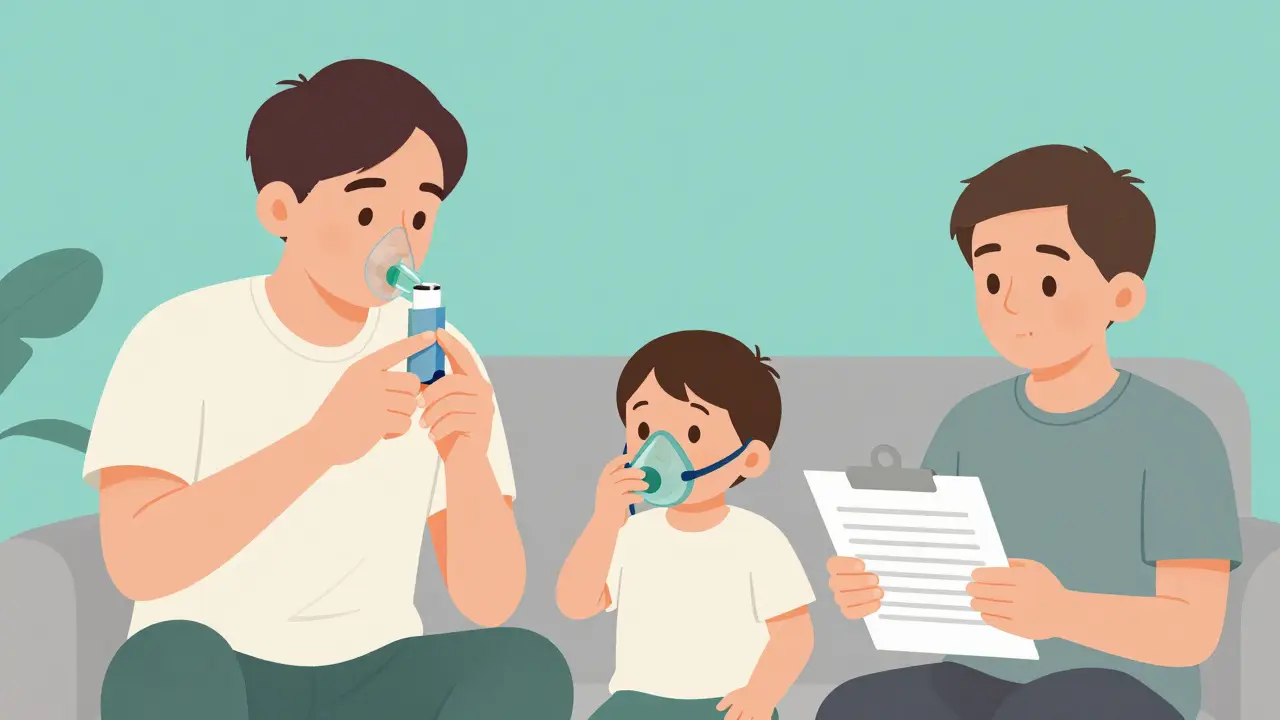
What a Real Asthma Care Plan Looks Like
An asthma care plan isn’t a form you fill out once and forget. It’s a living document. The National Asthma Education and Prevention Program (NAEPP) says every child with asthma should have one. Here’s what it must include:- Medications: Which ones? How often? When to use the rescue inhaler with spacer? When to call 911?
- Triggers: Dust? Exercise? Cold air? Pollen? List them clearly.
- Symptom zones: Green (doing fine), Yellow (warning signs-coughing, wheezing), Red (emergency-trouble breathing, lips turning blue).
- School instructions: Who can give medicine? Where is the spacer kept? Who’s trained to help?
- Emergency contacts: Parents, doctors, and a backup.
Many schools now use digital copies stored in health portals, but paper copies should still be kept in the nurse’s office and with the classroom teacher. A 2023 study found that schools with printed care plans posted visibly in classrooms had 50% faster response times during asthma episodes.
Why Teens Stop Using Spacers (And How to Fix It)
Here’s the quiet crisis: teenagers stop using spacers. Not because they don’t know how. But because they don’t want to look different. A 2022 study found adolescents were 80% less likely to use spacers correctly than children aged 4-8. Why? Peer pressure. Embarrassment. The belief that they’re too old for masks. The fix isn’t to nag. It’s to adapt. For teens, use a spacer with a mouthpiece only-no mask. Choose slim, quiet models. Some now come in colors or with designs. Teach them to carry it in a small pouch with their phone or wallet. Remind them: no one notices a spacer. But everyone notices a kid gasping for air in the hallway. Also, involve them in choosing their spacer. Let them pick the color. Let them name it. Make it theirs. When a 16-year-old told his nurse, “I call mine ‘Thunder’ because it’s loud when I use it,” she knew he’d stick with it.What’s Changing in 2026
The CDC’s National Asthma Control Program is now funding spacer distribution in underserved schools. In Australia, New South Wales rolled out a statewide school spacer program in 2024, providing free spacers and training to every public school. The American Academy of Pediatrics updated its 2024 guidelines to require that all school staff who interact with children be trained in spacer use-not just nurses. New research is testing smartphone apps that use camera recognition to check if a child is using their spacer correctly. A $2.5 million NIH study is tracking this in 15 U.S. schools through 2025. Early results show kids who get real-time feedback improve their technique by 60% in four weeks.
What Parents Can Do Today
You don’t need to wait for policy changes. Here’s what works right now:- Ask your child’s doctor for a written asthma care plan. If they don’t give you one, ask again.
- Take the plan to the school nurse and meet with your child’s teacher. Walk them through the steps.
- Keep a spare spacer at school-even if your child has one at home.
- Practice spacer use at home every week. Make it part of the routine, like brushing teeth.
- Watch for signs your child isn’t using it right: coughing after using the inhaler, frequent use of rescue meds, no improvement after treatment.
If your child has had more than two asthma attacks in the past year, or needed oral steroids, they need a care plan. Now. Not next month. Not after summer.
Common Mistakes (And How to Avoid Them)
- Mistake: Wiping the spacer dry after washing. Fix: Air-dry without rinsing.
- Mistake: Using the inhaler without shaking it first. Fix: Shake 5-10 times before each puff.
- Mistake: Pressing the inhaler more than once at a time. Fix: One puff. Wait 30 seconds. Then the next.
- Mistake: Assuming your child knows how to use it. Fix: Watch them use it every three months. If they’re over 8, have them demonstrate to you.
- Mistake: Waiting until an attack to check the spacer. Fix: Check it weekly. Is it cracked? Is the valve stuck? Is it clean?
One parent in Sydney told me her son’s asthma improved overnight after she started washing his spacer the right way. No new meds. No doctor visits. Just a cleaner spacer. That’s the power of small details done right.
Do all children with asthma need a spacer?
Yes. Every child using a metered-dose inhaler (MDI) should use a spacer, regardless of age. Even toddlers and teens benefit. Spacers ensure more medicine reaches the lungs and less gets stuck in the mouth or throat. The Global Initiative for Asthma (GINA) and the American Academy of Pediatrics both recommend spacers for all pediatric MDI users.
Can my child use a spacer at school without permission?
No. Schools require written authorization from a doctor and a signed asthma care plan before allowing a child to use or carry asthma medication-even if it’s just a spacer and inhaler. Always submit the care plan to the school nurse. Some states require schools to store medication on-site, but they still need proper documentation to release it.
How often should I clean the spacer?
Clean it once a week with warm water and a drop of dish soap. Don’t rinse it dry-just let it air-dry. Rinsing creates static that traps medicine. If your child uses it daily, clean it every five days. If it’s used less often, once a week is fine. Never use a towel to dry it.
What if my child refuses to use the spacer?
Start by letting them choose the color or design. Make it part of their routine-like brushing teeth. Practice together at home. For teens, use a mouthpiece-only spacer and explain that it’s faster and more effective than a nebulizer. If they still resist, ask their doctor about alternative inhalers, like dry powder devices, which don’t need spacers. But never stop using the spacer unless a doctor advises it.
Is it safe to use a spacer that’s been dropped or cracked?
No. Cracks or damage can cause the valve to stick or allow medicine to escape. A damaged spacer won’t hold the dose properly, meaning your child gets less medication. Replace it immediately. Most spacers last 1-2 years with proper care. If you’re unsure, bring it to your pharmacist-they can check it for free.
Can a spacer be used with any inhaler?
Most spacers are compatible with standard metered-dose inhalers (MDIs), including albuterol and corticosteroids. But not all. Some inhalers, like dry powder inhalers (DPIs), don’t work with spacers. Always check the label or ask your pharmacist. If your child uses multiple inhalers, get a spacer that fits both. Many modern spacers have universal adapters.
Next Steps for Parents and Schools
If your child has asthma, do three things this week:- Get a written asthma care plan from their doctor.
- Visit the school nurse and hand them the plan. Ask for a copy to keep at home.
- Practice spacer use with your child-every day for a week. Then check their technique.
For schools: Train every staff member who works with children-not just nurses. A teacher who recognizes early signs of asthma can prevent an emergency. A custodian who knows how to store spacers properly can extend their life. Asthma isn’t just a medical issue. It’s a school issue. And fixing it starts with one spacer, one plan, one conversation.
John O'Brien
January 26, 2026 AT 11:07Paul Taylor
January 27, 2026 AT 16:17Desaundrea Morton-Pusey
January 28, 2026 AT 07:46Murphy Game
January 30, 2026 AT 02:02Kegan Powell
January 31, 2026 AT 05:43April Williams
January 31, 2026 AT 06:23Harry Henderson
January 31, 2026 AT 07:10suhail ahmed
February 2, 2026 AT 04:10