

Imagine waking up and finding that while you can see the edges of the room, the center of your vision is a blurred smudge. You can see the lamp on the bedside table, but you can't read the time on your alarm clock or recognize the face of the person standing right in front of you. This is the reality for millions of people living with Age-Related Macular Degeneration is a progressive eye disease that causes the breakdown of the macula, the small central part of the retina responsible for sharp, detailed vision. Also known as AMD, it is currently the leading cause of blindness for people over 65 in developed countries.
The scary part about AMD is that it doesn't take away your whole world-it just steals the center of it. Because your peripheral vision stays intact, you aren't "blind" in the traditional sense, but the activities that make life feel normal-reading a book, driving a car, or seeing your grandkids' smiles-become incredibly difficult. Thankfully, medical science has made massive leaps, particularly with treatments that can stop the most aggressive forms of the disease in their tracks.
Dry vs. Wet AMD: Knowing the Difference
Not all AMD is the same. Doctors generally split the condition into two categories: dry and wet. Understanding which one you or a loved one has is critical because the treatment plans are completely different.
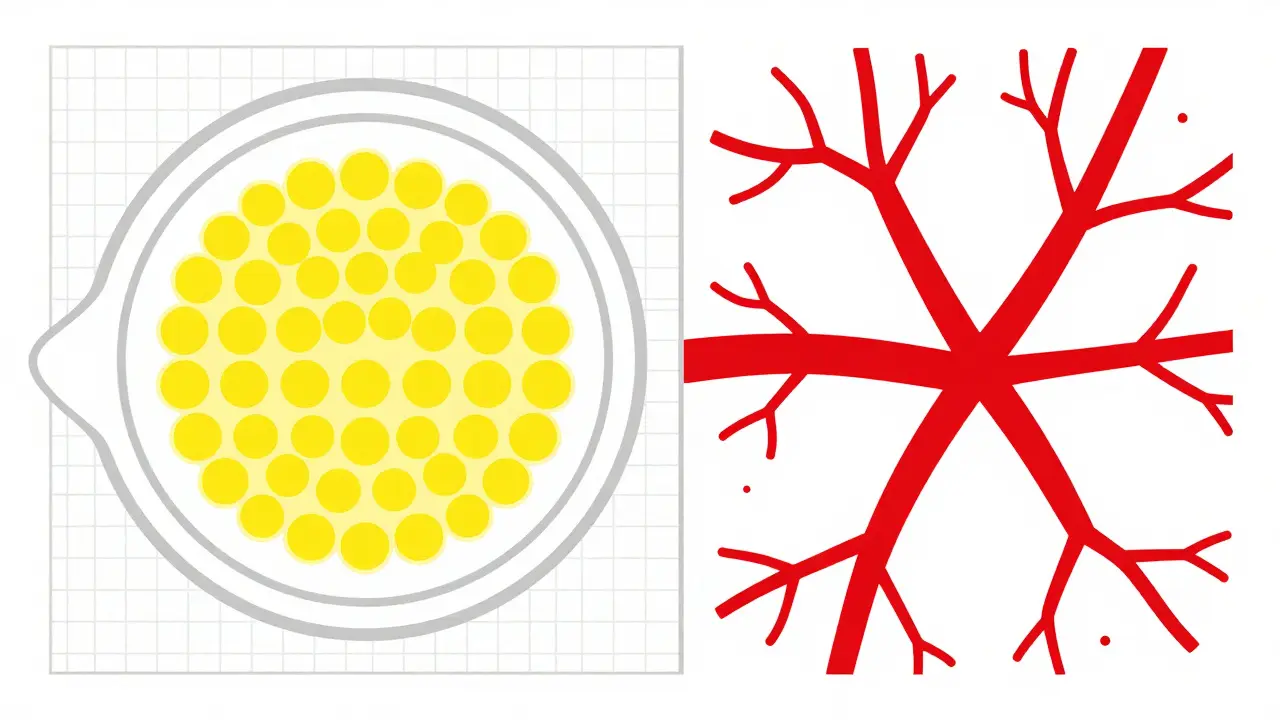
Dry AMD is the most common form of the disease, accounting for about 90% of cases. It happens when tiny yellow protein deposits called drusen build up under the macula, causing the retinal tissue to thin out slowly over time. Most people with dry AMD experience a slow, gradual fade in vision. While there is no cure to reverse it, the goal is to slow the progression.
Then there is Wet AMD is a more severe version where abnormal blood vessels grow beneath the retina. These vessels are leaky, allowing blood and fluid to seep into the macula, which can cause rapid and severe vision loss. Although it affects only 10-15% of patients, it is responsible for about 90% of the severe vision loss associated with the disease. Wet AMD is always considered a late-stage condition and requires immediate medical intervention.
| Feature | Dry AMD (Non-Neovascular) | Wet AMD (Neovascular) |
|---|---|---|
| Prevalence | ~90% of cases | ~10-15% of cases |
| Progression Speed | Slow and gradual | Rapid (weeks or months) |
| Primary Cause | Drusen accumulation & thinning | Abnormal blood vessel leakage |
| Vision Impact | Gradual blurring of center | Severe central blind spots |
| Treatment Focus | Slowing progression (Supplements) | Stopping leakage (Injections) |
What Exactly is Anti-VEGF Therapy?
If you're diagnosed with wet AMD, your doctor will likely mention Anti-VEGF is a class of medications designed to block Vascular Endothelial Growth Factor, a protein that triggers the growth of the leaky, abnormal blood vessels characteristic of wet AMD. Think of VEGF as a "growth signal" that the body sends out. In a healthy eye, it's useful, but in wet AMD, the signal goes haywire, creating fragile vessels that leak fluid and scar the retina.
Anti-VEGF drugs act like a chemical mute button. By blocking that protein, these medications stop the leaky vessels from growing and allow the fluid already in the eye to be reabsorbed. This prevents further damage and, in many cases, can actually improve vision that was thought to be lost forever.
The delivery method is the part most people dread: the medication is injected directly into the vitreous humor of the eye. While the idea of a needle near your eye sounds like a nightmare, the procedure is typically very fast. Modern numbing drops and techniques make it far less painful than it sounds, and the trade-off-saving your sight-is usually worth the anxiety.
Who is at Risk? The Real Drivers of Vision Loss
Age is the most obvious factor; the risk jumps from under 1% in your 40s to about 35% once you hit 75. But age isn't the only thing moving the needle. Genetics play a huge role-if a parent or sibling has AMD, you're three to six times more likely to develop it yourself. Ethnicity also matters, with White populations showing a significantly higher prevalence than African American or Hispanic groups.
However, there are things you *can* control. Smoking is the biggest modifiable risk factor. Current smokers are nearly four times more likely to develop AMD than those who have never smoked. Why? Because smoking increases oxidative stress in the retina, essentially "rusting" the delicate cells of the eye. Other lifestyle factors like high blood pressure, high cholesterol, and obesity (specifically a BMI over 30) also push the odds higher.
Managing Your Vision: A Practical Game Plan
Living with AMD requires more than just a once-a-year doctor's visit. It takes a proactive approach to keep the disease from advancing.
- The Amsler Grid: This is a simple square grid of straight lines. By looking at it daily, you can spot "metamorphopsia"-when straight lines start looking wavy. This is often the first sign that dry AMD has turned into wet AMD. About 40% of patients catch their condition early using this simple tool.
- Nutritional Support: For those with intermediate dry AMD, the AREDS2 formula is the gold standard. These specific antioxidant supplements can reduce the risk of progressing to the advanced stage by 25%. It's not a cure, but it's a powerful defensive wall.
- Injection Discipline: If you are on anti-VEGF therapy, missing appointments is dangerous. Research shows that patients who miss more than 25% of their scheduled shots see an average of 30% more vision loss. Whether it's a monthly schedule or a "treat-and-extend" plan, consistency is everything.

The Future of Macular Health
The burden of monthly eye injections is a major complaint for patients. Because of this, the industry is moving toward "longer-acting" solutions. We are already seeing the introduction of port delivery systems-permanent implants that provide a steady stream of medication for up to six months, removing the need for constant clinic visits.
Even more exciting is the work being done in gene therapy. Scientists are targeting the complement pathway genes, which account for a huge portion of the genetic risk for AMD. Instead of blocking a protein every month, gene therapy aims to "reprogram" how the eye handles these proteins permanently. While still in early phases, these developments suggest that the next decade will see a drastic reduction in AMD-related blindness.
Can Anti-VEGF therapy actually cure AMD?
No, anti-VEGF therapy is not a cure. It is a management strategy. It works by blocking the protein that causes abnormal blood vessel growth in wet AMD, which stabilizes vision and can sometimes improve it, but it doesn't remove the underlying disease process.
Is the eye injection painful?
Most patients describe it as a brief, intense pressure rather than sharp pain. Doctors use local anesthetic drops and gels to numb the surface of the eye. The procedure lasts only a few seconds, though the anxiety surrounding it is often the hardest part.
Can dry AMD turn into wet AMD?
Yes, dry AMD can progress to wet AMD at any stage. This is why doctors recommend daily monitoring with an Amsler grid and regular check-ups, as early detection of the "wet" stage is crucial for saving central vision.
Will I go completely blind if I have AMD?
AMD affects your central vision, not your peripheral vision. While you may lose the ability to read or recognize faces, you will typically still be able to navigate a room and see things to your side. You do not lose your entire field of vision.
Do vitamins really help with dry AMD?
For people with intermediate AMD, the AREDS2 supplement formula has been proven to reduce the risk of progressing to advanced AMD by about 25%. However, these supplements aren't useful for people with no AMD or very early stages.
Next Steps for Your Eye Health
If you are over 65, your first step is a comprehensive dilated eye exam. This is the only way to catch AMD before the vision loss becomes permanent. If you've already been diagnosed with dry AMD, start a daily routine with an Amsler grid and discuss the AREDS2 formula with your optometrist.
For those already undergoing anti-VEGF treatments, focus on adherence. If the frequency of injections is affecting your quality of life, ask your specialist about newer options like bispecific antibodies or port delivery systems that might reduce your clinic visits while keeping your vision stable.